







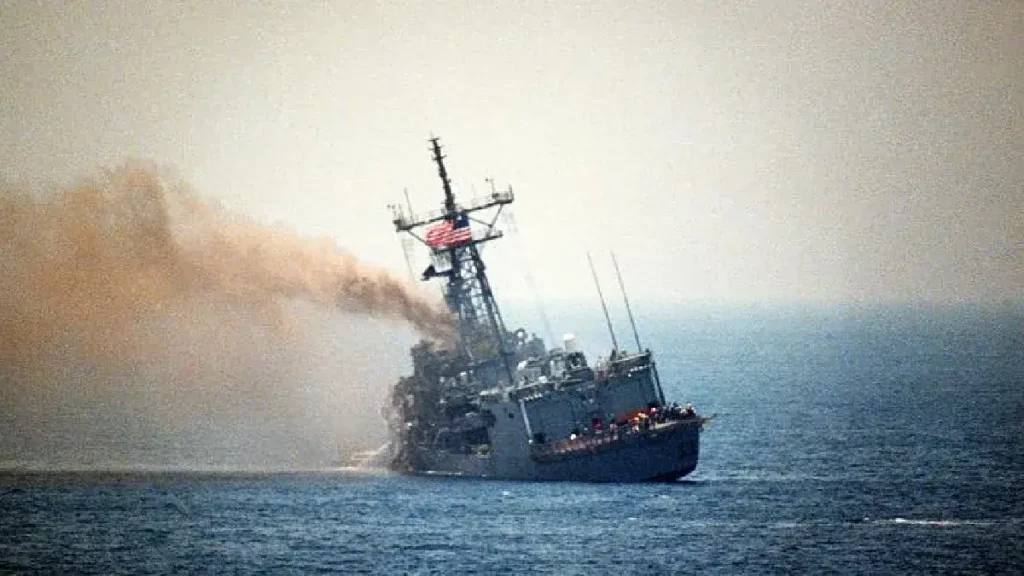
WASHINGTON — U.S. forces struck Iranian rocket launchers near the Strait of Hormuz on Sunday, August 30, 2026, in the first confirmed military action against Iran in a month, according to a U.S. official. The strike targeted Islamic Revolutionary Guard Corps (IRGC) positions on Iran’s Larak Island after U.S. Central Command observed forces preparing to launch rockets carrying sea mines into the strait. Iran swiftly vowed retaliation, with Iranian state media reporting casualties among IRGC fighters.





What Happened in the Strait of Hormuz?
U.S. forces conducted the strike after detecting IRGC personnel preparing to fire rockets equipped with naval mines into the strategic waterway, according to Tim Hawkins, a spokesperson for U.S. Central Command. The operation targeted two rocket launchers on Larak Island in the Persian Gulf, just days after the U.S. military completed clearing sea mines from the strait’s international shipping routes.
Semiofficial Iranian news outlets reported sounds of explosions near Larak Island. The IRGC, in a statement carried by Iran’s state broadcaster, confirmed casualties, noting “the martyrdom and injury of several of our fighters and compatriots”. The statement declared the attack would “result in punishment of the aggressor”.
Iranian state television later showed what it said were ballistic missiles fired at U.S. bases in Jordan in retaliation. Jordan’s armed forces confirmed intercepting eight missiles that penetrated the country’s airspace early Monday.
The strike breaks a lull in fighting during an intermittent conflict that has lasted more than six months, since the U.S. and Israel launched attacks on Iran on February 28, 2026. The last confirmed U.S. military action against Iran before Sunday occurred on July 29, when the U.S. conducted a “heavy wave of strikes” on dozens of Revolutionary Guard targets.
Why Is the Strait of Hormuz So Important?
The Strait of Hormuz is one of the world’s most critical maritime chokepoints. Located between Iran and Oman, it connects the Persian Gulf with the Gulf of Oman and the Arabian Sea. Before the current conflict, approximately 20% of the world’s oil—about 13 million barrels per day—flowed through this narrow passageway. It also carries roughly one-fifth of global liquefied natural gas (LNG) trade.
For Asian economies, the strait is particularly vital. More than 80% of the LNG shipped through the strait in 2024 went to Asia. China, the world’s largest crude oil importer, and India, the third-largest, rely heavily on Middle Eastern shipments passing through the strait. Japan and South Korea also depend almost entirely on energy imports routed through the waterway.
Disruptions to traffic through the strait have immediate global consequences. Brent crude prices have jumped approximately 15% since the conflict began, reaching nearly $90 per barrel following Sunday’s strike. The price for a barrel of U.S. oil rose 1.8% to $84.94, while Brent crude rose 1.9% to $89.79 in response to the military action.
What Is the US Saying?
The Trump administration has framed the strike as a defensive action to protect freedom of navigation. A U.S. official stated that forces observed the IRGC preparing to launch rockets with sea mines into the strait, prompting the military response. President Donald Trump has repeatedly declared that the “Strait of Hormuz is open,” noting that 24 vessels passed through last week. However, that number represents a fraction of the roughly 130 vessels that transited daily before the war began.
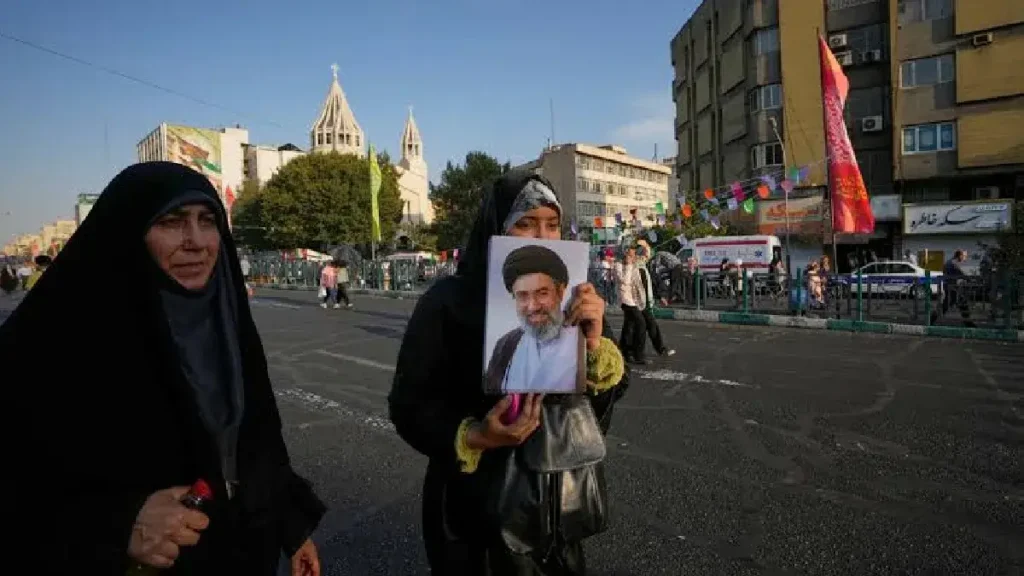
The attack comes just days after the administration announced a shift toward increasing economic pressure—rather than military action—to try to end the war with Iran. The new strategy centers on threatening to punish any country or entity that continues to conduct business with Tehran.
Trump has also ruled out immediate diplomatic talks with Iran. “They are in deep trouble, they have very little capacity, the strait of Hormuz is open, it doesn’t mean we finished with the military,” Trump said, leaving the possibility of further action open. He stressed that Washington was “not looking to meet or anything” with Iranian officials.
The administration is also weighing the strain of prolonged conflict. Officials have expressed concerns about diminished munitions stockpiles after months of war, potentially undermining U.S. military readiness in other parts of the globe.
What Is Iran Saying?
Iran’s official response has been defiant. An IRGC spokesperson, Gen. Hossein Mohebi, called the U.S. attack a “fatal mistake by the Trump regime during the economic war” and said the enemy would “pay the consequences militarily and economically”. The IRGC has also asserted that the Strait of Hormuz is under its complete control and threatened to attack any vessel attempting to cross without permission.
Iranian officials have framed the conflict as an act of aggression. They say the country has suffered $270 billion in direct and indirect damage from U.S. and Israeli strikes. Iranian President Masoud Pezeshkian said his country is capable of overcoming difficulties and accused Washington of attempting to sow chaos, as protests have erupted in Tehran over the erosion of government benefits and severe inflation.
Tehran continues to insist that even after working out a management plan for the strait with Oman, the U.S. cannot use it until it fulfills its obligations under a June memorandum of understanding. That deal quickly fell apart over differing interpretations of Iran’s authority over shipping arrangements, and Trump declared the MOU “over” three weeks after it was signed.
Iran’s Supreme Leader Mojtaba Khamenei, who has not been seen in public since being injured in airstrikes six months ago, has also called on Muslim countries, particularly Gulf states, to unite against what he called their “real enemy”. He urged Gulf Arab rulers to identify their “real enemy” and confront it.
Could the Strait of Hormuz Be Closed?
While officials have not declared a complete closure, shipping traffic has been heavily suppressed. Preliminary data shows that only seven commodity vessels transited the strait on Thursday, down from 17 on Wednesday and below the 10-day average of about 15 vessels. A multinational coalition overseen by the U.S. Navy confirmed that commercial traffic remains at “reduced levels”.
Iran has found significant leverage by threatening shipping through the strait. While the U.S. has cleared sea mines from international shipping lanes, Iran still has enough drones and missiles to fire at vessels transiting the waterway. The IRGC has claimed to have reached understandings with Oman over management of the strait, though details remain unclear.
A complete closure would have severe consequences. Mediators, including Qatar and Pakistan, have been working to restore normal traffic. Qatar’s prime minister recently pressed Iranian officials to respect freedom of navigation. Iran has agreed to draw up a list of conditions for reopening the strait, but negotiations remain stalled.
What Could Happen to Oil Prices?
Oil prices have already reacted significantly to the military action and ongoing disruptions. Brent crude, the international standard, approached $90 per barrel following Sunday’s strike, its highest level since July 2024. U.S. oil prices also rose sharply.
If the disruption continues, analysts warn of more significant economic consequences. Asia is the most exposed region because it relies heavily on imported fuel, much of it shipped through the strait. When supply tightens, richer nations outbid poorer ones for scarce cargoes, leaving more vulnerable economies short of fuel.
China has alternatives, including strategic petroleum reserves and the ability to buy more from Russia, though the price remains a concern. India, with less than a month of crude reserves, faces more immediate risks, with analysts warning that fuel costs and broader inflation could rise quickly if the conflict drags on. Japan and South Korea have larger stockpiles but remain vulnerable to prolonged disruptions.
Energy expert Zulfikar Yurnaidi of ASEAN’s Centre for Energy warned that the crisis “would not only raise oil and gas prices but also grind global economic activity to a halt”.
What Does This Mean for Middle East Security?
The conflict has exposed vulnerabilities in the U.S. military presence in the Gulf. Since the war began on February 28, Iran has targeted U.S. bases and assets in the region, with estimates suggesting Iran damaged at least 15 U.S. military sites, including radar and early-warning systems in Qatar, naval headquarters in Bahrain, and aircraft and logistics facilities in Kuwait. While 80–90% of attacks were intercepted, the damage has raised questions about the future of U.S. bases in the region.
Analysts suggest the Pentagon is reassessing its Middle East military presence, considering a smaller, more dispersed deployment or shifting forces westward. The U.S. currently maintains about 50,000 troops at nearly 20 military sites in and around the Gulf.
Regional dynamics are also shifting. U.S. Gulf allies are seeking greater strategic autonomy through collective defence, including the GCC Unified Military Command and diversified arms purchases from Turkey, Europe, Pakistan, South Korea, and China. However, experts note that these moves are unlikely to replace Washington’s role in the short term.
The conflict has also drawn in broader regional actors. Iran’s supreme leader has called for Muslim unity against “the real enemy,” while diplomatic efforts continue through mediators like Qatar and Pakistan.
Strait of Hormuz Military Action — What Happens Next?
Several key developments will shape the coming days and weeks:
Further military operations: President Trump has indicated that military action against Iran may not be over, keeping the possibility of further strikes open. The U.S. remains on high alert in the region and continues to defend the free flow of maritime trade, according to U.S. Central Command.
Official statements: Both Washington and Tehran are expected to issue further statements. Iran’s vow to retaliate suggests the potential for additional military exchanges.
Shipping activity: Commercial traffic through the strait remains at reduced levels, and analysts warn that the longer disruptions continue, the greater the risk of a “more profound dislocation to the oil market”.
Diplomatic negotiations: While the U.S. has disengaged from direct talks, mediators including Qatar continue to press for a resolution. Iran has said it is preparing a list of conditions for reopening the strait, but negotiations remain stalled over differing interpretations of Iranian authority over shipping arrangements.
Oil-market reaction: Energy markets will continue to react to developments. Analysts note that the crisis, coming after six months of conflict, has already driven significant price increases and poses ongoing risks to global economic activity.
Frequently Asked Questions
What happened in the Strait of Hormuz?
U.S. forces struck Iranian Revolutionary Guard rocket launchers on Larak Island on August 30, 2026, after observing preparations to launch rockets carrying sea mines into the strait. Iran has vowed to retaliate.
Why is the Strait of Hormuz important?
The strait is a critical energy chokepoint through which about 20% of the world’s oil and about one-fifth of global LNG trade normally flows. Its disruption has immediate effects on global energy prices and economic activity.
Is there military action in the Strait of Hormuz?
Yes. U.S. forces conducted strikes on Iranian positions on August 30, 2026, the first confirmed military action in a month during an intermittent conflict that has lasted more than six months.
Is Iran involved in the Strait of Hormuz tensions?
Yes. The IRGC has been actively threatening shipping through the strait, laying sea mines, and engaging in military exchanges with U.S. forces. Iran has also vowed to retaliate for the latest U.S. strikes.
Could the Strait of Hormuz be closed?
While officials have not declared a complete closure, shipping traffic has been heavily suppressed to a fraction of normal levels. Iran has threatened to block the strait, and mediators are working to restore normal traffic.
How could military action affect oil prices?
Oil prices have already risen significantly, with Brent crude approaching $90 per barrel following the latest strikes. Prolonged disruptions could drive prices higher and have cascading effects on global economies, particularly in energy-importing regions like Asia.
Why does the Strait of Hormuz matter to the global economy?
Because it is the primary route for Middle Eastern oil and LNG exports to Asia and other global markets. Disruptions tighten supply, drive up energy prices, and can slow economic activity worldwide.
Conclusion
The U.S. military strike on Iranian rocket launchers near the Strait of Hormuz marks a significant escalation in a conflict that has already lasted more than six months. Coming just days after the Trump administration announced a shift toward economic pressure rather than military action, the strike demonstrates the fragility of the current situation. With shipping traffic heavily suppressed, oil prices elevated, and Iran vowing retaliation, the coming days and weeks will be critical in determining whether this latest military action leads to further escalation or opens the door to renewed diplomatic efforts.