




Tarte Face Tape Foundation has become one of the most searched foundations for shoppers looking to conceal visible dark spots, uneven skin tone, and discoloration without a heavy finish. The product markets itself as a full-coverage formula with a natural matte finish that feels weightless on the skin.



For anyone dealing with hyperpigmentation or stubborn dark patches, the promise of coverage that stays put without looking cakey is understandably appealing.
This Tarte Face Tape Foundation review examines what the product actually delivers based on verified specifications and shopper feedback, along with practical guidance on application, shade matching, and skin-type considerations. The goal is to help you decide whether this foundation aligns with your coverage needs and makeup preferences.
Why Shoppers Are Looking at Tarte Face Tape Foundation
The search for a foundation that can conceal dark spots without creating a mask-like effect is a common challenge. Many full-coverage formulas deliver the opacity needed to hide discoloration but often come with tradeoffs: they can look heavy, settle into fine lines, or feel uncomfortable after a few hours of wear.
Tarte Face Tape Foundation targets shoppers who want fuller coverage, help concealing visible discoloration, long-lasting makeup, and an even-looking complexion without an excessively heavy appearance. The product has gained attention for its claim of providing full coverage with a natural matte finish that feels weightless.
It is worth noting that no single foundation works for everyone. Results depend on skin type, preparation, shade matching, and application technique. The following sections break down what the product offers and how it performs based on available information.
What Is Tarte Face Tape Foundation?
Tarte Face Tape Foundation is a liquid foundation designed to provide full coverage with a natural matte finish. According to the brand, the formula is transfer-proof, waterproof, and sweatproof, with a wear time of up to 12 hours.
The foundation is described as being inspired by the brand’s bestselling Shape Tape concealer. It contains skin-loving ingredients including snow mushroom extract, apple fruit extract, and hyaluronic acid. These ingredients are included for hydration and antioxidant benefits, not for treating any skin condition.
The product comes in a pump bottle, and the brand recommends dispensing one to two pumps onto the back of the hand before applying. The formula is available in a substantial shade range that spans fair to very deep skin tones, with options categorized by undertone (cool, neutral, warm, and olive).
Key product claims listed by the brand include:
- Full coverage without a heavy feel
- Natural matte finish
- Tape technology to help smooth texture and blur the appearance of pores, fine lines, and wrinkles
- Transfer-proof, waterproof, and sweatproof
- Vegan and cruelty-free
Can Tarte Face Tape Foundation Cover Dark Spots?
This is the central question for many shoppers considering this product. The answer requires a clear distinction between cosmetic coverage and medical treatment.
Tarte Face Tape Foundation can help conceal the appearance of dark spots and discoloration through its full-coverage formula. The product is designed to provide opaque coverage that may make uneven pigmentation less visible on the surface of the skin. The brand’s consumer panel data reports that 100% of study participants said it covered dark spots, redness, and imperfections.
However, it is essential to understand that this is cosmetic coverage only. Foundation does not treat melasma, hyperpigmentation, or any underlying skin condition. It does not remove dark spots or change the skin itself. It temporarily conceals their appearance while worn.
Some shoppers with melasma have reported positive experiences with the coverage. A 41-year-old reviewer with melasma described it as the only makeup they had found that effectively covered their “huge dark blotches” without looking “muddy.” Another shopper shared that the foundation “provides phenomenal coverage” and lasts through “10+ hour work days.”
These are individual experiences, not guaranteed results. Coverage effectiveness varies based on the depth and color of the discoloration, the shade match, and application technique.
What Shoppers Say About the Foundation
Shopper feedback on Tarte Face Tape Foundation is mixed, with recurring themes around coverage, finish, and staying power.
Coverage and finish. Many reviewers describe the coverage as excellent and buildable. One shopper with oily skin said it “doesn’t leave me patchy” and “looks amazing.” Another with dry skin reported that it “gives great coverage and doesn’t dry out my skin” and “blends perfectly” without feeling heavy. A reviewer in their late 40s noted that it “covers up the redness” and “does not feel heavy on my face.”
Staying power. Opinions vary on longevity. One shopper praised it for lasting through long work days and making skin “look nearly flawless.” However, another reviewer reported that it “starts to separate” within a few hours and emphasized lines under the eyes despite using powders and setting sprays. This discrepancy suggests that results may depend on skin type, preparation, and environment.
Texture and blending. Several shoppers note that the formula blends easily. One described it as having a “smooth, lightweight texture that blends effortlessly.” However, a reviewer who rated it three stars found it “quite thick and gloopy” and felt that other foundations provided similar coverage without the “mask” feeling.
Shade matching. Some shoppers have noted challenges with shade and color matching. This is a common issue with full-coverage foundations, where an exact match becomes more critical because the product is less forgiving than sheerer formulas.
Does It Look Muddy or Cakey?
The concern about cakey or muddy appearance is valid for any full-coverage foundation. Several factors influence whether a foundation looks heavy or natural.
Skin preparation. Dry, flaky, or unmoisturized skin can cause foundation to cling to patches and look uneven. A reviewer noted that when they first started using the foundation without a consistent skincare routine, they experienced a “chalky texture.” Moisturizing adequately before application can help.
Application amount. Using too much product is one of the most common causes of cakey-looking foundation. The brand recommends starting with one to two pumps, which is significantly less than many people instinctively use.
Application technique. Blending thoroughly with a damp sponge or brush helps the foundation meld with the skin rather than sitting on top of it. The brand recommends blending from the center of the face outward.
Setting products. Powder can help extend wear, but over-powdering can create a dry, flat appearance. Strategic powdering in areas prone to shine or movement is generally more effective than applying powder everywhere.
Tarte Face Tape Foundation is formulated to provide full coverage with a natural matte finish, and the brand states it “never looks dry or cakey.” However, individual results depend heavily on the factors above. Shopper experiences with cakey appearance appear to be the exception rather than the rule, often linked to insufficient skin preparation or excessive application.
How to Apply Full-Coverage Foundation for a More Natural Finish
Getting full coverage without a heavy look is a matter of technique. Here is a step-by-step approach.
1. Prepare the skin. Start with clean, exfoliated skin. Flaky patches will become more visible under full-coverage foundation, so gentle exfoliation before application can help create a smoother surface.
2. Moisturize. Apply a moisturizer suited to your skin type and allow it to absorb fully before proceeding. Hydrated skin provides a smoother canvas and helps prevent foundation from settling into dry patches. A reviewer noted that moisturizing an hour before makeup resolved their initial issues with chalkiness.
3. Consider a primer. A primer can help smooth texture, control shine, and extend wear. Those with oily skin may benefit from a mattifying primer, while those with dry skin might prefer a hydrating formula.
4. Start with less product than you think you need. Dispense one to two pumps onto the back of your hand. This is the brand’s recommended starting point. You can always add more, but removing excess product is difficult.
5. Apply strategically. Dab the foundation onto the areas that need the most coverage first—typically the center of the face, cheeks, and any areas of discoloration. Then blend outward.
6. Blend thoroughly. Use a damp makeup sponge or a foundation brush to blend the product into the skin. The damp sponge can help sheer out the coverage slightly while maintaining opacity where needed.
7. Layer only where necessary. If additional coverage is needed on specific spots, add a small amount of product to those areas rather than applying another full layer across the entire face.
8. Set strategically. Apply powder only where needed—typically the T-zone, under the eyes, and any areas where makeup tends to break down. This preserves the skin-like finish on the rest of the face.
9. Touch up as needed. For long days, carry a small amount of product or a powder for touch-ups. Blotting papers can help manage shine without adding more product.
How to Use Foundation When You Want to Conceal Dark Spots
For readers specifically focused on concealing visible discoloration, a few additional strategies can improve results.
Consider color correction. Dark spots that have a blue or purple undertone may benefit from a peach or orange color corrector applied underneath foundation. This can help neutralize the discoloration so that less foundation is needed to conceal it.
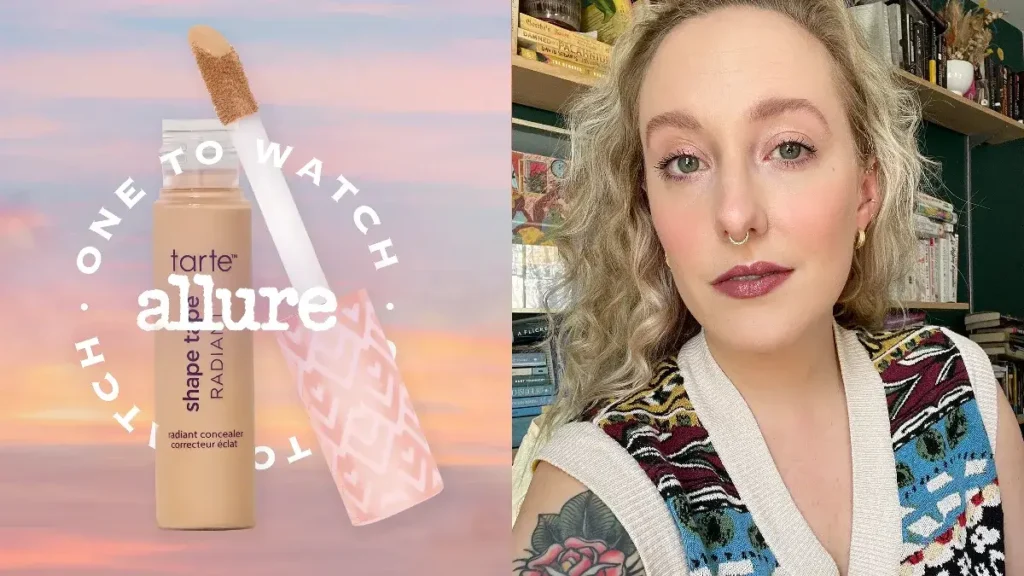
Use targeted concealer. A full-coverage concealer applied precisely to dark spots can provide additional coverage without requiring a heavier layer of foundation across the entire face. Tarte’s Shape Tape concealer is frequently mentioned alongside the Face Tape Foundation.
Build foundation coverage in layers. Apply a thin layer of foundation first, then add a second thin layer only on the areas that need more coverage. This builds opacity without creating a thick, uniform mask.
Blend the edges. When adding extra coverage to a specific spot, blend the edges outward so the transition between the fuller coverage area and the rest of the face is seamless.
Choose the right shade. A foundation that is too light will make dark spots appear gray or ashy. A foundation that is too dark will not provide sufficient coverage. Matching the undertone is as important as matching the depth.
Is Tarte Face Tape Foundation Good for Different Skin Types?
Skin type influences how any foundation performs. Here are considerations for different skin types.
Dry skin. Some shoppers with dry skin have reported positive experiences, noting that the foundation “doesn’t dry out my skin” and “blends perfectly.” However, one reviewer noted it can be “slightly drying” and “needs a good base layer.” People with dry skin may want to prioritize moisturizing and consider a hydrating primer underneath.
Oily skin. Shoppers with oily skin have reported that the foundation “doesn’t leave me patchy” and “stays well.” The natural matte finish may be particularly appealing for those who prefer to control shine. A mattifying primer and strategic powdering can help extend wear.
Combination skin. This skin type often requires a balanced approach—hydrating in dry areas and controlling shine in the T-zone. The foundation’s matte finish may work well, but application and setting techniques can be adjusted for different zones of the face.
Normal skin. Those without significant dryness or oiliness concerns may find the foundation straightforward to use, provided the shade match is accurate and application technique is sound.
Mature skin. Full-coverage foundations can sometimes emphasize fine lines and texture. One reviewer in their late 40s reported that the foundation “does not feel heavy” and is “one of my favorite foundations.” However, another shopper reported that it “makes lines under my eyes look even worse.” People with mature skin may want to use a lighter application in areas prone to fine lines and focus coverage on discoloration rather than applying uniformly.
How to Choose the Right Tarte Foundation Shade
Shade matching is critical for any foundation, but especially for full-coverage formulas where the wrong shade is more noticeable.
Understand your undertone. Tarte labels its shades with descriptors including B (beige/cool), N (neutral), S (sand/warm), H (honey/peach), and G (golden/olive). Identifying whether your skin has cool, warm, or neutral undertones helps narrow the options.
Test in natural lighting. Store lighting can distort color perception. If possible, test shades near a window or step outside to see how the foundation looks in daylight.
Test on the jawline. Applying foundation along the jawline and blending down the neck helps ensure the shade matches both the face and the neck, avoiding a visible line of demarcation.
Consider seasonal changes. Skin tone can shift slightly with sun exposure. A shade that matches in summer may be slightly too dark in winter. Some people keep two shades and mix them as needed.
Be aware of online shade-matching limitations. While virtual try-on tools and shade finders can be helpful, they are not always accurate. Reading reviews from people with similar skin tones and undertones can provide additional guidance.
Tarte Face Tape Foundation vs. Lightweight Foundation
The choice between a full-coverage foundation like Face Tape and a lightweight foundation comes down to priorities and context.
| Consideration | Full-Coverage (Face Tape) | Lightweight Foundation |
|---|---|---|
| Coverage | Conceals dark spots, redness, discoloration | Sheer to medium; may not fully conceal dark spots |
| Finish | Natural matte | Varies; often more luminous or skin-like |
| Feel | Can feel slightly heavier depending on application | Generally feels lighter on the skin |
| Longevity | Designed for long wear (up to 12 hours) | May require more frequent touch-ups |
| Best for | Events, photography, long days, significant discoloration | Everyday wear, minimal makeup preferences, good skin days |
Neither option is universally better. Someone who wants to conceal significant discoloration for a full day may prefer the coverage of Face Tape. Someone who prefers a barely-there makeup look may find a lightweight foundation more comfortable and appropriate for daily wear.
When a Full-Coverage Foundation Makes Sense
Full-coverage foundation is a practical choice in several situations:
Events and photography. Full coverage photographs well and provides an even canvas for other makeup. The matte finish can help prevent flashback in photos.
Long days. When makeup needs to last through work, commuting, and evening plans without touch-ups, a long-wearing full-coverage formula can be practical.
Significant discoloration. For those who want to conceal visible dark spots or uneven tone, fuller coverage may be necessary to achieve the desired effect.
Evening makeup. Full coverage can provide a polished base for more dramatic eye or lip makeup.
Conversely, lighter makeup may be preferable for:
- Everyday wear when skin is relatively clear
- Hot or humid conditions where heavy makeup feels uncomfortable
- Situations where a natural, no-makeup makeup look is desired
- Days when skin needs a break from fuller coverage
5 Tips for Getting Better Results From Full-Coverage Foundation
1. Start with less product. One to two pumps is often sufficient for the entire face. Adding more foundation rarely improves coverage as much as proper blending and layering.
2. Build coverage gradually. Apply a thin layer first, then add more only where needed. This prevents the entire face from looking heavy.
3. Match the undertone, not just the depth. A foundation with the wrong undertone will look off even if the depth is correct. Pay attention to whether your skin leans cool, warm, or neutral.
4. Use targeted concealer instead of more foundation. For stubborn spots, a small amount of full-coverage concealer applied precisely to the area can be more effective than layering more foundation everywhere.
5. Set strategically. Powder only where needed. Over-powdering can make full-coverage foundation look dry and flat.
Is Tarte Face Tape Foundation Worth Considering?
Tarte Face Tape Foundation offers a full-coverage option for shoppers who want to conceal visible dark spots, uneven tone, or discoloration. The formula is designed to provide opaque coverage with a natural matte finish, and many shoppers report positive experiences with coverage and longevity.
However, it is not the right choice for everyone. Some shoppers find the formula too thick, experience separation, or prefer a lighter feel. Those who prefer minimal makeup or have very dry skin may find other formulas more comfortable.
Before purchasing, consider:
- Your skin type and how it typically responds to full-coverage foundations
- Your shade match and undertone (this is critical for full-coverage products)
- Your application technique and willingness to prepare the skin properly
- Your coverage needs and whether they justify a fuller formula
A travel-size option, if available, can be a practical way to test the formula before committing to a full-size bottle.
Frequently Asked Questions
Is Tarte Face Tape Foundation good for dark spots?
Tarte Face Tape Foundation is a full-coverage foundation that can help conceal the appearance of dark spots and discoloration. It provides opaque coverage that may make uneven pigmentation less visible while worn. It does not treat or remove dark spots—it is cosmetic coverage only. Results vary based on the depth of discoloration, shade match, and application.
Can Tarte Face Tape Foundation cover hyperpigmentation?
The foundation’s full-coverage formula can help conceal the appearance of hyperpigmentation. Some shoppers with melasma have reported positive coverage results. However, coverage effectiveness varies by individual. For significant discoloration, color correction and targeted concealer may be needed in addition to foundation.
Is Tarte Face Tape Foundation full coverage?
Yes. Tarte Face Tape Foundation is formulated as a full-coverage foundation with a natural matte finish. The brand describes it as providing full coverage without a heavy feel.
Does Tarte Face Tape Foundation look cakey?
Whether a foundation looks cakey depends on skin preparation, application amount, and technique. Tarte Face Tape Foundation is designed to provide full coverage without a dry or cakey appearance. Some shoppers have reported issues with cakey texture, often linked to insufficient moisturizing or excessive application.
How long does Tarte Face Tape Foundation last?
The brand describes the formula as providing up to 12 hours of wear, with transfer-proof, waterproof, and sweatproof properties. Shopper experiences vary; some report all-day wear, while others note separation after a few hours.
How do you apply Tarte Face Tape Foundation?
The brand recommends dispensing one to two pumps onto the back of the hand, dabbing onto the skin with fingertips, and blending with a brush or damp sponge from the center of the face outward. Additional layers can be added as needed.
Is Tarte Face Tape Foundation suitable for dry skin?
Some shoppers with dry skin have reported positive experiences, noting that it doesn’t dry out their skin. Others have found it slightly drying and recommend a good moisturizing base. Those with dry skin may want to prioritize hydration and consider a hydrating primer.
How do you choose a Tarte Face Tape Foundation shade?
Identify your undertone (cool, neutral, warm, or olive) and depth. Test shades in natural lighting along the jawline. Tarte labels shades with undertone descriptors including B (beige/cool), N (neutral), S (sand/warm), H (honey/peach), and G (golden/olive). Be aware that online shade matching has limitations.