







Barbara Feldon was “within hours of being fired” from Get Smart during the show’s first few weeks on air. The reason had nothing to do with her performance as Agent 99. It had everything to do with a deodorant commercial she had filmed months earlier.




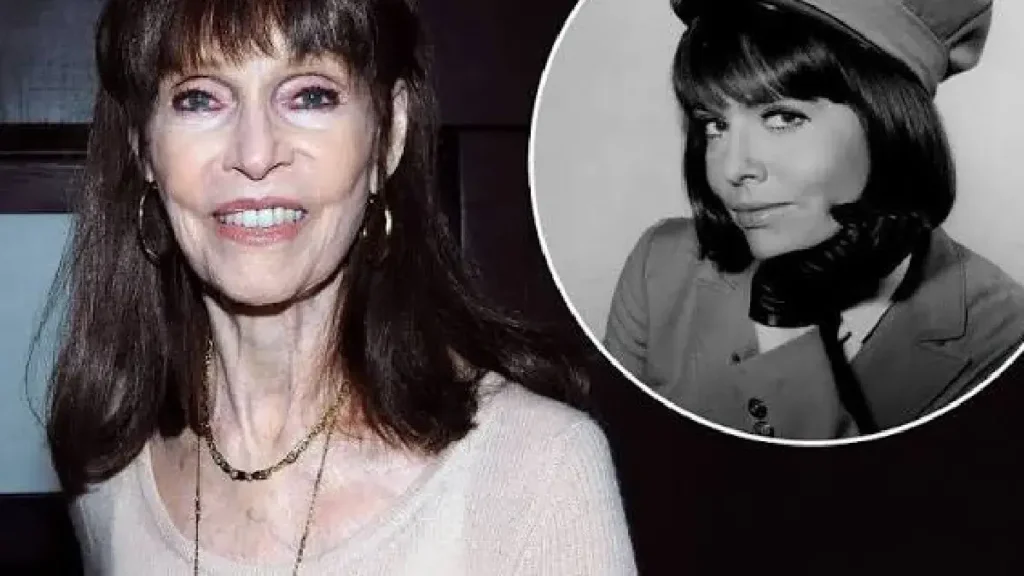
In an interview on The Jim Masters Show, the 93-year-old actress recalled how a sponsor conflict nearly ended her time on the classic 1960s spy comedy before it had truly begun. The story offers a rare glimpse into the commercial machinery that powered television during the era—and the precarious position of actors caught between network politics and advertising dollars.
Barbara Feldon Was the Woman Behind Agent 99
For five seasons, from 1965 to 1970, Barbara Feldon played Agent 99 on Get Smart, the cool-headed intelligence operative who consistently outsmarted her bumbling partner, Maxwell Smart. The role made her a television icon and earned her two Emmy nominations for Outstanding Lead Actress in a Comedy Series.
Before Get Smart, Feldon’s career had been building steadily through small television roles and, crucially, commercial work. She appeared in episodes of The Man from U.N.C.L.E., Flipper, and East Side/West Side. It was a 1965 guest appearance on Mr. Broadway that caught the attention of producers developing a new spy spoof from Mel Brooks and Buck Henry.
The character of Agent 99 was unusual for the era—a capable, intelligent woman thriving in a high-stakes career. Feldon later noted that “a lot of women said 99 was a role model for them, because she was smart and always got the right answer.” That relatability, combined with her natural chemistry with co-star Don Adams, helped make the series a cultural phenomenon.
What Was ‘Get Smart’ About?
Get Smart was a satirical take on the James Bond spy craze that dominated 1960s entertainment. The show followed Maxwell Smart, also known as Agent 86, a confident but hopelessly clumsy operative working for CONTROL, a fictional American intelligence agency. His primary adversary was KAOS, described as “an international organization of evil.”
Don Adams played Maxwell Smart with a mix of bravado and physical comedy that made the character instantly recognizable. Feldon’s Agent 99 served as his partner, and eventually his wife in later seasons. Where Max was reckless and frequently incompetent, 99 was methodical, perceptive, and almost always correct. The dynamic inverted the typical gender roles of 1960s television, and audiences responded enthusiastically.
The series ran for 138 episodes across five seasons on NBC, from September 1965 to May 1970. It won seven Emmy Awards during its run.
The Revlon Commercial That Created a Problem
Feldon’s troubles began before she ever set foot on the Get Smart soundstage.
She had previously appeared in advertising for Revlon, including a Christmas promotion for a stick deodorant product. The commercial aired during the holiday season and, according to Feldon, was never intended to run again. But when she was cast on Get Smart, the situation became complicated.
One of the show’s sponsors manufactured a soap product that contained deodorant. That sponsor’s CEO, Feldon explained, became fixated on the idea that viewers would somehow connect her with Revlon rather than his soap. “This is the thinking of advertisers,” she said on the podcast. “The guy who was the head of this company that sponsored Get Smart got it in his mind that people would be reminded that the actress did a deodorant commercial six months ago and would associate it with their soap… and therefore it would be a conflict.”
The sponsor’s concern had little to do with logic. The Revlon ad had already run its course. It was unlikely to appear again. But in the world of 1960s television advertising, perception mattered as much as reality. The sponsor threatened to pull its support unless Feldon was removed.
“It was down to the line and I was told that I was going to be removed from the set the next day—that they were going to make NBC come and remove me from the set,” Feldon recalled.
Why a Revlon Ad Could Have Threatened a TV Role
To understand why a finished commercial could jeopardize a steady acting job, it helps to understand how television worked in the mid-1960s.
During that era, sponsors held enormous power over programming. Many shows were produced by advertising agencies or with direct sponsor involvement. Individual companies often had their names in the title—The Phil Silvers Show was sponsored by Camel cigarettes, The Colgate Comedy Hour by Colgate—and their approval extended to casting decisions. A sponsor who felt an actor represented a competing brand could make that actor’s position untenable.
Product-category conflicts were a particular concern. If a sponsor sold soap, an actor associated with a rival soap or deodorant brand could be seen as diluting the sponsor’s message. This was not a matter of formal contract law in every case, but of commercial relationships and personal sensitivities. A sponsor with enough leverage could simply demand a change.
Feldon later said the actors and production teams were often under intense pressure from advertisers. The experience was not unique to her, but the stakes felt existential in the moment.
Barbara Feldon’s Own Account of What Happened
What happened next is preserved in Feldon’s own recollection, shared decades later.
When she arrived on set the day after being told she would be removed, a producer pulled her aside. He gave her a phone number for the sponsor’s CEO and a final instruction: call him and plead her case. “So here I am in the parking lot with the quarters in my hand and my producer saying, ‘This is our last chance,’ and I was so scared,” Feldon remembered. “I was shaking because I hated being criticized. I felt, you know, so intimidated by this big corporate guy.”
She made the call. “I said, ‘I’m Barbara Feldon,’ and he said ‘I know who you are,’ and I said, ‘I just wanted to talk about the problem that we’re having,’ he said, ‘I’m not having a problem.'”
Feldon told the CEO how much the role meant to her. His response was brief. “‘Too bad, baby,’ and he hung up.”
She returned to the soundstage and finished the day’s work. She showed up the next morning expecting to be fired. “The hours went by and nobody came and it was never mentioned again,” she said. “It was never mentioned again.”
Feldon remained on Get Smart for the full five-season run.
Agent 99 Became One of Television’s Most Memorable Female Characters
The Revlon incident is a footnote in Feldon’s career, but Agent 99 became something more enduring.
The character was notable for the era. In a television landscape where women were often relegated to decorative or subordinate roles, Agent 99 was competent, decisive, and frequently the one who solved the case. She was smart without being condescending, capable without being threatening to her male partner’s ego. Feldon’s performance balanced warmth with authority, creating a character that felt both aspirational and accessible.
“She was smart and always got the right answer,” Feldon said of the character’s appeal to women viewers. The show’s creators, Mel Brooks and Buck Henry, wrote Agent 99 as a counterpoint to Maxwell Smart’s chaos—the steady hand in a world of absurdity.
Feldon has also noted that the role arrived just before the women’s movement began reshaping American culture. Agent 99, she explained, represented “an entry-level feminism” that combined traditional deference with quiet self-assertiveness. “She would never lord her intelligence over Max,” Feldon said in a 2006 interview.
Barbara Feldon and Don Adams’ ‘Get Smart’ Chemistry
The on-screen partnership between Feldon and Don Adams was the engine that made Get Smart work.
Maxwell Smart was arrogant, impulsive, and almost comically inept. Agent 99 was patient, observant, and quietly brilliant. The contrast created a comedic dynamic that allowed both actors to shine. Adams brought physical comedy and impeccable timing; Feldon brought grounding and a dry wit that made the absurdity feel almost plausible.
Feldon has said that the chemistry was immediate and instinctive. “The minute we were in character, there was this absolutely no-holds-barred communication between us,” she said in 2013. Off-camera, the relationship was more distant during the show’s run—Adams was focused on writing and production, and the two did not socialize. But their professional connection translated on screen in a way that audiences recognized immediately.
One practical challenge: Feldon was taller than Adams. To minimize the difference, she often slouched, went barefoot, or stood on lower surfaces in scenes where height would be noticeable. “I can barely watch the first year because I’m slouching so much,” she admitted. The physical accommodation became part of the show’s behind-the-scenes lore.
Barbara Feldon’s Career Beyond ‘Get Smart’
After Get Smart ended in 1970, Feldon found herself caught in the typecasting trap that claims many television actors. “For a while people were afraid to cast me in anything dramatic because they’d see me on the screen and think they’re supposed to laugh,” she said in an Archive of American Television interview.
She continued working in television movies and guest roles throughout the 1970s, including the 1975 TV movie Let’s Switch! opposite Barbara Eden, and the cult thriller A Vacation in Hell. She appeared on The Dean Martin Show, McMillan & Wife, and Mad About You.
Feldon reprised her role as Agent 99 in the 1989 TV movie Get Smart, Again! and a short-lived 1995 revival series on Fox. She also wrote and provided commentary for the DVD release of the original series but declined to participate in the 2008 film adaptation starring Steve Carell.
Her creative work extended beyond acting. Feldon wrote Living Alone and Loving It: A Guide to Relishing the Solo Life, published in 2003, reflecting her own experience of building a fulfilling life as a single woman after two marriages. She has also written poetry and essays.
The Lasting Legacy of ‘Get Smart’
Get Smart endures as one of the defining television comedies of the 1960s. Its influence on spy-comedy can be seen in later shows like Archer and films that blend espionage with satire. The show’s gadgets—the shoe phone, the Cone of Silence—became cultural touchstones that remain recognizable decades later.
The 2008 film adaptation, starring Steve Carell as Maxwell Smart and Anne Hathaway as Agent 99, brought the franchise to a new generation. While Feldon did not participate, the film’s existence demonstrated the durability of the original concept.
For Feldon herself, Agent 99 remains the role with which she is most identified. She has spoken about the character with affection and without resentment, recognizing that the role gave her a place in television history—even if it also limited the opportunities that followed.
What Barbara Feldon’s Revlon Story Reveals About Classic Television
The Revlon incident is more than a colorful anecdote. It illustrates the commercial realities that shaped television production in the 1960s.
Sponsors were not merely financial backers. They were creative stakeholders whose preferences could determine casting, storylines, and even which actors stayed on a show. The line between advertising and entertainment was blurry by modern standards. A commercial an actor filmed before landing a series could become a liability if a sponsor perceived a conflict.
Feldon’s experience also highlights the vulnerability of actors in that system. She had no contractual protection against a sponsor’s whims. Her job depended on a phone call she had no power to influence. The fact that she kept her role may have had less to do with the call itself than with the sponsor simply deciding not to follow through on the threat.
The story also reveals how much television has changed. Today, actors negotiate brand exclusivity clauses with legal teams. Sponsors rarely have direct control over casting. The idea that a deodorant commercial could nearly derail an actress’s career seems almost quaint—but it was the reality of the era.
Why the Story Still Resonates Today
The Feldon story continues to circulate because it speaks to something audiences find compelling: the gap between the polished surface of television and the messy business underneath.
Modern viewers understand celebrity brand partnerships intimately. Actors promote products on social media, sign endorsement deals, and navigate conflicts between their personal brands and their professional obligations. The Feldon episode is a precursor to those dynamics, played out in a lower-tech era with higher stakes.
The story also resonates because it reminds audiences that Agent 99—a character who seemed so effortlessly confident on screen—was played by an actress who was genuinely terrified in a parking lot with a roll of quarters, trying to save her job. That contrast between the character’s composure and the actor’s vulnerability makes the story human.
Timeline
| Period | Event |
|---|---|
| 1933 | Barbara Feldon born in Butler, Pennsylvania |
| Early 1960s | Feldon appears in Revlon “Top Brass” commercial and other advertising work |
| 1965 | Feldon cast as Agent 99 on Get Smart |
| 1965 | Revlon deodorant conflict emerges; Feldon nearly removed from the show |
| 1965–1970 | Get Smart airs for five seasons on NBC |
| 1970s | Feldon continues acting in TV movies and guest roles |
| 1989 | Feldon reprises Agent 99 in Get Smart, Again! |
| 1995 | Short-lived Get Smart revival series airs on Fox |
| 2003 | Feldon publishes Living Alone and Loving It |
| Today | Agent 99 remains an enduring figure in classic TV history |
Barbara Feldon Quick Facts
| Detail | Information |
|---|---|
| Full name | Barbara Anne Hall |
| Professional name | Barbara Feldon |
| Born | March 12, 1933, Butler, Pennsylvania |
| Profession | Actress, model, author |
| Best-known role | Agent 99 on Get Smart |
| Major series | Get Smart (1965–1970) |
| Emmy nominations | Two (1968, 1969) |
| Notable creative work | Living Alone and Loving It (2003) |
9. FAQ
Who did Barbara Feldon play on Get Smart?
Barbara Feldon played Agent 99, the competent and intelligent partner to Don Adams’ Maxwell Smart (Agent 86).
What was Barbara Feldon’s role in Get Smart?
Agent 99 was a top operative for CONTROL who frequently saved the day when Maxwell Smart’s bumbling created problems. She was the calm, capable counterpart to his chaos.
Why was Barbara Feldon nearly fired from Get Smart?
A sponsor of Get Smart manufactured a deodorant soap and objected to Feldon’s earlier appearance in a Revlon deodorant commercial. The sponsor threatened to have her removed from the show.
What did the Revlon commercial have to do with Get Smart?
Feldon had filmed a Revlon stick deodorant promotion before being cast on Get Smart. A sponsor whose company sold deodorant soap saw this as a conflict, believing viewers would associate Feldon with a competing brand.
Who played Agent 99?
Barbara Feldon played Agent 99 on the original Get Smart series (1965–1970). Anne Hathaway played the character in the 2008 film adaptation.
Who played Maxwell Smart?
Don Adams played Maxwell Smart (Agent 86) in the original Get Smart series.
When did Get Smart originally air?
Get Smart aired on NBC from September 1965 to May 1970, spanning five seasons and 138 episodes.
Was Barbara Feldon actually fired from Get Smart?
No. Feldon was told she would be removed from the set, but the threat was never carried out. She remained on the show for its entire five-season run.
What happened to Barbara Feldon after Get Smart?
Feldon continued acting in television movies and guest roles throughout the 1970s and beyond. She reprised Agent 99 in the 1989 TV movie Get Smart, Again! and a 1995 revival series. She also wrote Living Alone and Loving It, published in 2003.
Why is Agent 99 still remembered?
Agent 99 was unusual for 1960s television—a competent, intelligent woman in a career role who frequently outshined her male partner. Feldon’s performance made the character a role model for many viewers and an enduring figure in classic TV history.