







In his first televised interview since a Massachusetts jury deadlocked in the trial of his former wife, Patrick Clancy spoke candidly with CBS’ 60 Minutes about the period before the deaths of their three children and the moment he first realized Lindsay Clancy was “really struggling.”





The interview, which aired Sunday, September 20, 2026, comes just weeks after a mistrial was declared in Lindsay Clancy’s high-profile murder trial on September 4, 2026.
This article distinguishes between Patrick Clancy’s personal recollections, documented medical and court information, defense claims, prosecution arguments, and facts that remain unresolved.
The deaths of the three Clancy children in January 2023 were a tragedy that has generated intense public scrutiny, misinformation, and debate about postpartum mental health. This report does not sensationalize those deaths and relies only on verified reporting and court records.
Patrick Clancy Recalls When He First Realized Lindsay Was Struggling
According to his account in the 60 Minutes interview, Patrick Clancy began to notice something was wrong in October 2022, after the birth of the couple’s third child.
“She came downstairs one morning and said, ‘I didn’t sleep at all last night,'” Patrick recalled. He said he told her he would take the kids to school so she could focus on catching up on sleep.
Patrick said the sleep deprivation became severe. In the interview, he described nights when Lindsay went without sleep entirely. He now views that period as an important point in the timeline leading up to January 2023.
Patrick has also acknowledged that he did not understand postpartum mental illness at the time. “I could piece together what it was like to be really anxious or depressed, but I didn’t know how to manage a postpartum illness,” he said. He added that he believes “mental illness has this ability to be tragically deceptive,” and that there were likely things he did not see.
According to Patrick’s recollection, Lindsay’s difficulties worsened in December 2022. He described “a huge lack of sleep, deep, deep depression, intrusive thoughts,” and said she went to the hospital at the end of that month.
The Timeline Before the January 2023 Tragedy
The following timeline is based on publicly documented events, court testimony, and Patrick Clancy’s 60 Minutes interview. Exact dates are included only where verified.
2022: Birth of the couple’s third child, Callan.
October 2022: Patrick recalls Lindsay going multiple nights without sleep. He begins to notice she is struggling.
Late 2022: Lindsay’s symptoms worsen. Patrick describes “deep depression” and “intrusive thoughts.”
December 2022: According to Patrick, this was “a big struggle.” Lindsay is hospitalized at the end of the month.
January 7, 2023: Lindsay returns home from the hospital for their daughter Cora’s birthday.
January 24, 2023: The couple’s three children — Cora, 5; Dawson, 3; and Callan, 8 months — are killed at the family’s home in Duxbury, Massachusetts. Lindsay attempts suicide and survives, paralyzed from the waist down.
January 2023: Lindsay is charged with three counts of first-degree murder. She pleads not guilty.
2026: Trial begins in Plymouth County Superior Court.
September 4, 2026: Judge William F. Sullivan declares a mistrial after the jury fails to reach a unanimous verdict.
What Patrick Said About Lindsay’s Mental Health
In the 60 Minutes interview and in prior court testimony, Patrick described Lindsay’s condition in the months before the deaths. He has spoken about severe sleep deprivation, depression, and intrusive thoughts, and has said Lindsay sought medical treatment and was hospitalized.
During his trial testimony, Patrick said Lindsay told him about intrusive thoughts of harming the children and thoughts of suicide. She sought care from experts in postpartum mood disorders and was placed on multiple psychiatric medications. When those interventions did not resolve her symptoms, she checked into a psychiatric hospital. The children were killed 19 days after she was discharged.
It is important to distinguish between a person experiencing a mental-health condition and the specific legal question of criminal responsibility. The fact that someone has postpartum depression, postpartum psychosis, or another psychiatric condition does not mean they will become violent. Postpartum mental illness does not inherently cause violence.
The specific mental-health claims in Lindsay Clancy’s criminal case were matters of evidence and argument in court. Her defense argued she lacked criminal responsibility due to severe mental illness. Prosecutors argued she knew what she was doing. The jury was unable to reach a unanimous decision.
What Happened to Lindsay Clancy and Her Children
On January 24, 2023, Lindsay Clancy killed her three children — Cora, 5; Dawson, 3; and Callan, 8 months — at the family’s home in Duxbury, Massachusetts. She then attempted suicide by cutting herself and jumping from a second-story window. She survived but was paralyzed from the waist down.
Patrick Clancy has said that Callan, the youngest, did not die immediately. The infant lived for four more days and died in his father’s arms. “I’m so grateful for those four days I had with him,” Patrick said. “I said, ‘I’m so sorry,’ and I got to hold him, I got to lay down next to him, and he died in my arms.”
Lindsay Clancy was charged with three counts of first-degree murder. She has never disputed that she caused the deaths but pleaded not guilty on the basis of lack of criminal responsibility.
Lindsay Clancy’s Defense and the Postpartum Psychosis Argument
Lindsay Clancy’s defense attorney, Kevin Reddington, argued that she was experiencing postpartum psychosis at the time of the deaths and should not be held criminally responsible.
Under Massachusetts law, a defendant can be found not guilty by reason of insanity — known in the state as lack of criminal responsibility — if they had a mental disease or defect and lacked the substantial capacity to appreciate the wrongfulness of their conduct or to conform their conduct to the law.
Reddington argued that prosecutors did not present evidence that would allow a jury to find Clancy guilty. He said that even the prosecution’s expert witnesses agreed Clancy suffered from a serious mental illness at the time. “The testimony bears on which illness she had, not on whether she had one,” Reddington wrote in a court filing.
The defense has maintained that Lindsay was a loving mother in the grip of a rare condition. Her attorney has said Lindsay had bipolar disorder and that antidepressants prescribed after the birth of her third child worsened her condition.
Prosecutors, by contrast, argued that Lindsay Clancy knew what she was doing and was criminally responsible. They pointed to her actions in the weeks, days, and hours before the killings — driving, planning a child’s birthday party, and bringing her daughter to a doctor’s appointment — as evidence that she was of sound mind.
The defense theory was not proven at trial. The jury deadlocked, and no final determination of criminal responsibility has been reached.
What Happened at the 2026 Trial?
Lindsay Clancy’s trial began in 2026 in Plymouth County Superior Court. The trial lasted six weeks and included graphic and emotional testimony. Patrick Clancy testified as a prosecution witness and experienced a panic attack when his 911 call was played for the jury.
On September 4, 2026, after seven days of deliberations, the jury informed Judge William F. Sullivan that it could not reach a unanimous verdict. Sullivan declared a mistrial.
According to public reporting, 11 of 12 jurors favored a finding that Lindsay was not criminally responsible, while one juror disagreed. The defense attorney blamed the lone juror for the deadlock, saying the juror had revealed a possible bias against those dealing with mental illness. The holdout juror, Michael Desronvil, later released a statement through his lawyer saying he “didn’t have any doubts” about Clancy’s guilt and believed there was enough proof she knew what she was doing.
A mistrial means the trial ended without a verdict. It is not an acquittal. The charges against Lindsay Clancy remain pending. Prosecutors have not announced whether they will seek a retrial. A hearing is scheduled for September 29, 2026, to determine next steps.
Lindsay Clancy was not acquitted. She was not “found innocent.” No final verdict was reached.
What Patrick Clancy Has Said About the Trial and Aftermath
In his 60 Minutes interview, Patrick Clancy discussed his grief, his experience during the trial, and his decision to forgive Lindsay.
He described the emotional toll of testifying and the stress of the trial. “There was a time I didn’t think I would live to see my 35th birthday, and I was completely fine with it,” he said, disclosing his own struggles with suicidal thoughts.
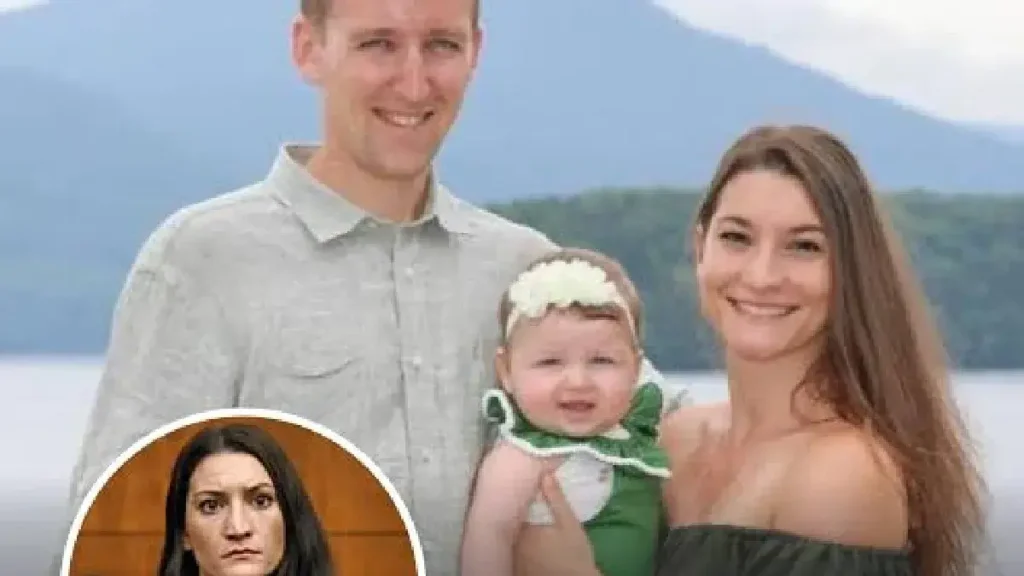
Patrick said he chose to forgive Lindsay. “I saw headlines that said, ‘Killer Mom,’ ‘Baby Murderer,’ and ‘Monster,’ and none of them were accurate,” he said. “I believe it was her mental illness that caused that.” He added, “When it comes to forgiveness, I felt that if I didn’t get there, I would be eaten up inside forever.”
He also addressed the conspiracy theories that circulated online about him during the trial, including unfounded claims that he was connected to his children’s deaths. “It’s deeply harmful to the legacy of my children,” Patrick said. “It is a huge distraction from what really matters here, which is perinatal mental health.”
Patrick appeared alongside his new wife, Dr. Rachel Danis. He confirmed that they are expecting a child. “I can’t wait to tell them about their brothers and sister,” he said.
What We Know — and What We Still Don’t Know
What is documented:
- Patrick Clancy’s recollections of Lindsay’s struggles beginning in fall 2022
- Lindsay’s publicly documented treatment history, including hospitalization and medication
- The January 24, 2023, deaths of Cora, Dawson, and Callan Clancy
- Lindsay Clancy’s suicide attempt and resulting paralysis
- The criminal charges of first-degree murder
- The defense’s mental-health argument
- The 2026 trial and the mistrial on September 4, 2026
- The reported 11-1 jury division
- The September 29, 2026, hearing
What remains unclear:
- Lindsay Clancy’s precise mental state at every point in the timeline
- Questions that were disputed during trial, including her ability to appreciate wrongfulness
- Whether prosecutors will retry the case
- Any details not established by official records
Readers should not treat social-media speculation, anonymous claims, or unverified theories as evidence in this case.
Understanding Postpartum Mental Health
Postpartum mental health conditions are common and treatable, but they exist on a spectrum.
Postpartum depression is a serious but treatable condition that can occur after childbirth. Symptoms may include persistent sadness, loss of interest, fatigue, changes in sleep or appetite, and difficulty bonding with the baby. It affects a significant number of new mothers and is not a sign of personal failure.
Postpartum psychosis is a rare psychiatric emergency. It involves symptoms such as loss of contact with reality, hallucinations, delusions, severe confusion, or extreme changes in behavior. It typically emerges in the days or weeks after childbirth and requires immediate medical attention.
Most people experiencing postpartum depression or other postpartum mental-health conditions do not become violent. Postpartum psychosis is rare, and even among those who experience it, violence is not the norm.
This article does not diagnose Lindsay Clancy. The specific claims about her mental state were matters of evidence and argument in court, not established medical facts.
Why Patrick’s Recollection Matters
Patrick Clancy’s account of the fall of 2022 is receiving attention because it highlights how quickly and severely postpartum mental illness can escalate, and how difficult it can be for families to recognize what is happening.
His recollections underscore several important public-health points:
- Severe sleep deprivation can be an early warning sign.
- Postpartum depression and postpartum psychosis are distinct conditions with different levels of urgency.
- Families may struggle to navigate the medical system when symptoms change rapidly.
- Professional medical support is essential, but the system can be difficult to access.
This article does not blame Patrick Clancy for what happened. He has said he did the best he could with the information and resources available to him at the time. The tragedy was not his fault.
Patrick Clancy’s Life After the Tragedy
Since the deaths of his children, Patrick Clancy has focused on advocacy for perinatal mental-health awareness. In his 60 Minutes interview, he emphasized that the issue of perinatal mental health is what “really matters here.”
He has remarried and is expecting a child with his new wife, Dr. Rachel Danis. He has said he plans to tell his future child about their siblings.
Latest Update on Lindsay Clancy’s Case
As of September 21, 2026:
- Lindsay Clancy’s trial ended in a mistrial on September 4, 2026, after the jury could not reach a unanimous verdict.
- The reported jury division was 11-1 in favor of finding her not criminally responsible.
- Lindsay Clancy remains in a psychiatric hospital while her case is unresolved.
- Prosecutors have not announced whether they will retry the case.
- A hearing is scheduled for September 29, 2026, in Plymouth County Superior Court to determine next steps.
- The charges against Lindsay Clancy remain pending. She has not been acquitted or convicted.
Quick Details
Who: Lindsay Clancy
Former husband: Patrick Clancy
Location: Duxbury, Massachusetts
Case: Deaths of the couple’s three children
Incident: January 24, 2023
Trial: 2026
Latest trial status: Mistrial after jury deadlock on September 4, 2026
Defense position: Lack of criminal responsibility based on severe mental illness
Current status: Charges pending; retrial decision unresolved; hearing scheduled September 29, 2026
FAQ
1. Who is Patrick Clancy?
Patrick Clancy is the former husband of Lindsay Clancy. He is the father of Cora, Dawson, and Callan Clancy. He testified at Lindsay’s trial and spoke publicly in a 60 Minutes interview in September 2026.
2. What did Patrick Clancy say about Lindsay Clancy?
Patrick Clancy said he first noticed Lindsay was struggling in October 2022, when she went multiple nights without sleep. He described her condition worsening to include “deep depression” and “intrusive thoughts” and said he did not understand postpartum illness at the time. He has said he forgives her and believes her mental illness caused the deaths.
3. When did Patrick Clancy first realize Lindsay was struggling?
According to his account, Patrick first realized something was wrong in October 2022, after the birth of their third child, when Lindsay told him she had not slept at all.
4. What happened to Lindsay Clancy’s children?
Cora (5), Dawson (3), and Callan (8 months) were killed on January 24, 2023, at the family’s home in Duxbury, Massachusetts. Callan survived for four days before dying in his father’s arms.
5. What did Lindsay Clancy’s defense argue?
Her defense argued that she was experiencing postpartum psychosis and lacked criminal responsibility for her actions. The defense maintained she was a loving mother in the grip of a severe mental illness.
6. What happened during Lindsay Clancy’s 2026 trial?
The trial lasted six weeks. The jury deliberated for seven days before telling the judge it could not reach a unanimous verdict. The judge declared a mistrial on September 4, 2026.
7. Was Lindsay Clancy convicted?
No. The trial ended in a mistrial. She was neither convicted nor acquitted.
8. What does a mistrial mean in a criminal case?
A mistrial means the trial ended without a verdict. It does not resolve the charges. Prosecutors may choose to retry the case or dismiss the charges.
9. What is postpartum psychosis?
Postpartum psychosis is a rare psychiatric emergency involving symptoms such as hallucinations, delusions, severe confusion, or loss of contact with reality. It requires immediate medical attention.
10. What happens next in the Lindsay Clancy case?
A hearing is scheduled for September 29, 2026, to determine next steps. Prosecutors have not announced whether they will seek a retrial. Lindsay Clancy remains in a psychiatric hospital.