






Hopes for a new major Boeing China deal are fading ahead of the U.S.-China summit between President Donald Trump and Chinese President Xi Jinping, according to people briefed on the matter cited by Reuters. Boeing is instead concentrating on completing a previously announced commitment for China to buy 200 aircraft, rather than securing a fresh agreement for hundreds of additional jets during the summit.





The development comes as Boeing tries to rebuild its position in one of the world’s largest commercial aviation markets. The U.S. planemaker has been largely shut out of new Chinese aircraft orders since 2017, while European rival Airbus has expanded its presence in the country. The 200-aircraft commitment announced in May marked an important return for Boeing, but the status of additional orders remains uncertain.
Reuters reported on September 24 that negotiations remain fluid and that hopes for another major Chinese commitment have weakened. At the same time, there is still work to complete on the May agreement. U.S. Trade Representative Jamieson Greer said earlier this week that about 140 of the 200 aircraft orders were in a good state, with another 10 being formally documented.
The situation matters beyond Boeing. China is one of the world’s largest aviation markets and has substantial long-term requirements for new aircraft. For Boeing, access to Chinese airlines can generate not only aircraft sales but also demand for maintenance, parts, training and other aviation services. For the United States, Boeing is also a major aerospace exporter, making commercial aircraft transactions relevant to the broader U.S.-China trade relationship.
Boeing China Deal Hopes Fade Ahead of Summit
The latest Reuters report said expectations for a new Chinese commitment to buy Boeing aircraft were declining ahead of the Trump-Xi summit, based on information from two people briefed on the matter. The sources spoke anonymously because the negotiations are private. Reuters also reported that talks remained in flux, meaning the situation was not presented as a finalized decision to rule out new purchases.
The immediate focus has shifted toward the 200 Boeing aircraft commitment announced in May.
That distinction is important. A potential new agreement involving additional aircraft is different from the existing 200-aircraft commitment, and neither should automatically be treated as equivalent to completed deliveries.
Boeing CEO Kelly Ortberg had already tempered expectations for a major new announcement around the summit. Reuters reported earlier that Ortberg said additional orders would come forward but would be announced by airlines according to their own timing. He had also described the 200-aircraft commitment as an initial tranche that could potentially be followed by more orders.
That leaves Boeing with a more immediate objective: moving the May commitment through the documentation and purchasing process.
The U.S.-China summit is taking place against a much broader backdrop involving trade, tariffs, artificial intelligence, Taiwan, critical minerals and other areas of bilateral relations. Reuters reported that the two countries had agreed to extend their trade truce by two months, creating additional time for negotiations on a potentially broader trade agreement.
A Boeing announcement could therefore have been commercially and diplomatically significant. But the latest reporting indicates that a new large aircraft commitment is not currently the central expectation.
What Is the Status of Boeing’s Existing China Aircraft Deal?
China announced in May that it would purchase 200 Boeing aircraft, marking the first major Chinese Boeing deal in nearly a decade. The announcement came during Trump’s visit to China and formed part of a broader package of commercial and trade commitments.
The deal was particularly significant because Boeing had gone years without securing a comparable large Chinese aircraft order.
However, the May announcement did not mean that all 200 aircraft had immediately moved through every stage of the commercial purchasing process.
On September 21, U.S. Trade Representative Jamieson Greer told Fox News that approximately 140 aircraft orders were in a “good state”, while another 10 were being formally documented. Reuters reported that the remaining portion of the 200-aircraft commitment was still subject to the process required to finalize the purchases.
That provides an important distinction between an announced commitment and a completed commercial order.
Aircraft transactions can involve negotiations, contractual documentation, financing, production slots, regulatory approvals and delivery schedules. An announcement therefore does not mean every aircraft has already been manufactured, delivered or accepted by an airline.
The May agreement also involved concerns about continued access to aircraft components. Reuters reported in June that Boeing said it could provide aftermarket parts support for the 200-aircraft order, while China’s commerce ministry had emphasized the importance of reliable supplies of aircraft engine parts and components.
Those issues illustrate how aircraft sales can be influenced by supply chains and government trade policies as well as by airline fleet requirements.
Why China Is So Important to Boeing
China represents a major long-term opportunity for commercial aircraft manufacturers because of its enormous passenger market, large airline fleets and continuing need for fleet renewal.
Boeing’s 2024 China Commercial Market Outlook projected demand for 8,830 new airplanes between 2024 and 2043. The company estimated that China’s commercial fleet would grow from about 4,345 aircraft to 9,740 over that period. Boeing also forecast strong demand for single-aisle aircraft, widebody jets and freighters.
Airbus has also identified China as one of the world’s most important aviation markets. Its January 2026 forecast projected approximately 9,570 new aircraft deliveries in China over 20 years, while describing China as its largest single-country market by fleet.
The two manufacturers use different forecasting methodologies and publication dates, so their numbers should not be treated as directly interchangeable. But both forecasts illustrate the scale of the Chinese aviation market.
For Boeing, the opportunity extends beyond the initial aircraft sale.
Airlines require spare parts, maintenance, training, modifications, technical support and other services throughout an aircraft’s operating life. Boeing has said its 2025 outlook projected $825 billion in aviation aftermarket products and services demand in China over two decades.
That means a manufacturer’s market position can influence revenue opportunities long after an aircraft is delivered.
Boeing Has Faced a Long Order Drought in China
Boeing’s current challenge in China is not simply about one summit or one order.
The company has been effectively shut out of major new Chinese aircraft orders since 2017, according to Reuters. During that period, Airbus continued building its presence in the Chinese market.
The relationship has also been affected by wider U.S.-China tensions.
Aircraft are particularly sensitive to geopolitical and trade developments because they are high-value products involving international supply chains, export controls, engines, components and long-term aftermarket support.
The 737 MAX’s history also became relevant to Boeing’s Chinese operations. After the aircraft’s global grounding in 2019, Chinese carriers were among the operators affected. Separately, U.S.-China trade tensions created uncertainty around aircraft components and other aerospace supplies.
By 2026, Boeing was working to reestablish a more predictable commercial relationship with Chinese airlines.
The 200-aircraft commitment announced in May was therefore more than a single sales announcement. It represented a reopening of an important commercial channel after years of limited major orders.
Airbus Has Strengthened Its Position in China
While Boeing’s order activity in China slowed, Airbus continued expanding its industrial and commercial presence.
One important difference is Airbus’ manufacturing footprint in China. The European planemaker operates a final assembly facility in Tianjin, giving it a direct industrial presence in the Chinese market.
Reuters cited aviation consultant Shukor Yusof, founder of Endau Analytics, as saying Airbus had made greater inroads into China partly because of its Tianjin final assembly line and the comparatively more stable China-Europe relationship. Reuters also reported his view that Boeing’s influence in the region had been affected by both geopolitical tensions and internal company issues.
Those comments are an attributed industry assessment rather than an official explanation from Boeing or the Chinese government.
Airbus itself describes China as its largest single-country market by fleet. Its January 2026 data also highlighted strong passenger traffic recovery and continued investment in Chinese airport infrastructure.
For Boeing, rebuilding market access therefore involves competing against an established Airbus presence rather than simply returning to a market where little has changed.
What Does the Trump-Xi Summit Mean for Boeing?
The Trump-Xi summit has attracted attention because commercial agreements were part of the agenda surrounding the leaders’ earlier meeting.
In May, Trump announced that China had agreed to buy 200 Boeing aircraft, while discussions also included additional potential aircraft and engine purchases. Reuters reported that Trump had previously suggested China’s Boeing orders could eventually reach as many as 750 aircraft.
That history created expectations that another Boeing announcement might accompany the September summit.
However, the latest reporting points to a more cautious situation.
The summit itself covers a much broader range of issues. Reuters reported that the two governments were dealing with the trade truce, tariffs, artificial intelligence, rare earths, Taiwan and other geopolitical issues.
A Boeing order can therefore be part of the broader commercial relationship without being the defining outcome of the summit.
For Boeing, the most concrete near-term development is the completion of the May commitment.
Why Boeing Needs Access to the Chinese Market
China’s scale makes market access strategically important for Boeing.
The country’s airlines operate large fleets and continue to require aircraft for passenger growth and fleet replacement. Boeing’s 2024 forecast estimated that China would require 8,830 new aircraft over 20 years, including 6,720 single-aisle aircraft and 1,575 widebody aircraft.
The company has also had longstanding relationships with Chinese airlines and the Chinese aerospace supply chain.
Boeing said in its 2024 China outlook that its aircraft had been a mainstay of China’s civil aviation system for more than five decades and that Chinese suppliers contributed parts used across Boeing’s aircraft programs.
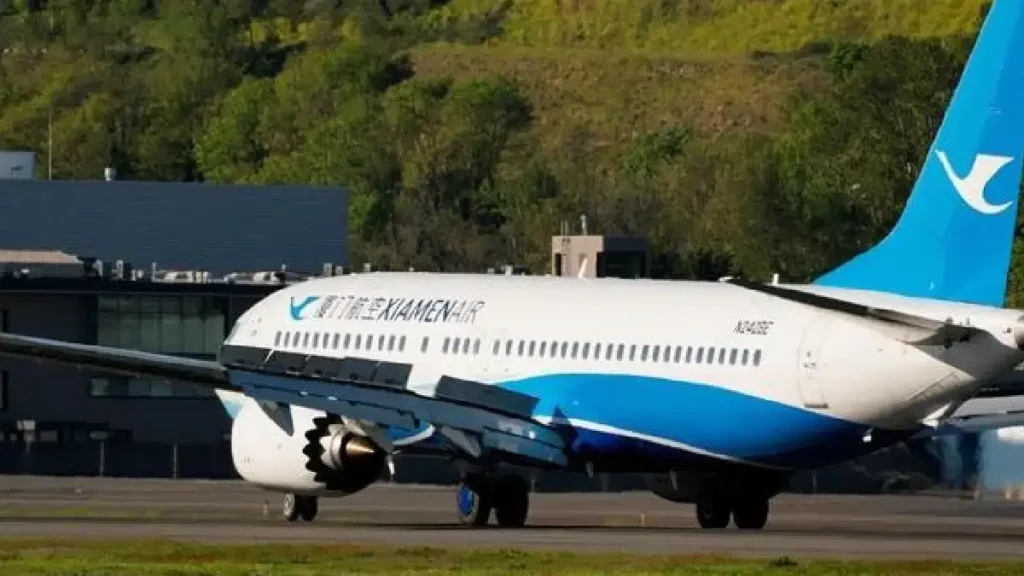
This means Boeing’s relationship with China has historically involved more than selling completed aircraft.
It includes industrial cooperation, supplier relationships, training, maintenance and other services.
A prolonged reduction in new orders can therefore affect the broader commercial relationship, while renewed aircraft purchases can create opportunities across several parts of the aviation ecosystem.
Boeing vs Airbus in China’s Commercial Aircraft Market
| Factor | Boeing | Airbus |
|---|---|---|
| Major aircraft families | 737 family, 787, 777/777X | A320 family, A330, A350 |
| China market position | Major historical presence, but limited major new orders since 2017 | Large established fleet and continued market activity |
| Recent China development | 200-aircraft commitment announced in May 2026 | Continued presence and industrial footprint |
| China manufacturing | Boeing has operated completion and delivery activities and supplier relationships | Final assembly facility in Tianjin |
| Long-term market outlook | Boeing forecasts substantial Chinese aircraft demand | Airbus also forecasts substantial Chinese aircraft demand |
The table highlights why the current Boeing China deal matters. Boeing is not entering an empty market. It is attempting to regain commercial momentum in a market where Airbus already has significant industrial and airline relationships.
Neither manufacturer’s long-term forecast guarantees future orders. Airline fleet decisions can change because of traffic, financing, aircraft availability, regulation, geopolitics and other factors.
What the Boeing China Situation Means for U.S.-China Trade
Commercial aircraft are among the most visible examples of high-value trade between the United States and China.
A Boeing order can involve American manufacturing, suppliers, engines, aircraft components, engineering and long-term services.
The May agreement was therefore significant in the context of broader U.S.-China trade negotiations.
Reuters reported that the May package included commitments involving Boeing aircraft as well as other trade measures. China also said the United States would provide guarantees concerning aircraft engine parts and components connected with the Boeing agreement.
The aircraft issue demonstrates how commercial transactions can intersect with government-to-government relations.
At the same time, airline purchases ultimately involve commercial decisions. Boeing CEO Kelly Ortberg has said future orders would be announced by airlines according to their own timing, emphasizing the role of individual carriers in the purchasing process.
Boeing’s Broader Commercial Aircraft Business
The China issue comes as Boeing continues to rebuild its commercial aircraft operations and work through a large global backlog.
Boeing’s second-quarter 2026 results showed 314 commercial aircraft deliveries during the first six months of the year, including 243 737s, 16 767s, 15 777s and 40 787s. At June 30, Boeing reported a commercial-airplane backlog valued at approximately $596.7 billion.
The company’s commercial portfolio includes the 737 family of single-aisle aircraft, the 787 Dreamliner and the 777/777X widebody programs.
Boeing’s 2026 Commercial Market Outlook projects nearly 44,000 new commercial airplanes globally over the next 20 years, with the worldwide commercial fleet expected to exceed 50,000 aircraft by 2045.
China is an important part of that global market.
The challenge for Boeing is therefore not simply producing aircraft. It also needs to maintain relationships with major international airline customers and ensure that geopolitical and supply-chain developments do not prevent aircraft from reaching those markets.
Why a New Boeing-China Deal Has Become Difficult
Several factors have complicated the Boeing-China relationship.
The first is the broader U.S.-China political and trade relationship. Tariffs, export restrictions and negotiations over technology and critical materials can affect commercial transactions.
The second is supply reliability.
Chinese officials previously raised concerns about continued access to aircraft engine parts and components. Boeing subsequently said it could provide aftermarket support for the 200-aircraft deal, subject to the applicable rules governing global sales of parts.
The third is competition.
Airbus has an established manufacturing footprint in Tianjin and a large Chinese fleet. That gives Chinese airlines an alternative source of aircraft when making fleet decisions.
The fourth is Boeing’s own operational history.
The company has faced production, certification and supply-chain challenges across its commercial aircraft programs. Those issues are separate from the U.S.-China political relationship but can influence airline purchasing and delivery schedules.
No single factor fully explains the current situation.
What Happens to Boeing’s Existing China Orders?
The immediate question is how the May 200-aircraft commitment moves from a high-level announcement toward completed transactions.
The latest public information provides some progress markers.
Greer said around 140 orders were in a good state and another 10 were being documented. Reuters also reported that one person briefed on the matter believed final details for part of the May agreement could potentially be announced during the summit if contracts were finalized.
That does not establish that all 200 aircraft have become firm, completed orders.
It is useful to distinguish several stages:
Announced commitment: A company or government publicly states an intention to purchase aircraft.
Firm order: The purchase has been formally contracted under the applicable commercial terms.
Production: The manufacturer builds the aircraft.
Delivery: The aircraft is transferred to the customer.
Acceptance: The customer formally accepts the aircraft under the applicable transaction terms.
These stages can take time, particularly for a large fleet transaction involving multiple airlines.
What Boeing and China Could Do Next
The next developments can be measured through concrete commercial and government actions rather than assumptions about future negotiations.
Readers will be able to monitor whether additional portions of the May 200-aircraft commitment are formally documented, whether Chinese airlines announce specific Boeing purchases and whether aircraft deliveries begin progressing under the agreement.
Future government statements about trade and aviation policy will also be relevant.
Boeing’s production and delivery figures will provide another measure of whether Chinese aircraft purchases are translating into completed deliveries.
Airbus’ activity in China will remain important as well because Chinese airlines have access to both major Western commercial aircraft manufacturers.
The broader U.S.-China trade relationship will continue to influence the environment in which aircraft purchases take place.
For now, the September 24 Reuters report indicates that Boeing’s immediate focus is on advancing the existing 200-aircraft commitment rather than relying on a new large announcement during the summit.
Key Facts About the Boeing China Deal
- Reuters reported on September 24, 2026, that hopes for a new major Boeing aircraft commitment from China were fading ahead of the Trump-Xi summit.
- China announced a commitment to buy 200 Boeing aircraft in May 2026.
- The May commitment represented Boeing’s first major Chinese aircraft deal in nearly a decade.
- U.S. Trade Representative Jamieson Greer said about 140 orders were in a good state as of September 21.
- Greer said another 10 orders were being formally documented.
- Boeing CEO Kelly Ortberg has said additional orders would be announced by airlines according to their own timing.
- Boeing has been largely shut out of major new Chinese orders since 2017, according to Reuters.
- Airbus has continued expanding its presence in China and operates a final assembly facility in Tianjin.
- Boeing’s 2024 China forecast projected demand for 8,830 new aircraft through 2043.
- The status of future Boeing orders remains dependent on commercial, regulatory, supply-chain and broader U.S.-China developments.
Boeing China Deal — Frequently Asked Questions
Why are hopes fading for a new Boeing China deal?
Reuters reported on September 24 that two people briefed on the matter said expectations for a new Chinese commitment were weakening ahead of the Trump-Xi summit. Negotiations were still described as fluid, while Boeing was focusing on finalizing the May 200-aircraft commitment.
Is China cancelling its Boeing aircraft orders?
There is no basis in the latest Reuters report for saying that China has cancelled the 200-aircraft commitment. Instead, the latest reporting indicates that the existing agreement is still being worked through, with some orders in good standing and others being formally documented.
How many Boeing aircraft has China agreed to buy?
China announced a commitment to purchase 200 Boeing aircraft in May 2026. Trump had previously discussed the possibility of the number eventually increasing substantially, but the latest reporting does not establish a new larger commitment.
What is the status of Boeing’s existing China aircraft deal?
U.S. Trade Representative Jamieson Greer said on September 21 that about 140 orders were in a good state and another 10 were being documented. The process for the remaining aircraft was still developing.
Why is China important to Boeing?
China is one of the world’s largest aviation markets and has significant long-term requirements for new aircraft. Boeing’s 2024 forecast projected 8,830 new aircraft deliveries in China over 20 years.
Why is Airbus gaining ground in China?
Reuters reported that Airbus has expanded its presence in China during the period when Boeing received few major new orders. Airbus also operates a final assembly line in Tianjin and describes China as its largest single-country market by fleet.
Will Boeing get a new China aircraft deal during the Trump-Xi summit?
The latest reporting does not establish that a new deal will be announced during the summit. Reuters reported that expectations for a fresh major commitment had weakened, while negotiations remained in flux.
What aircraft does Boeing sell to Chinese airlines?
Boeing’s commercial portfolio includes the 737 family, 787 Dreamliner and 777 family of aircraft. Specific Chinese airline purchases depend on individual contracts and should be distinguished from broader aircraft commitments.
Why have Boeing-China aircraft orders been affected by U.S.-China tensions?
Commercial aircraft transactions can be affected by tariffs, export controls, component availability, geopolitical relations and regulatory issues. Reuters has also reported concerns surrounding reliable access to aircraft engine parts and components.
How does the Boeing China situation affect the U.S. aerospace industry?
Boeing is a major U.S. aerospace manufacturer, and aircraft sales involve production, suppliers, engineering, components and long-term services. China is also a major aviation market, making commercial aircraft transactions relevant to the wider U.S.-China trade relationship.
What should investors watch next for Boeing?
Key developments include formalization of the May aircraft commitment, announcements from Chinese airlines, Boeing deliveries, production trends, future U.S.-China trade developments and Airbus activity in China.
Is Boeing losing the China market to Airbus?
The current data shows Airbus has maintained and expanded a strong position in China while Boeing has faced a prolonged period of limited major new orders. However, that does not establish that Boeing has permanently lost the Chinese market. The May 200-aircraft commitment shows that Boeing remains involved in China’s commercial aviation market.