






Elizabeth Warren Paramount Warner Bros merger developments have entered a critical new phase, with Paramount Skydance and a coalition of state attorneys general now engaged in settlement discussions that could determine the fate of the proposed $111 billion acquisition of Warner Bros. Discovery.




The talks have advanced in recent days and could produce an agreement as soon as this weekend or early next week. A federal judge has scheduled formal settlement proceedings for October 14-15, 2026, in San Francisco, with a trial date currently set for March 2027.
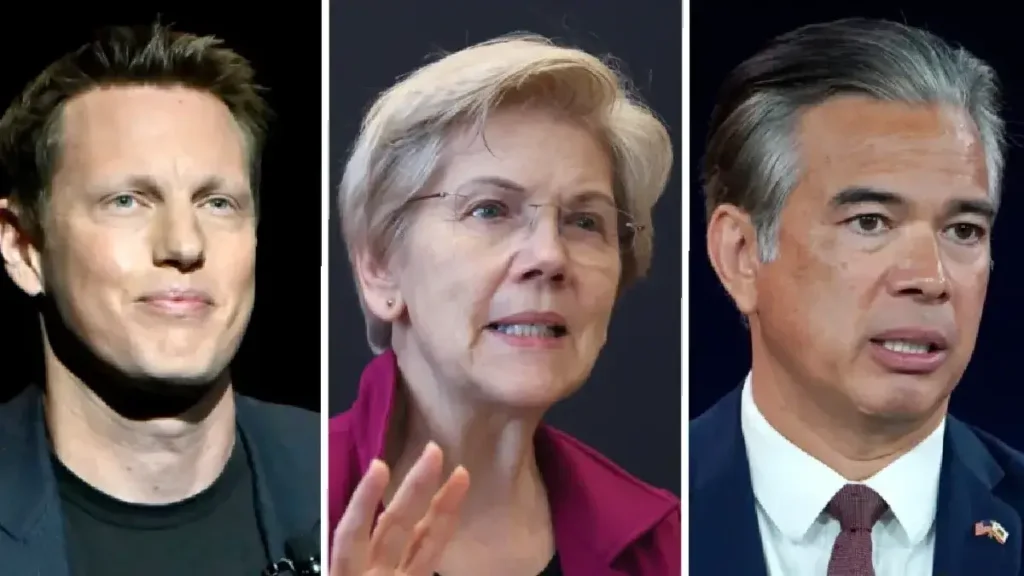
However, the discussions have triggered sharp criticism from merger opponents, including the Block the Merger coalition, which argued Saturday that any agreement built on unenforceable concessions would constitute “a win only for David Ellison.” Senator Elizabeth Warren also issued a statement Saturday warning that it would be a “massive mistake to cave” on the litigation.
The proposed transaction remains subject to the unresolved legal challenge and has not closed. Settlement talks are ongoing, and the exact terms remain uncertain.
What Is Happening With the Paramount-Warner Bros. Merger?
Paramount Skydance, led by CEO David Ellison, has been seeking to acquire Warner Bros. Discovery in a transaction valued at approximately $110 billion to $111 billion. The deal would combine two of Hollywood’s five major film studios and bring together major media assets under one corporate umbrella.
The acquisition has already received regulatory clearance from the U.S. Department of Justice and numerous international jurisdictions, including the European Commission, Australia, China, Germany, France, Spain, Canada, and South Korea. Paramount has stated that regulatory bodies representing 65 jurisdictions have either cleared the transaction or elected not to challenge it on competition or foreign direct investment grounds.
However, the merger faces a significant remaining obstacle: a lawsuit filed in July 2026 by California Attorney General Rob Bonta and 11 other Democratic state attorneys general, who allege the transaction violates antitrust law.
The settlement discussions have advanced in recent days, with a deal potentially reachable in the coming days. Paramount shares rose as much as 8.7% in after-hours trading following reports of the advanced talks. Warner Bros. Discovery shares climbed 8.6%.
A spokesperson for Bonta’s office stated that potential settlement talks are confidential and that the office “cannot confirm or deny whether settlement talks are occurring or their alleged substance.”
Why Are State Attorneys General Trying to Block the Deal?
The lawsuit, filed on July 13, 2026, in the U.S. District Court for the Northern District of California, alleges that the proposed merger would substantially lessen competition in violation of Section 7 of the Clayton Act.
The plaintiff states include California, Arizona, Colorado, Connecticut, Massachusetts, Minnesota, Nevada, New Jersey, New Mexico, New York, Oregon, and Washington.
According to the complaint, the merger would combine two of the nation’s five major film distributors, leaving only four to control over 85 percent of all wide-release theatrical films in the United States. It would also combine two of the five major owners of basic cable channels, leaving only two companies—the combined entity and Disney—to control 59 percent of all basic cable in the country.
The attorneys general allege that the merger would harm movie theaters, basic cable distributors, and ultimately audiences nationwide through higher prices, lower quality, and reduced content output. The complaint specifically cites concerns about theatrical distribution, cable programming licensing, and the concentration of “anticipated top-grossing theatrical films.”
These are allegations made by the plaintiffs in their legal filing and do not constitute established findings of fact.
What Has Elizabeth Warren Said About the Paramount-Warner Bros. Merger?
Senator Elizabeth Warren (D-Mass.) has been a consistent critic of the proposed transaction, raising concerns about media consolidation, competition, and the potential for political influence over news organizations.
In a statement issued Saturday, September 19, 2026, Warren warned against settling the antitrust lawsuit. “As Trump tries to ban CNN from the White House, it would be a massive mistake to cave on the Paramount merger,” Warren said. “The last thing we need is another Trump-controlled media conglomerate abusing its power to stomp out competition. This is a dangerous merger.”
Warren’s statement referenced the Trump administration’s recent denial of access to the White House press pool for certain outlets, including CNN, which is owned by Warner Bros. Discovery.
In June 2026, Warren said that corporate mergers approved during the Trump administration could be undone by a future administration. “The deals that are being cut today are occurring in the shadow of a coming political tsunami of anger against these giant corporations,” she said.
Warren has also raised concerns about foreign investment in the deal. In June 2026, she joined Senators Cory Booker and Adam Schiff in urging the Federal Communications Commission to halt any premature closing of the merger and conduct a full national security review, citing nearly 49.5% foreign ownership in the combined company.
The senators noted that the investment includes Gulf sovereign wealth funds from Saudi Arabia, Abu Dhabi, and Qatar, with documented histories of censorship and political influence.
What Is the Block the Merger Coalition Saying?
The Block the Merger coalition, a group of more than 40 free speech, pro-democracy, and antitrust organizations along with entertainment industry members and labor unions, issued a sharp statement Saturday opposing the reported settlement discussions.
“The rumored ‘deal’ to usher the Paramount-Warner Bros. merger forward is an insult to everyone who has stood up against this harmful transaction and to the hundreds of thousands of workers, journalists and consumers who will be hurt if it goes forward,” the coalition said in a statement.
The coalition specifically criticized the structure of the potential settlement: “Let’s be very clear: an agreement based on unenforceable concessions is a win only for David Ellison. It is an L for everyone else.”
The group said more than 75,000 people have joined its campaign urging state attorneys general to reject any settlement and block the merger outright. It cited support from industry figures including actors Bryan Cranston, Mark Ruffalo, Jane Fonda, and directors Denis Villeneuve and Sophia Coppola, as well as national leaders including Senator Warren.
The coalition’s characterization of the settlement as “a win only for David Ellison” is the group’s own assessment and does not represent a legal finding or an independent conclusion.
Who Is David Ellison and Why Is He Central to the Deal?
David Ellison is the CEO of Paramount Skydance and the son of Oracle co-founder Larry Ellison. He has been the driving force behind Paramount’s bid to acquire Warner Bros. Discovery.
In a memo to staff, Ellison expressed confidence that the transaction would ultimately be completed. “We remain highly confident that this transaction does not pose any legal issues, and we will complete it and bring these two companies together,” he said.
Ellison has also threatened to move Paramount’s operations out of California if a settlement is not reached, a move that has prompted concern among California politicians about potential job losses. Los Angeles Mayor Karen Bass and other Democratic officials have urged Attorney General Bonta to reach a settlement to keep Paramount in the state.
According to the merger agreement, Paramount will be required to pay late fees of $7 million per day to Warner Bros. Discovery shareholders starting at the end of September if a deal is not reached. A failed acquisition would force Paramount to pay $7 billion to Warner Bros. Discovery.
What Could the Paramount-Warner Bros. Merger Create?
If completed, the merger would bring together major entertainment and media assets under a single corporate structure. The combined company would include Paramount Pictures, Warner Bros., HBO, CBS, CNN, Comedy Central, Food Network, TBS, and numerous streaming and production operations.
The complaint filed by the state attorneys general notes that the combined company would control well-known franchise intellectual property including Top Gun, Mission: Impossible, and Star Trek from Paramount, and Batman, Harry Potter, and Lord of the Rings from Warner Bros.
The merger would create a media company with significant scale in film production, television networks, and streaming platforms, positioning it to compete more effectively against technology companies and streaming rivals, according to Paramount’s stated rationale for the deal.
Why Are Settlement Talks Happening Now?
Several practical factors have created pressure for both sides to negotiate.
For Paramount, the $7 million per day “ticking fee” that begins accruing on October 1 creates a significant financial incentive to resolve the litigation quickly. The company has also stated that absent the lawsuits, it would have been able to close the transaction in the coming weeks.
For the state attorneys general, the litigation involves significant resources and coordination among 12 states. Bonta has also faced political pressure from California officials concerned about the potential loss of Paramount’s operations and jobs if the company follows through on threats to leave the state.
The court has ordered formal settlement talks for October 14-15, though reports indicate that discussions have accelerated in advance of that schedule.
What Concessions or Remedies Have Been Reported?
Reports of potential settlement terms have focused on behavioral commitments rather than structural remedies.
The reported terms include Paramount agreeing to operate the two companies’ movie studios separately for a period rather than immediately combining them. Other reported elements include commitments on the number of theatrical releases—Paramount has offered to release at least 30 films per year with 45-day theatrical windows—and potential independent content monitoring for CNN.
Attorney General Bonta has previously stated that he does not favor behavioral remedies because they are difficult to enforce. He has said he prefers structural changes, such as the sale of assets, and said that a sale of some intellectual property “could be a component” of a settlement.
Structural remedies typically involve divestitures or the sale of parts of the combined business, while behavioral commitments are promises about future conduct. Opponents of the deal have argued that behavioral promises are harder to monitor and enforce after a merger closes.
No specific concession has been accepted or finalized, and reports of potential terms remain unconfirmed by the parties.
Why Does Enforcement Matter in a Merger Settlement?
The debate over remedies centers on how effectively different types of commitments can be monitored and enforced after a merger is completed.
Behavioral commitments—such as promises to maintain certain release patterns or editorial independence—require ongoing oversight and can be difficult to enforce if circumstances change or if the company’s incentives shift over time.
Structural remedies, by contrast, involve permanent changes to the corporate structure, such as selling assets or maintaining separate business units. These are generally viewed as more durable because they alter the competitive landscape directly rather than relying on continued compliance with promises.
Bonta has consistently stated his preference for structural remedies, and his willingness to accept behavioral commitments as the primary component of any settlement has been a key question in the negotiations.
Paramount’s Position on the Merger
Paramount has consistently maintained that the transaction is pro-competitive and legally sound.
In a memo to staff, CEO David Ellison stated that regulatory bodies representing 65 jurisdictions have either cleared the transaction or elected not to challenge it. “These clearances reflect both the facts and the law: this combination is fully consistent with the anti-trust laws, and will create a stronger, more competitive media company with the scale to invest more deeply in storytelling, expand consumer choice and compete more effectively in a rapidly changing entertainment landscape,” he wrote.
Ellison also said the lawsuits filed by the state attorneys general and the Writers Guild of America are preventing the transaction from closing. “Absent the lawsuit filed by the California Attorney General along with 11 other attorneys general, and a separate lawsuit from the Writers Guild of America, both seeking to block the merger, we would have been able to close the transaction in the coming weeks.”
Paramount has declined to comment publicly on the settlement discussions.
How Many Regulators Have Approved the Deal?
Paramount has stated that regulatory bodies representing 65 jurisdictions have either cleared the transaction or elected not to challenge it on competition or foreign direct investment grounds.
The U.S. Department of Justice approved the merger on competition grounds earlier in 2026. The European Commission granted approval with concessions related to film distribution. A decision by the United Kingdom’s Competition and Markets Authority was still pending as of the latest reporting.
The Federal Communications Commission approved equity investments from three Middle Eastern sovereign wealth funds backing Paramount’s bid on September 17, 2026. The funds are collectively providing approximately $24 billion in financing, resulting in foreign investors holding 49.5 percent of the combined company.
However, these regulatory clearances do not automatically resolve the separate U.S. state antitrust litigation. The state attorneys general lawsuit remains the primary legal obstacle to closing.
What Is the Status of the Antitrust Lawsuit?
The lawsuit, State of California v. Paramount Skydance Corporation, was filed on July 13, 2026, in the U.S. District Court for the Northern District of California.
The plaintiffs are seeking to permanently enjoin Paramount from acquiring Warner Bros. Discovery. The states filed a motion for a temporary restraining order and preliminary injunction, arguing that the merger would cause irreparable harm if allowed to proceed.
Paramount agreed not to close or integrate the companies until the earlier of five days after the litigation concludes or June 1, 2027.
A trial is currently scheduled for March 2, 2027. Settlement talks could change the litigation path if the parties reach an agreement.
What Could Happen Next?
Three main scenarios remain possible, and no outcome is guaranteed.
Scenario 1: Settlement. The parties could reach an agreement on remedies acceptable to the states, potentially resolving the litigation and allowing the merger to proceed. Any settlement would likely need the support of all 12 Democratic states and the Writers Guild of America, which has a separate lawsuit challenging the deal.
Scenario 2: No Settlement. The litigation could continue toward trial, with the states seeking to permanently block the merger. The trial is currently scheduled for March 2027.
Scenario 3: Revised Deal Terms. The companies could negotiate additional structural or behavioral remedies if reported and legally permissible, potentially addressing the states’ concerns without a formal settlement.
Why This Matters to Hollywood, Workers and Viewers
The proposed merger has significant implications for the entertainment industry and its workforce.
For Hollywood, the combination of two major studios would reshape the competitive landscape for film production and distribution. The state attorneys general allege that the merger would reduce the number of major film distributors from five to four and give the combined company control over a substantial share of wide-release theatrical films.
For workers, the merger could affect employment at both companies, particularly if operations are consolidated or if Paramount follows through on threats to relocate. California officials have warned that more than 50,000 jobs could be at risk if Paramount leaves the state.
For viewers and consumers, the merger could affect the availability and pricing of content across theatrical releases, cable networks, and streaming platforms. The states allege that reduced competition would lead to higher prices and lower quality.
For journalists, the combination of CNN and CBS News under one corporate umbrella has raised concerns about editorial independence and media diversity. Warren and other critics have pointed to the Ellison family’s connections to President Trump as a particular concern.
These are potential effects and concerns raised by parties to the dispute; they are not established outcomes.
What We Know vs. What Has Not Been Confirmed
Confirmed/Documented
- Paramount Skydance is seeking to acquire Warner Bros. Discovery for approximately $110 billion to $111 billion.
- Twelve state attorneys general filed an antitrust lawsuit to block the merger on July 13, 2026.
- A federal judge has scheduled settlement proceedings for October 14-15, 2026.
- A trial is scheduled for March 2, 2027.
- Paramount has received regulatory clearances from numerous jurisdictions.
- The merger has not closed and remains subject to the litigation.
- Senator Elizabeth Warren has publicly criticized the merger and warned against settling.
- Block the Merger coalition has publicly opposed a settlement based on behavioral remedies.
Reported But Not Final
- Settlement talks between Paramount and state attorneys general have advanced in recent days.
- A settlement could be reached as soon as this weekend or early next week.
- Reported settlement terms include operating studios separately, theatrical release commitments, and CNN editorial independence measures.
Not Confirmed
- A final settlement agreement.
- A guaranteed closing date for the merger.
- Final concession terms.
- A guaranteed merger completion.
- Any claim that the merger will definitely succeed or fail.
Frequently Asked Questions
Is the Paramount-Warner Bros. merger completed?
No. The merger has not closed. It remains subject to an unresolved antitrust lawsuit filed by 12 state attorneys general. Settlement discussions are ongoing, but no final agreement has been announced.
Why are state attorneys general challenging the merger?
The attorneys general allege that the merger would violate antitrust law by substantially reducing competition in theatrical film distribution and basic cable programming, leading to higher prices, lower quality, and reduced content for consumers. These are allegations that have not been proven in court.
What has Elizabeth Warren said about the deal?
Senator Warren has called the merger “dangerous” and warned that settling the lawsuit would be “a massive mistake.” She has raised concerns about media consolidation, competition, and political influence over news organizations including CNN and CBS News.
Who is David Ellison?
David Ellison is the CEO of Paramount Skydance and the son of Oracle co-founder Larry Ellison. He is the driving force behind Paramount’s bid to acquire Warner Bros. Discovery and has expressed confidence that the transaction will ultimately be completed.
What is Block the Merger?
Block the Merger is a coalition of more than 40 free speech, pro-democracy, and antitrust organizations, along with entertainment industry members and labor unions, opposing the Paramount-Warner Bros. Discovery merger. The group has argued that a settlement based on unenforceable concessions would benefit David Ellison at the expense of workers, journalists, and consumers.
Is Paramount negotiating with the state AGs?
Yes. Multiple reports indicate that Paramount and the state attorneys general are engaged in settlement discussions. The talks have reportedly advanced in recent days, though no final agreement has been confirmed.
When are settlement talks scheduled?
Formal court-ordered settlement proceedings are scheduled for October 14-15, 2026, in San Francisco. Reports indicate that discussions have accelerated in advance of that schedule.
Could the merger still be blocked?
Yes. The litigation remains active, and the states are seeking a permanent injunction to block the merger. A trial is scheduled for March 2027 if no settlement is reached.
What happens if there is no settlement?
If no settlement is reached, the litigation would proceed toward trial, currently scheduled for March 2027. The states would continue seeking to permanently block the merger.