







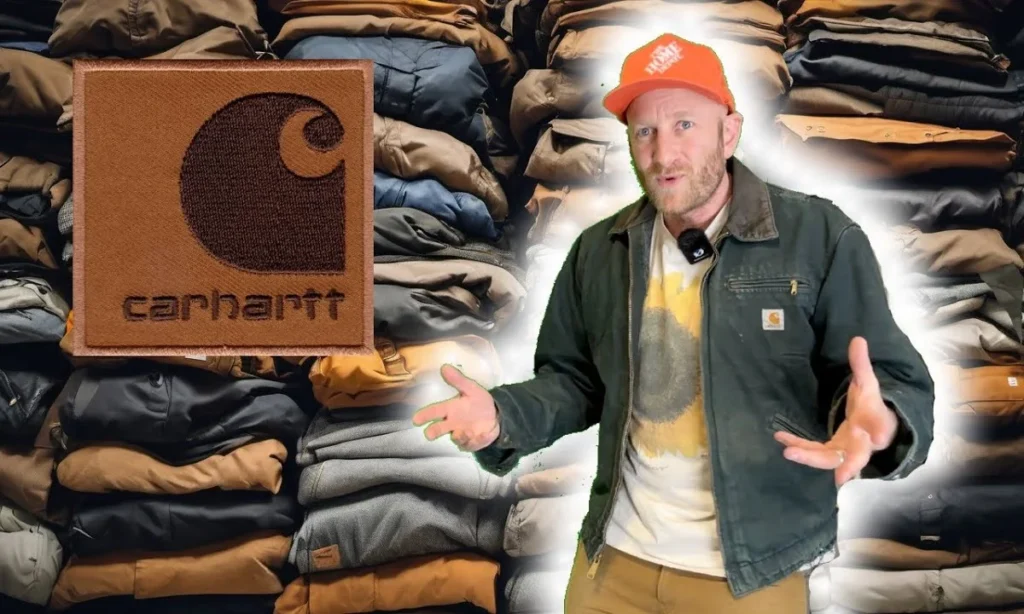
If you have been following the resale world for even a short time, The vintage Carhartt jackets, you have likely noticed one piece of clothing that refuses to fade away. once a purely functional item for tradesmen and farmers, has become a pillar of online reselling.





As we move through 2026, the market for these heavyweight work jackets has not only held steady but has matured into something more predictable and, for the careful flipper, more profitable than ever. The days of finding a pristine Detroit jacket for five dollars at a rural thrift store are mostly gone, but that does not mean the opportunity has passed.
Instead, success in 2026 requires a sharper eye, a better understanding of condition and authenticity, and a willingness to adapt to new buyer preferences. This full guide will walk you through the current state of flipping vintage Carhartt jackets, from where to source them to how to price them for a fast and fair sale, all while keeping your resale practice honest and sustainable.
Why 2026 Is Different for Vintage Carhartt Flippers
The vintage Carhartt boom that started around 2018 has now settled into a more mature phase. In 2026, casual resellers who simply buy any old Carhartt jacket and list it at a high price are finding that their inventory sits for months. The buyers have become educated.
They know the difference between a pre 1998 blanket lined jacket and a modern polyfill model. They look for specific style codes like the J97, the C03, and the early Sandstone Duck finishes. More importantly, they have learned to spot overpriced common pieces. The good news is that demand remains extremely strong for the right jackets.
What has changed is that buyers in 2026 are searching for character and rarity rather than just any workwear name. A faded moss green jacket with a broken in lining and a faint paint stain will sell faster than a clean but common brown jacket. The flipper who understands this shift and sources accordingly will continue to do very well.
Where to Find Vintage Carhartt Jackets in 2026
The sourcing landscape has changed considerably in the past few years. The traditional thrift store chain has become more competitive, with many stores pulling valuable workwear for their own online platforms.
However, this does not mean you cannot find vintage Carhartt jackets in the wild. Small town thrift shops that are not part of large chains remain excellent hunting grounds, especially those located near agricultural or industrial areas.
Estate sales in the Midwest and parts of the South are another strong source, as many original owners bought their Carhartt jackets in the 1980s and 1990s and never parted with them until now. Online sourcing has also become more viable if you know what to look for.
Sellers on general marketplace platforms who list a jacket simply as “old work coat” are still common, and those listings can yield excellent deals. The key in 2026 is to search broadly, check frequently, and be ready to drive an hour or two for a promising collection. Patience and persistence have replaced luck as the main tools of the successful flipper.
How to Evaluate a Vintage Carhartt Jacket Like a Pro
When you finally hold a potential find in your hands, you need to evaluate it quickly and accurately. Start with the tag. Vintage Carhartt jackets from the golden era, roughly 1985 to 2000, use a specific tag system.
The early white or tan tags with black lettering and a style code that begins with a number are the most desirable. Later tags from the early 2000s are still vintage but generally sell for less. Next, check the lining. Blanket linings in good condition are worth more than quilted or mesh linings.
Run your hand along the cuffs and the hem. These areas wear out first on a real work jacket. A small hole at a cuff can be acceptable, but frayed fabric that is falling apart will hurt your resale value significantly.
Smell is another critical factor. Many vintage Carhartt jackets carry decades of barn dust, cigarette smoke, or machine oil. Some smells can be removed with careful washing, but others are permanent. Be honest with yourself about whether a jacket can be refreshed or if it should be passed over.
Finally, look at the logo patch. A cracked, faded, or slightly peeling patch adds character and is generally preferred by buyers. A completely destroyed patch is less desirable unless the jacket is otherwise exceptional.
Cleaning Vintage Carhartt Jackets for Resale in 2026
Cleaning methods have become a point of strong opinion among vintage buyers. Some purists argue that a vintage work jacket should never be washed, as washing removes the authentic patina and softness that comes from years of use. Others refuse to buy any jacket that has not been thoroughly cleaned.
The smart flipper falls somewhere in the middle. For a jacket that is simply dusty or has a mild storage smell, hanging it outside in fresh air for several days and then steaming it lightly is often enough. For a jacket that is genuinely dirty or has a strong odor, a gentle wash is appropriate.
Fill a bathtub with cool water and a small amount of a mild, natural soap. Submerge the jacket and gently press the water through the fabric without scrubbing or twisting. Rinse with cool water until the soap is gone. Press out excess water by rolling the jacket in clean towels, then lay it flat to dry away from sunlight and heat.
Never put a vintage Carhartt jacket in a washing machine or dryer, as the agitation will damage the blanket lining and the logo patch, and the heat will shrink the cotton duck fabric permanently. Once dry, the jacket will feel stiff. This is normal. With light wear or a gentle steaming, the fabric will relax again.
Photographing Your Jacket for a Fast Sale
In 2026, buyers expect professional looking photographs even from small scale resellers. You do not need a fancy camera. A modern smartphone camera combined with natural daylight is more than sufficient. Hang the jacket on a plain wall, preferably a neutral color like light gray or white.
Photograph the front of the jacket hanging straight, then the back, then each side. Open the jacket and photograph the entire lining. Take a close up of the tag showing the style code, size, and country of origin.
Photograph the logo patch, the zipper, and both cuffs and the hem. If there are any stains, holes, or unusual wear marks, photograph those clearly as well. Finally, include a photograph of the jacket being worn if possible.
A simple shot of the jacket on your body from the front and side helps buyers understand the true fit, which is especially important because vintage Carhartt sizing runs much larger than modern sizing.
A vintage medium often fits like a modern large or even extra large. Being transparent about fit in your photographs and your written description will reduce the chance of returns.
Pricing Your Vintage Carhartt Jacket for 2026
Pricing has become more scientific in 2026. The days of guessing a high number and hoping for a sale are over. Before you set a price, search for sold listings of the exact or very similar jacket on resale platforms. Pay attention to the condition of those sold jackets compared to yours.
A clean, no hole jacket with a rare color like burgundy, navy, or forest green will command the highest prices, often between one hundred fifty and two hundred fifty dollars depending on the model. Common brown jackets in good condition typically sell between seventy five and one hundred forty dollars.
Jackets with significant damage like large rips, missing lining, or broken zippers are harder to sell but can still move quickly if priced fairly, usually between thirty and sixty dollars for a patient flipper. Size continues to affect price as well.
Small and medium jackets sell fastest and often at a premium because the fashion driven market prefers a slimmer fit. Large and extra large jackets sell more slowly but can still fetch good prices.
Double extra large and triple extra large are the hardest to sell unless they are a very rare color or style. In 2026, pricing fairly and pricing to move is generally smarter than holding out for a top dollar offer that may never come.
Where to Sell Vintage Carhartt Jackets in 2026
The best platform for selling vintage Carhartt jackets depends on your goals and your patience level. Large general marketplaces offer the widest audience and the fastest potential sales, but they also come with higher fees and more competition from other resellers.
Smaller, vintage focused platforms attract buyers who are specifically looking for old workwear and are often willing to pay slightly higher prices, but the audience size is smaller and sales can take longer.
Many successful flippers in 2026 use a combination approach. They list their most common jackets on larger platforms to move inventory quickly and reserve their rare, high value pieces for vintage only marketplaces where collectors will recognize the value. Social media marketplaces have also become surprisingly effective for local sales, especially in cities with strong vintage fashion scenes.
A local buyer who can try on the jacket before buying will often pay close to your asking price without haggling over shipping costs or fit concerns.
About Flipping Vintage Carhartt Jackets in 2026
How can I tell if a vintage Carhartt jacket is authentic and not a reproduction?
Authentic vintage Carhartt jackets have specific tag details that reproductions almost always get wrong. Look for the brown or white woven tag with a style code that matches known vintage models. The brass zippers should have the Carhartt name or a period correct brand like YKK or Ideal.
The stitching on vintage jackets is heavy and slightly uneven in places, while reproductions tend to have perfect, machine uniform stitching. The duck canvas on a real vintage jacket feels dense and stiff when new but softens beautifully with age, whereas reproductions often feel lighter from the start.
What are the most profitable vintage Carhartt jacket styles to flip in 2026?
The most consistently profitable styles are the J97 sandstone duck jacket with blanket lining, the C03 firm duck chore coat, and the early Detroit jackets with the smaller logo patch.
Rare colors like teal, burgundy, and mustard yellow sell for significantly more than common brown. Women’s vintage Carhartt jackets, which are much harder to find, can also command premium prices because demand from female buyers has grown steadily in recent years.
Should I repair damage on a vintage Carhartt jacket before selling it?
This depends on the damage and your skill level. Small loose buttons can be sewn back on without hurting value. A broken zipper is usually not worth repairing because replacing a zipper on heavyweight duck canvas is expensive and requires specialized equipment.
Small holes in the lining can be left as is, with disclosure in the listing. Holes in the outer shell are harder to evaluate. A tiny hole in an inconspicuous spot is fine to leave. A large hole should be disclosed and priced accordingly. Most vintage buyers prefer an unrepaired jacket with honest wear over a poorly done amateur repair.
How do I price a vintage Carhartt jacket that has paint stains or oil marks?
Paint stains and oil marks are common on authentic workwear. Some buyers specifically seek out these jackets because the stains tell a story. Generally, a few small paint drips or a light oil mark does not lower the value significantly and may even increase it for the right buyer.
Heavy stains that cover large areas or that smell strongly of oil will lower the value by thirty to fifty percent compared to a clean example. The most important rule is to photograph every stain clearly and describe it honestly in your listing. Surprise stains are the number one reason for returns and negative feedback.
What time of year is best for selling vintage Carhartt jackets?
The selling season for heavy work jackets begins in September and runs through March in most regions. Prices peak in October and November as buyers prepare for winter. Sales slow down considerably from April through August, though rare and highly desirable jackets can sell at any time of year.
Smart flippers stock up during the summer months when thrift stores are less crowded and prices on jackets are often lower, then list their inventory in the fall. If you find an excellent jacket in June, it is still worth listing immediately because a motivated buyer somewhere in a cooler climate or the Southern Hemisphere may be looking.
How do I deal with the musty smell that many vintage Carhartt jackets have?
Musty smells come from decades of storage in basements and attics. The most effective home remedy is fresh air and sunlight. Hang the jacket outside on a dry, breezy day for several hours, then bring it inside and repeat the next day.
Avoid direct intense sunlight for more than an hour at a time because UV rays can fade the fabric. If fresh air does not work, place the jacket in a large plastic bin with an open box of baking soda for a week, checking every few days.
Do not let the baking soda touch the fabric directly. For persistent smells, a gentle bathtub wash as described earlier in this guide is the next step. If the smell remains after washing, the jacket should be sold as is with full disclosure that the odor is permanent. Some buyers in 2026 are still willing to buy smelly jackets at a discount and attempt their own cleaning methods.
Is flipping vintage Carhartt jackets still worth the time and effort in 2026?
For the casual reseller looking for a fun side hustle, flipping vintage Carhartt jackets remains absolutely worthwhile, though expectations should be realistic. You will not find a treasure every week, and you will leave many thrift stores empty handed. However, when you do find a good jacket, the profit margin is still strong.
A jacket bought for twenty dollars and sold for one hundred thirty dollars after fees and shipping is a solid return on a relatively small time investment. For the serious reseller who sources online, travels to estate sales, and builds relationships with thrift store staff, flipping vintage Carhartt jackets can grow into a consistent monthly income.
The key is to treat it as a long term practice rather than a get rich quick scheme. Learn the tags, study the market, and focus on quality over quantity, and you will find that 2026 still holds plenty of opportunity for the dedicated flipper.