







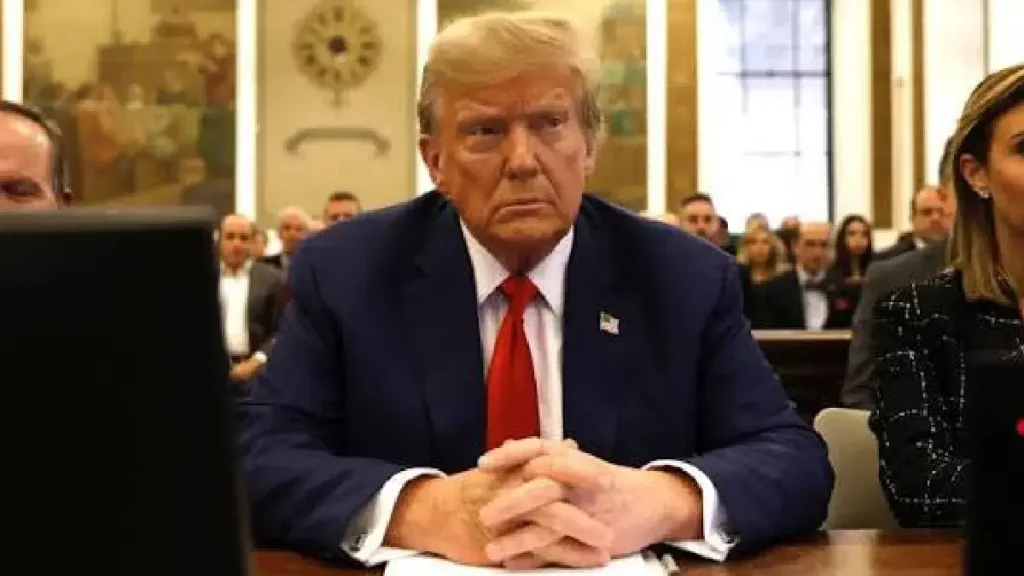
Judge Alvin K. Hellerstein of the U.S. District Court for the Southern District of New York ruled on August 28, 2026, that the President’s arguments were “neither new nor legally sufficient” and that he had failed to show “good cause and diligence” for the request. This marks the third time Judge Hellerstein has blocked Trump’s effort to transfer the case from the New York state court where he was tried and convicted.





What Happened
President Trump’s legal team made a renewed bid to have his state-level criminal case moved to federal court. Their strategy was to leverage a U.S. Supreme Court ruling on presidential immunity, hoping a federal court would then be more receptive to dismissing the conviction. U.S. District Judge Alvin K. Hellerstein denied this request, maintaining that the case involves private conduct, not official presidential acts.
Trump New York Conviction Rejected: Why the Latest Challenge Failed
Judge Hellerstein’s decision was rooted in several key findings. He stated that President Trump was seeking a “second bite at the apple,” a move “the law disfavors.” The judge pointed to a critical strategic error by the defense: instead of immediately seeking removal to federal court after the Supreme Court’s immunity ruling, Trump’s lawyers first asked the state trial judge to set aside the verdict. This delay of nearly two months was characterized by the judge as a “quintessential strategic decision” that did not establish “good cause” for his late request. Most importantly, Judge Hellerstein made a definitive ruling on the scope of presidential immunity in this case, asserting: “Paying hush money to an adult film star or engaging in a cover-up of an embarrassment are not subsumed in presidential immunity.”
Background of the New York Hush-Money Conviction
The case stems from a May 2024 verdict in which Trump was found guilty on 34 felony counts of falsifying business records. The charges were related to a $130,000 hush-money payment made to adult film actor Stormy Daniels during the 2016 presidential campaign. The payment was made to silence Daniels about an alleged sexual encounter, which Trump has consistently denied. In January 2025, days before his second term began, Trump was sentenced to an unconditional discharge, which left the conviction intact but imposed no jail time or other penalties.
Trump’s Legal Arguments and the Judge’s Ruling
President Trump’s legal team argued that the conviction should be overturned based on the Supreme Court’s July 2024 ruling that presidents are immune from prosecution for official acts. They contended that evidence used at trial, including testimony from White House staff, was related to his official duties and thus protected.
Judge Hellerstein unequivocally rejected this interpretation. He ruled that the conduct in question—the hush money payment and its cover-up—was purely personal. In his 35-page filing, he wrote, “There is no way that discussions regarding hush money payments to cover up the President’s relations with Stormy Daniels could be an official act. An affair, or a cover-up of an affair, is not within the ‘outer perimeter’ of the President’s official responsibilities.”
What This Ruling Means
This ruling is a major procedural victory for the Manhattan District Attorney’s office, ensuring the case remains a state conviction for the foreseeable future. It solidifies the legal precedent that the Supreme Court’s immunity decision does not shield a president’s personal conduct from state-level prosecution. This maintains a historic status for Trump as the first former and current U.S. president to be convicted of a crime.
What Happens Next
President Trump’s legal team has already announced they will appeal Judge Hellerstein’s decision. This appeal will go to the 2nd U.S. Circuit Court of Appeals, which had previously sent the case back to Hellerstein for reconsideration. Additionally, Trump is continuing to challenge the conviction through the New York state court appellate process.
FAQ Section
1. What is the latest Trump New York conviction rejected news?
A federal judge, Alvin K. Hellerstein, rejected President Donald Trump’s attempt to move his hush-money conviction from New York state court to federal court. The judge ruled that Trump’s arguments for doing so were legally insufficient, marking his third denial of such a request.
2. Why was Trump’s bid to overturn his conviction rejected?
The judge ruled that Trump’s legal arguments were neither new nor legally sufficient. He also stated that Trump’s team had waited too long to file the request, having first pursued their immunity argument in state court. Most importantly, the judge ruled that the case concerns personal conduct, which is not protected by presidential immunity.
3. What was Trump’s hush-money conviction about?
In May 2024, Trump was convicted on 34 felony counts of falsifying business records. The charges stemmed from a $130,000 payment made to adult film actress Stormy Daniels before the 2016 election to conceal an alleged affair, which Trump has denied.
4. What happens next in this legal battle?
President Trump’s legal team has stated they will appeal the decision to the 2nd U.S. Circuit Court of Appeals. He is also appealing the conviction through the New York state court system.
5. Why did Trump want the case moved to federal court?
Moving the case to federal court was a strategic move by Trump’s legal team. They argued that the Supreme Court’s ruling on presidential immunity should apply, which could have made it easier to have the conviction overturned or dismissed.