







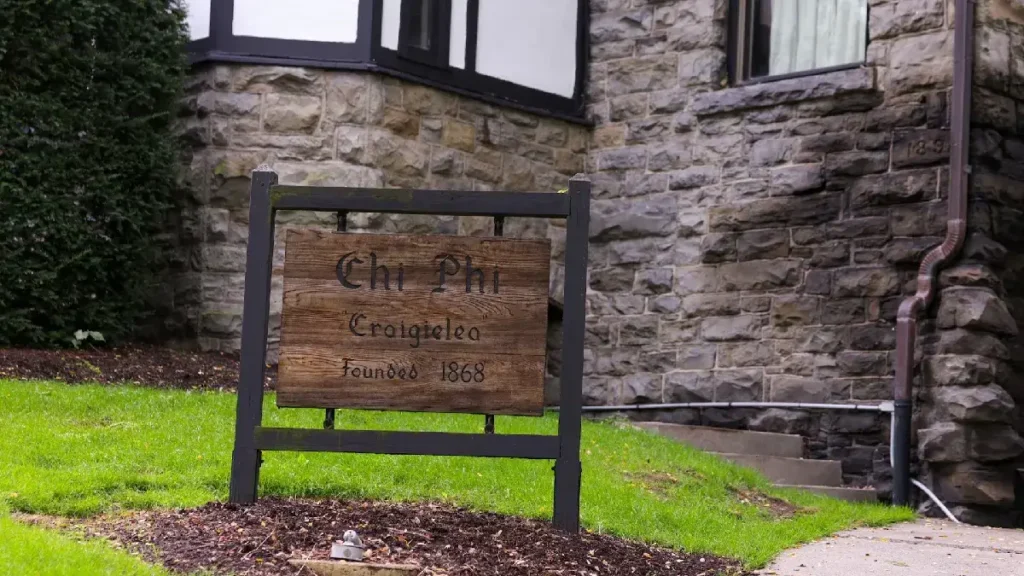
Cornell University President Michael Kotlikoff has vowed to take a “serious look” at the role of fraternities and sororities in campus life following renewed scrutiny over rape allegations involving members of the Chi Phi fraternity. The allegations, which date back to a 2024 incident and are detailed in a civil lawsuit filed in September 2026, have prompted a reopened criminal investigation and an independent review by New York’s attorney general. Kotlikoff, in an eight-minute video message to the Cornell community, called the allegations “deeply disturbing” and acknowledged that the university “must do better.”





The allegations remain allegations. No one has been criminally convicted. The lawsuit is a civil proceeding, and the criminal investigation is ongoing. Cornell has said it imposed disciplinary sanctions, including expulsions, but has not disclosed specifics, citing federal privacy law.
What Happened at Cornell?
The events at the center of the case occurred on the night of October 19, 2024. According to a 101-page civil lawsuit filed on September 16, 2026, a then-20-year-old Cornell student—identified in court documents as “Jane Doe”—was allegedly drugged and sexually assaulted by multiple members of the Chi Phi fraternity at the fraternity’s on-campus house.
According to the lawsuit, Doe had been drinking at her sorority house and a bar before arriving at the Chi Phi house to visit a friend. The complaint alleges she was given more alcohol and pressured into snorting ketamine, a dissociative drug, and was then sexually assaulted while “incapable of consent.” The alleged assault continued until approximately 5:45 a.m., according to the complaint.
Doe reported the incident to Cornell University police on November 8, 2024—about three weeks after the alleged assault. The Chi Phi chapter and seven of its members were placed on temporary suspension that same day, according to the lawsuit.
The Tompkins County District Attorney’s Office initially declined to pursue criminal charges. In September 2026, after the civil lawsuit was filed and public outrage grew, District Attorney Matthew Van Houten announced he would reopen the investigation and present evidence to a grand jury. Subsequently, New York Governor Kathy Hochul appointed Attorney General Letitia James as a special prosecutor to oversee the case, removing it from the local district attorney.
What Did the Woman Allege?
The lawsuit, filed in New York State Supreme Court, alleges that Doe was sexually assaulted by seven Chi Phi fraternity members. According to the complaint, one of the men sent a message to a Snapchat group chat—titled “Chi Phi Actives”—at approximately 1:42 a.m., stating there was “free p*ssy” upstairs, which the lawsuit alleges “encouraged other members to join in on the gang rape.”
The complaint includes a photograph of a portion of the group chat. Multiple fraternity members then entered the room, where the lawsuit alleges they pressured Doe into taking more ketamine and subjected her to an hours-long assault.
Doe’s attorney, Thomas P. Giuffra, has said the encounter was not consensual and that Doe “wouldn’t have gone to the police in the first place” if it had been. The lawsuit seeks unspecified monetary damages and a jury trial.
It is important to emphasize that these are allegations made in a civil complaint. They have not been proven in criminal court. Some of the accused individuals, through their attorneys, have denied any wrongdoing.
What Is Chi Phi and Why Is It at the Center of the Case?
Chi Phi is one of the oldest collegiate fraternities in the United States, with a chapter at Cornell University. According to the lawsuit and Cornell’s statements, the alleged assault occurred inside the Chi Phi fraternity house on Cornell’s campus in Ithaca, New York.
Cornell has said the Chi Phi chapter was closed in 2024 and remains barred from campus. The national Chi Phi organization stated that its Xi chapter voted unanimously to remove the accused members from its rolls just three days after Doe filed her police report, and that the Grand Council subsequently voted to permanently expel them. The national fraternity said it “condemns sexual assault and drug and alcohol abuse in the strongest possible terms.”
The allegations are specific to certain members of the Chi Phi chapter at Cornell. They should not be generalized to all fraternity members, all Greek life organizations, or the national Chi Phi organization as a whole.
What Did Cornell University Do?
Cornell has stated that it conducted an internal Title IX investigation separate from the criminal process. According to the university, the investigation included interviews with 32 witnesses and 12 days of hearings, producing a 99-page report. The university said the process resulted in sanctions including expulsions and suspensions.
Cornell has declined to disclose how many students were expelled or suspended, citing federal student privacy law. The university has also stated that “none of the individuals charged were offered the opportunity to write essays as a sole consequence of their involvement.” This statement was made in response to claims in the lawsuit that some accused students were given the option to submit essays to mitigate their conduct.
The university also established a Presidential Task Force on Campus Sexual Assault in early 2025, which was tasked with implementing recommendations to strengthen policies, prevention efforts, and support systems. Cornell has also expressed support for the criminal investigation and the independent review.
However, Doe’s lawsuit alleges that Cornell failed to properly discipline the accused students and “sheltered them from speaking to law enforcement, and silenced victims.” The lawsuit also alleges that Doe was not allowed to leave school to heal and that she saw the accused men on campus regularly during the following semester. Cornell has not publicly responded to these specific allegations, citing the pending litigation.
Why Is Cornell President Michael Kotlikoff Reviewing Fraternities and Sororities?
In his October 3 video statement, President Kotlikoff said Cornell would engage students, alumni, and others in examining how to preserve the benefits of Greek life while strengthening accountability and transparency. He described the allegations as “deeply disturbing” and said they raised “heartbreaking and troubling issues about sexual assault, dehumanization and aspects of party culture, alcohol and drug use.”
Kotlikoff said: “Being part of a group can never diminish individual responsibility for our own actions, for how we treat others or for speaking up when someone may be at risk.”
The renewed review was prompted by the civil lawsuit, the public outcry that followed, and calls from students, alumni, and elected officials for greater accountability. Kotlikoff also acknowledged that Cornell had not communicated enough about the case, which he said had led to distrust. He pledged greater transparency within “real legal and privacy limits.”
The review is expected to examine how fraternities and sororities are overseen at Cornell, what role they play in campus culture, and how accountability mechanisms can be strengthened. The university has not yet announced specific reforms.
What Is Cornell’s Independent Review?
Cornell’s Board of Trustees is expected to announce details of an independent review conducted by external counsel. President Kotlikoff has said he supports an independent review of how Cornell handled the case, which was called for by Governor Hochul. The review is intended to examine the university’s response to the 2024 allegations, including the Title IX investigation and the disciplinary process.
Separately, the criminal investigation is now overseen by Attorney General Letitia James, who was appointed as a special prosecutor by Governor Hochul on September 30, 2026. Hochul said she took this step because newly released information “raised even more troubling questions about what was done and not done after this young woman came forward.”
The attorney general’s investigation will follow the facts and present evidence to a grand jury if warranted. No timeline has been announced, and no findings have been released.
What Happened With the Criminal Investigation?
The criminal investigation has gone through several stages:
Initial investigation (2024): Doe reported the incident to Cornell University police on November 8, 2024. Campus police investigated and consulted the Tompkins County District Attorney’s Office. District Attorney Matthew Van Houten declined to pursue charges, stating that Doe’s initial statement to police did not include allegations that she was drugged without consent or had sex against her will. According to Van Houten, Doe’s original account described voluntary drug use and sexual activity, and stated that “each time Jane Doe asked to stop the sexual conduct, the sexual conduct stopped.”
Reopened investigation (September 2026): After the civil lawsuit was filed and public pressure mounted, Van Houten announced he would present the case to a grand jury. He said the community had asked him to revisit the decision and that he had begun that process by speaking with Doe and her attorneys.
Special prosecutor appointed (September 30, 2026): Governor Hochul signed an executive order appointing Attorney General Letitia James as special prosecutor, removing the case from the local district attorney. Hochul cited concerns about the completeness of the information the district attorney’s office relied upon in its initial decision.
Doe’s attorney, Thomas Giuffra, has argued that the initial investigation was inadequate. He said it was “challenging” to understand how a thorough investigation could have been conducted when Doe “never spoke with anyone other than the officer who took her original complaint.” Van Houten has defended his office’s actions, saying he was “constrained by the law” as written in New York State.
It is critical to distinguish between these proceedings: the civil lawsuit is a claim for damages; the criminal investigation is a law enforcement matter; the Title IX investigation was an administrative university process with different standards and consequences.
What Have the Accused Students Said?
Attorneys for at least two of the accused men have issued denials.
Attorney Jeremy Saland, representing one of the accused, said in a statement to CNN: “Even the District Attorney’s Office, led by a chief prosecutor with the duty to pursue justice and uphold the rule of law without bias or favor, filed no charges against (him) because what she alleged did not happen.” Saland said his client “never sexually assaulted or even touched the plaintiff in any way.”
Attorney Andrew Miltenberg, representing another accused man, told CNN that while he did not want to minimize Doe’s trauma, “sympathy for the plaintiff and fairness to the defendants are not mutually exclusive. Due process exists precisely for this reason.” He said his client is entitled to have the evidence tested through legal proceedings.
Another attorney, representing a different accused man, called Doe’s allegations “selfishly false,” according to NewsNation. CNN has stated it is working to determine whether the remaining accused individuals have legal representation.
These denials are a material part of the story and must be weighed alongside the allegations. No accused individual has been criminally convicted.
What Has Cornell’s President Said?
President Kotlikoff’s public statements have focused on acknowledging the seriousness of the allegations, expressing empathy for the complainant, and committing to review and reform.
In his October 3 video message, he said: “My heart aches when I think of what she experienced. It raises heartbreaking and troubling issues about sexual assault, dehumanization and aspects of party culture, alcohol and drug use.”
He also said: “I want to acknowledge something that can be difficult for an institution to say: We don’t have all the answers, but we are committed to investigating and finding the answers our community deserves.”
On the role of Greek life, he said: “Being part of a group can never diminish individual responsibility for our own actions, for how we treat others or for speaking up when someone may be at risk.”
Kotlikoff has also expressed support for legislative efforts to change New York’s sexual assault laws, specifically the provision that makes it difficult to prosecute cases involving voluntary intoxication.
Why Are Fraternities and Sororities Under Scrutiny?
The Cornell case has renewed a broader national conversation about the role of Greek life organizations on college campuses. Concerns raised in this case include the role of alcohol and drugs in fraternity social culture, the adequacy of university oversight, and how campuses respond to sexual assault allegations.
Cornell’s Student Assembly has launched an initiative to reform the university’s consent training programs. Student Assembly Representative-at-Large Myshay Causey said the assembly is examining what Cornell teaches about consent during orientation and throughout the school year, especially in relation to fraternities and sororities, and is considering making training in-person rather than online.
Causey said students have expressed that “this is bigger than an administration issue, and this is something that has been going on time and time again.” She said students have stories dating back 30 years.
It is important to note that the allegations in this case involve specific individuals at a specific fraternity chapter. They do not establish that fraternities as a whole are responsible for sexual assault, nor should they be generalized to all Greek life members.
Cornell’s Sexual-Assault Prevention Efforts
Cornell has a long-standing Sexual Violence Prevention Framework that dates back to 2013 and includes education, support, policy, and institutional accountability components.
The university’s SHARE Office (Sexual Harassment & Assault – Response and Education) provides direct advocacy and prevention services. Cornell Health runs campus-wide awareness campaigns and peer-led initiatives, including the Intervene Bystander Campaign. The university has implemented evidence-based programs such as the Enhanced Access, Acknowledge, Act (EAAA) Sexual Assault Resistance program and the Actively Modeling Positive Masculinity (AM/PM) Project.
In 2025, Cornell established the Presidential Task Force on Campus Sexual Assault. A 2025 Cornell survey found that 35% of undergraduate women reported experiencing nonconsensual sexual contact during their time at the university, a figure that Causey said appeared “in line” with national trends.
The lawsuit alleges, however, that Cornell failed to prevent the alleged assault and failed to properly address sexual violence on campus.
What Happens Next at Cornell?
Several proceedings are ongoing or expected:
Criminal investigation: Attorney General Letitia James is overseeing the investigation as special prosecutor. She will determine whether to present evidence to a grand jury and whether to seek criminal charges.
Independent review: Cornell’s Board of Trustees is expected to announce details of an external review of the university’s handling of the case.
Greek life review: President Kotlikoff has committed to a “serious look” at the role of fraternities and sororities, with engagement from students, alumni, and other stakeholders.
Civil lawsuit: The lawsuit filed by Jane Doe against Cornell, the Chi Phi fraternity, seven former students, and others is proceeding through the court system.
Legislative efforts: Governor Hochul has pledged to work with the New York State Legislature to change the state’s sexual assault laws regarding voluntary intoxication.
No outcomes have been determined in any of these proceedings.
Cornell Fraternity Allegations: Key Facts at a Glance
| Detail | Information |
|---|---|
| University | Cornell University |
| Location | Ithaca, New York |
| President | Michael Kotlikoff |
| Fraternity mentioned | Chi Phi |
| Incident referenced | October 19, 2024 |
| Nature of case | Sexual-assault allegations (civil lawsuit) |
| Legal proceeding | Civil lawsuit filed September 16, 2026; criminal investigation reopened and overseen by NY Attorney General |
| Cornell response | Conducted Title IX investigation; says expulsions and suspensions issued; Chi Phi chapter closed |
| Latest development | President vows serious review of fraternities and sororities |
| Current status | As of October 4, 2026, criminal investigation and independent review ongoing; no criminal convictions |
Cornell Rape Allegations: 7 Important Questions
1. What happened at Cornell?
A former Cornell student alleges in a civil lawsuit that she was drugged and sexually assaulted by multiple Chi Phi fraternity members at the fraternity house in October 2024. She reported the incident to campus police in November 2024. The district attorney initially declined to press charges but reopened the investigation in September 2026 after the lawsuit was filed.
2. What are the allegations against Chi Phi members?
The lawsuit alleges that seven fraternity members sexually assaulted the woman after she was given alcohol and ketamine and became unable to consent. One member allegedly sent a group chat message inviting others to join. The accused individuals have denied wrongdoing through their attorneys.
3. Who is Michael Kotlikoff?
Michael Kotlikoff is the president of Cornell University. He released a video statement on October 3, 2026, calling the allegations “deeply disturbing” and pledging to review the role of fraternities and sororities on campus.
4. What did the Cornell president say?
Kotlikoff said his “heart aches” for the complainant and that the university “must do better.” He acknowledged that Cornell does not have “all the answers” but committed to investigating and pledged greater transparency. He also called for a “serious look at the role of fraternities and sororities in campus life.”
5. What action has Cornell taken?
Cornell says it conducted a Title IX investigation that included 32 witness interviews and 12 days of hearings, resulting in expulsions and suspensions. The Chi Phi chapter was closed and remains barred from campus. Cornell established a Presidential Task Force on Campus Sexual Assault in 2025.
6. Is there a criminal investigation?
Yes. The Tompkins County District Attorney initially declined to press charges in 2024. After the civil lawsuit was filed, he reopened the investigation. Governor Hochul then appointed Attorney General Letitia James as special prosecutor to oversee the case. No criminal charges have been filed.
7. What happens next?
The attorney general’s criminal investigation is ongoing. Cornell’s Board of Trustees is expected to announce an independent review. President Kotlikoff has committed to a review of Greek life. The civil lawsuit is proceeding. No outcomes have been determined.
What Does This Mean for Cornell Students?
The case has prompted student-led efforts to change campus culture. Cornell’s Student Assembly is working on reforming consent training, including considering in-person training rather than online modules.
Students have expressed frustration with the administration and have called for greater accountability and transparency. Some speakers at a student assembly hearing called for President Kotlikoff’s resignation.
The university has pledged to increase opportunities for students, parents, and others to engage with university leaders. Cornell has also said it supports legislative efforts to change state law regarding intoxication and consent.
For students concerned about safety or reporting options, Cornell’s SHARE Office provides confidential victim advocacy services. The university has stated that it is committed to ensuring that survivors “feel safe coming forward and are treated with compassion and dignity.”
This article does not provide legal advice. Readers should consult qualified professionals for guidance on specific situations.
Cornell Fraternity Review: What Could Change?
Analysis: Based on President Kotlikoff’s public statements and the university’s stated commitments, the review of Greek life could potentially examine several areas. The university has said it will engage students, alumni, and others in examining how to preserve the benefits of Greek life while strengthening accountability and transparency.
Areas that could be examined include fraternity oversight and accountability mechanisms, safety policies related to alcohol and drug use, consent education and training, disciplinary procedures for Greek life organizations, and transparency in how the university handles reports of sexual misconduct.
The Student Assembly’s initiative on consent training suggests that changes to education programs may be considered. Governor Hochul’s pledge to change state law could affect how such cases are handled in the future.
However, no specific reforms have been announced. The university has not stated what changes, if any, will result from the review.
Final Takeaway
The Cornell rape allegations involve a civil lawsuit filed by a former student who alleges she was drugged and sexually assaulted by multiple Chi Phi fraternity members in October 2024. The accused individuals have denied wrongdoing, and no criminal convictions have occurred.
Cornell conducted a Title IX investigation and says it imposed sanctions including expulsions, though it has not disclosed specifics. The Chi Phi chapter was closed. The district attorney initially declined to press charges but reopened the case after the lawsuit was filed. Governor Hochul appointed the state attorney general as special prosecutor.