







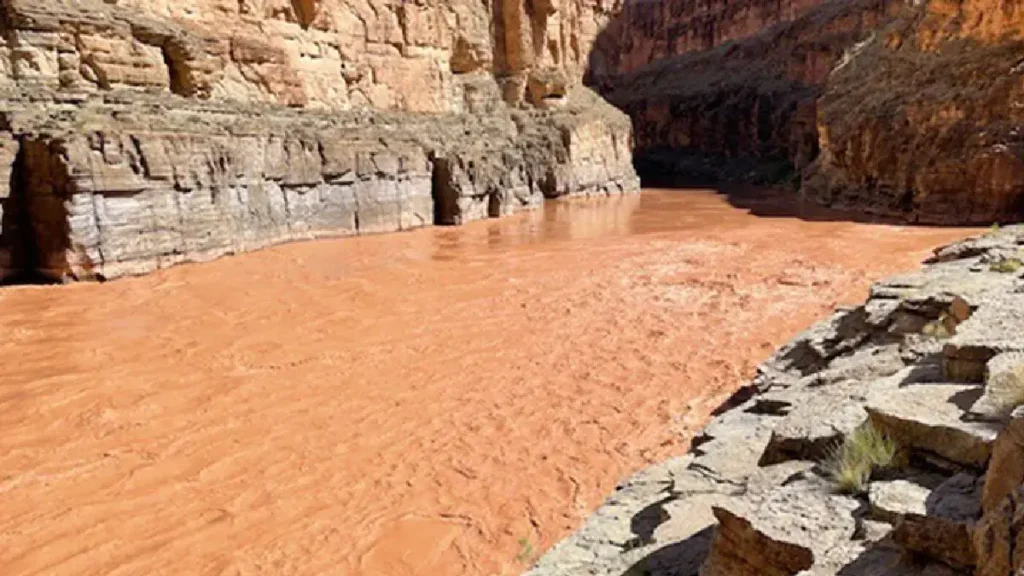
A significant flash flood in the Grand Canyon has led to the evacuation of dozens of visitors and a search for more than 20 people believed to be missing, authorities said Sunday. The “significant flash-flood event” struck Bright Angel Canyon and the popular Phantom Ranch area around 2:30 p.m. local time on Saturday, August 29, causing extensive damage and prompting a large-scale emergency response.





What Happened in the Grand Canyon?
The flash flood was triggered by a sudden and intense monsoon downpour. The National Weather Service reported that between 1.2 and 2.5 centimeters (about 0.5 to 1 inch) of rain fell within approximately 30 minutes in the steep, rocky terrain. Because of the steep elevation drop, “most of it ran off instantly,” said meteorologist Justin Johndrow, creating a powerful surge of water.
The floodwaters tore through Bright Angel Creek, which flows from the North Rim down to the Colorado River. The torrent was so powerful that it “significantly altered the landscape,” widening the creek bed, sweeping large boulders and debris into the river, and reportedly creating a new river rapid. Nearly all footbridges spanning Bright Angel Creek were destroyed, cutting off access for hikers and campers.
Rescue and Evacuation Efforts
In response to the emergency, the National Park Service (NPS), in coordination with the Arizona Department of Public Safety, launched air evacuation operations. More than 60 people were evacuated from Phantom Ranch and the lower North Kaibab Trail on Sunday. Evacuees were transported to the South Rim, where the American Red Cross was coordinating assistance.
No injuries have been reported so far. However, additional individuals were scheduled to be evacuated from Cottonwood Campground as the operation continued. A spokesperson for the Department of the Interior confirmed that 15 people remained scheduled for evacuation as of Sunday.
Search for Missing Hikers and Campers
The NPS has issued a public request for information on more than 20 individuals who may be missing or unaccounted for. The agency is specifically seeking information about hikers and backpackers who were in the inner canyon along the Bright Angel Creek corridor on August 29. This includes people traveling on the North Kaibab Trail, staying at Bright Angel Campground, or in the area known as “the Box” north of Phantom Ranch.
The park service is asking anyone with information to contact the NPS Investigative Services Branch. The situation is rapidly evolving, and officials are working diligently to account for all individuals.
Which Grand Canyon Areas Are Closed?
The flooding has caused “significant impacts to infrastructure” and forced the indefinite closure of several popular areas. These closures remain in effect until further notice:
- Phantom Ranch
- Bright Angel Campground
- Phantom Ranch Canteen and cabins
- The entire North Kaibab Trail
- The Black Bridge and Silver Bridge crossing the Colorado River
- The Colorado River is closed to river traffic due to debris in the water
Why Are Flash Floods Dangerous in the Grand Canyon?
Flash floods pose a unique and deadly threat in the Grand Canyon due to its geography. The steep, narrow canyons, like Bright Angel Canyon, act as funnels for water.
Intense monsoon rains, common in the region, can cause water levels to rise with little to no warning, turning a manageable creek into a destructive torrent in minutes. As recent wildfires in the area can also increase the risk of flash flooding and debris flows, visitors are advised to exercise extreme caution during monsoon season.
What Should Grand Canyon Visitors Do?
Authorities urge all visitors to follow National Park Service instructions and avoid all closed areas. Do not attempt to cross flooded trails or flowing water. Check the official Grand Canyon National Park website and alerts before traveling for the latest information on trail and campground closures.
Frequently Asked Questions
What happened in the Grand Canyon flash flood?
A “significant flash-flood event” occurred on Saturday, August 29, 2026, in Bright Angel Canyon and the Phantom Ranch area. It was caused by intense monsoon rainfall that led to a rapid surge of water, causing extensive damage and prompting a large-scale evacuation.
Where did the Grand Canyon flash flood occur?
The flooding occurred in Bright Angel Canyon, which includes the Bright Angel Creek corridor, Phantom Ranch, and the North Kaibab Trail.
Were people evacuated from the Grand Canyon?
Yes. More than 60 people were evacuated from the area, with air evacuations continuing into Sunday.
Are any hikers missing after the Grand Canyon flood?
Yes, the National Park Service is asking for the public’s help to locate more than 20 individuals who may be missing or unaccounted for following the flood.
Is the Grand Canyon open after the flash flood?
While the rest of the park may be open, several key areas have been closed indefinitely. These include Phantom Ranch, Bright Angel Campground, the entire North Kaibab Trail, and the Colorado River.
Which Grand Canyon trails are closed?
The entire North Kaibab Trail is closed until further notice. The Black Bridge and Silver Bridge crossing the Colorado River are also closed.
Why are flash floods dangerous in the Grand Canyon?
The steep, narrow terrain of the canyon causes water to funnel rapidly, leading to sudden, violent flooding that can be impossible to outrun or escape.
Where can visitors get official Grand Canyon flood updates?
Visitors should follow the official Grand Canyon National Park website, NPS social media, and local park alerts for the most current and accurate information.
Grand Canyon Flash Flood: What Happens Next?
The situation remains active. Search and rescue operations are ongoing, and the NPS is coordinating closely with state authorities. The park will continue to assess the damage to its infrastructure, including trails, bridges, and the water pipeline system.
Given the forecast for additional thunderstorms and heavy rainfall, there is a continued risk of further flash flooding, debris flows, and rockfall. The recovery and search efforts will be a top priority in the coming days as officials work to ensure the safety of all visitors and staff.