






Mexican Independence Day 2026 falls on Wednesday, September 16, 2026. The official holiday is September 16, but celebrations traditionally begin on the evening of September 15 with the Grito de Dolores—the famous “cry” that commemorates the call to arms that sparked Mexico’s independence movement in 1810.





| Detail | Information |
|---|---|
| Holiday | Mexican Independence Day |
| Date | September 16, 2026 |
| Day of Week | Wednesday |
| Traditional celebration begins | Evening of September 15 |
| Country | Mexico |
| Commemorates | Start of independence movement, 1810 |
Why Does Mexico Celebrate Independence Day on September 16?
Mexico’s Independence Day commemorates the beginning of the country’s struggle for independence from Spanish colonial rule—not the moment independence was achieved.
In the early morning hours of September 16, 1810, a Catholic priest named Miguel Hidalgo y Costilla rang the bells of his church in the town of Dolores, Mexico. He called on the people to rise up against the Spanish colonial government, delivering a passionate speech that became known as the Grito de Dolores—the Cry of Dolores.
That call ignited a rebellion that would take more than a decade to achieve its goal. The Mexican War of Independence lasted from 1810 until 1821, when Spain finally signed the Treaty of Córdoba formally recognizing Mexico’s independence.
It is essential to understand this distinction: September 16 marks the beginning of the fight, not the end. The date was chosen to honor the moment when Mexicans first answered the call to arms, not the eventual victory.
What Is the Grito de Dolores?
The Grito de Dolores is the symbolic heart of Mexico’s Independence Day celebrations. The word “Grito” translates to “cry” or “shout,” and it refers to Father Hidalgo’s historic call to action.
Historical Context
On the morning of September 16, 1810, Hidalgo gathered his congregation and delivered a speech that would change Mexican history. According to historical accounts, he proclaimed: “Long live America! And death to the bad government!” while holding the banner of the Virgin of Guadalupe, Mexico’s patron saint.
The exact wording of Hidalgo’s original speech remains a subject of historical debate, but its significance is undisputed. It marked the moment when a movement for independence transformed from quiet discontent into open rebellion.
The Modern Ceremony
Every year on the evening of September 15, the President of Mexico reenacts this historic moment from the balcony of the National Palace in Mexico City’s Zócalo square.
The modern ceremony includes:
- The President ringing the same bell that Hidalgo rang in 1810
- Waving the Mexican flag
- Reciting patriotic calls
- The crowd responding with “¡Viva México!” (Long live Mexico!)
This tradition has been carried down for generations and is replicated at government buildings, consulates, and community centers around the world.
September 15 vs. September 16: What’s the Difference?
One of the most common questions about Mexican Independence Day is why both September 15 and 16 are mentioned. The distinction is important:
September 15: The Celebration Night
The evening of September 15 is when the major festivities take place. This includes:
- The Grito de Dolores ceremony led by the President
- Public gatherings in town squares across Mexico
- Fireworks displays
- Music and cultural performances
- The ceremonial ringing of bells
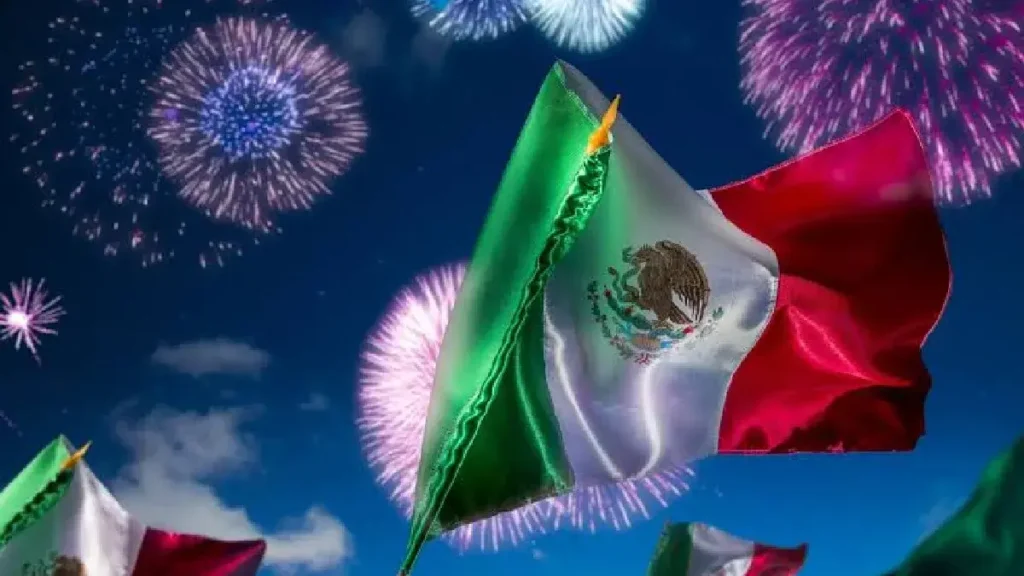
In Mexico City, millions gather at the Zócalo to participate in the celebration. The night is filled with the colors of the Mexican flag—green, white, and red—and a festive atmosphere that extends into the early morning hours.
September 16: The Official Holiday
September 16 is officially recognized as Mexican Independence Day and is a national public holiday. On this day:
- Government offices and schools are closed
- Many businesses remain closed or have reduced hours
- A civic-military parade takes place in Mexico City, led by the President
- Families continue celebrations with meals and gatherings
The key distinction: September 15 is the major celebration night, while September 16 is Independence Day itself.
How Is Mexican Independence Day Celebrated?
Celebrations vary by region and community, but several traditions are common throughout Mexico and among Mexican communities abroad.
Public Celebrations
- Grito ceremonies at government buildings and public squares
- Parades featuring civic groups, schools, and military units
- Fireworks displays on the night of September 15
- Cultural performances including mariachi music and folkloric dance
Home and Community Traditions
- Displaying the Mexican flag on homes and buildings
- Decorating with green, white, and red colors
- Family gatherings with traditional food and music
- Watching the presidential Grito broadcast on television
Music and Entertainment
The night of September 15 often features live music performances. In 2026, Mexico City’s Zócalo will host performances by artists including the winners of the “México Canta” competition and Grupo Intocable. Across the city’s boroughs, performers ranging from Pancho Barraza to Los Tigres del Norte are scheduled to appear.
Traditional Mexican Independence Day Food
Food plays a central role in Independence Day celebrations, though traditions vary significantly by region and family. Several dishes are particularly associated with the holiday:
Chile en Nogada
Perhaps the most iconic Independence Day dish is chile en nogada. This stuffed poblano pepper is filled with a complex mixture of meat, fruits, and nuts, then covered in a creamy walnut sauce and garnished with pomegranate seeds.
The dish’s colors—green pepper, white sauce, and red pomegranate seeds—reflect the Mexican flag. While legend ties its creation to the 1821 celebration of independence, food historians have found recipes predating that event. The dish is seasonal because its key ingredients (walnuts and pomegranates) are harvested in late summer.
Other Traditional Foods
- Pozole: A hearty hominy and meat soup
- Tamales: Steamed corn masa filled with various ingredients
- Tostadas and antojitos: Traditional Mexican snacks
- Mexican desserts: Including traditional sweets and pastries
It is important to note that no single dish is universally eaten on Independence Day. Families and regions have their own traditions.
Mexican Independence Day Colors and Symbols
The Mexican flag is central to Independence Day celebrations. Its three colors carry historical significance:
- Green: Historically associated with independence and hope
- White: Associated with religion and unity
- Red: Associated with unity and the blood of national heroes
The flag’s central emblem depicts an eagle perched on a cactus, devouring a snake—a symbol rooted in Aztec mythology and the founding of Tenochtitlan (modern Mexico City).
During Independence Day celebrations, these colors appear in decorations, clothing, food, and fireworks displays.
Is Mexican Independence Day a National Holiday?
Yes. September 16 is a national public holiday in Mexico. Government offices, schools, and many businesses are closed. The Mexican Consulate in Boston lists September 16 as an official holiday on its 2026 calendar.
However, private businesses may operate on modified schedules. It is advisable to check with specific establishments if planning activities on September 16.
Mexican Independence Day in the United States
Mexican Independence Day is widely celebrated in U.S. communities with large Mexican and Mexican-American populations. Celebrations include:
- Community festivals featuring Mexican food, music, and dance
- El Grito ceremonies at Mexican consulates
- Parades organized by community groups
- Cultural events at schools and community centers
For example, the Mexican Consulate in Oklahoma City hosted its first public El Grito celebration in 2026 at Plaza Calle Dos Cinco, featuring mariachis, folkloric dance, and traditional food. In Milwaukee, the nonprofit UMOS held its annual Mexican Independence Day Parade and Festival with nearly 50 participating groups.
These celebrations serve to keep traditions alive and share Mexican culture with younger generations and the broader community.
Important distinction: Mexican Independence Day (September 16) is not the same as Cinco de Mayo (May 5). Cinco de Mayo commemorates the 1862 Battle of Puebla, a different historical event entirely.
Mexican Independence Day vs. Cinco de Mayo
| Mexican Independence Day | Cinco de Mayo |
|---|---|
| September 16 | May 5 |
| Commemorates the 1810 start of independence movement | Commemorates the 1862 Battle of Puebla |
| Major national holiday throughout Mexico | Minor holiday in most of Mexico; widely celebrated in parts of the U.S. |
| Associated with Miguel Hidalgo and the Grito de Dolores | Associated with Mexican victory over French forces |
The two holidays are frequently confused, particularly in the United States, where Cinco de Mayo has become a major celebration of Mexican-American culture. However, in Mexico, Cinco de Mayo is primarily observed in the state of Puebla and is not a federal holiday.
Mexican Independence Day History Timeline
| Year | Event |
|---|---|
| 1810 | September 16: Miguel Hidalgo delivers the Grito de Dolores, beginning the independence movement |
| 1811 | Hidalgo is captured and executed; leadership passes to José María Morelos |
| 1815 | Morelos is captured and executed; guerrilla resistance continues |
| 1821 | August 24: Treaty of Córdoba signed; Mexico achieves independence from Spain |
The struggle for independence was long and costly. Mexico lost approximately one-tenth of its population during the 11-year conflict.
Who Was Miguel Hidalgo?
Miguel Hidalgo y Costilla (1753–1811) was a Catholic priest who became the leader of Mexico’s early independence movement.
Born in Guanajuato, Hidalgo was well-educated and served as a parish priest in the town of Dolores. His involvement in discussions about independence led to his historic call to arms on September 16, 1810.
Hidalgo led rebel forces for several months, achieving initial successes before being captured. He was executed in 1811, but his legacy as the “Father of Mexican Independence” endures.
What Happens During the Presidential Grito?
The modern Grito ceremony is one of Mexico’s most important annual traditions. Here is what typically happens:
- The President appears on the balcony of the National Palace in Mexico City’s Zócalo
- The bell is rung—the same bell Hidalgo rang in 1810
- The President waves the Mexican flag
- Patriotic calls are shouted, including “¡Viva México!” and names of independence heroes
- The crowd responds with “¡Viva!” after each call
- Fireworks and celebrations follow throughout the night
The 2026 ceremony will be led by President Claudia Sheinbaum, who will ring the bell and deliver the traditional cry from the National Palace.
Mexican Independence Day 2026: What to Know
- Date: Wednesday, September 16, 2026
- Major celebration: Evening of Tuesday, September 15
- Colors: Green, white, and red
- Key tradition: Grito de Dolores ceremony
- Food: Chile en nogada and other traditional dishes
- Official status: National public holiday in Mexico
Communities around the world will host their own celebrations, with Mexican consulates and cultural organizations organizing Grito ceremonies and festivals.
Frequently Asked Questions
When is Mexican Independence Day 2026?
Mexican Independence Day 2026 is Wednesday, September 16, 2026.
Is Mexican Independence Day on September 15 or September 16?
Both dates are important. The Grito de Dolores ceremony takes place on the evening of September 15, while September 16 is officially recognized as Independence Day.
Why does Mexico celebrate on September 16?
September 16 marks the anniversary of Miguel Hidalgo’s call to arms in 1810, which began Mexico’s independence movement.
What is the Grito de Dolores?
The Grito de Dolores is the historic call to rebellion delivered by Father Miguel Hidalgo on September 16, 1810. It is reenacted annually by Mexico’s President and at celebrations worldwide.
Who started Mexican Independence?
Miguel Hidalgo y Costilla, a Catholic priest, initiated the independence movement with his Grito de Dolores in 1810. The struggle continued under other leaders until independence was achieved in 1821.
Is Mexican Independence Day a federal holiday?
Yes. September 16 is a national public holiday in Mexico, with government offices and schools closed.
Is Mexican Independence Day the same as Cinco de Mayo?
No. Mexican Independence Day is September 16. Cinco de Mayo (May 5) commemorates the 1862 Battle of Puebla, a different historical event.
What do people eat on Mexican Independence Day?
Traditional foods vary by region, but chile en nogada is particularly associated with the holiday. Pozole, tamales, and other Mexican dishes are also common.
What colors are associated with Mexican Independence Day?
Green, white, and red—the colors of the Mexican flag.
How is Mexican Independence Day celebrated in Mexico?
Celebrations include the Grito ceremony, parades, fireworks, music, folkloric dance, family gatherings, and traditional food.
How is Mexican Independence Day celebrated in the U.S.?
U.S. communities host festivals, parades, El Grito ceremonies at consulates, and cultural events celebrating Mexican heritage.
When did Mexico become independent from Spain?
Mexico achieved independence in 1821, when Spain signed the Treaty of Córdoba. The independence movement began in 1810.
What day of the week is Mexican Independence Day 2026?
Wednesday, September 16, 2026.
Conclusion
Mexican Independence Day 2026 is Wednesday, September 16. The celebration begins the evening before with the Grito de Dolores, a tradition that honors Miguel Hidalgo’s historic call to arms in 1810.