







For the millions of Americans who experience the stabbing heel and arch pain associated with plantar fasciitis, finding the right footwear is often the first line of defense. While many shoes claim to offer support, podiatrists frequently point to Brooks as a brand that consistently delivers on cushioning and stability. Board-certified podiatrists recommend specific Brooks models for their ability to provide the thick foam cushioning and supportive structure needed to alleviate discomfort.





Which Brooks Shoes Does the Podiatrist Recommend?
Board-certified podiatrist Dr. Matthew Neuhaus often recommends the Brooks Ghost or Adrenaline lines for patients dealing with plantar fasciitis, arch pain, or heel pain. He notes that these shoes are “very stable” and feature “a thick foam sole, which provides a cushion that people often need when they have significant arch or heel pain.”
Dr. Gregory Alvarez also recommends the Brooks Adrenaline GTS 24, calling it a “great choice for those who need a bit more stability.” He explains that the shoe’s GuideRails support system “helps limit excess motion that can put stress on the plantar fascia, making it a solid option for walking, running or all-day wear.”
Other podiatrists, such as Dr. Anne Sharkey and Dr. Priya Parthasarathy, highlight the brand’s commitment to research-based footwear. Many Brooks styles hold the American Podiatric Medical Association (APMA) Seal of Acceptance, indicating they meet specific criteria for foot health.
Why Cushioning Matters for Plantar Fasciitis
Plantar fasciitis is an inflammation of the thick band of tissue—the plantar fascia—that runs across the bottom of the foot, connecting the heel bone to the toes. The condition often leads to persistent heel pain, particularly with the first steps in the morning or after long periods of standing.
According to podiatrists, wearing supportive shoes reduces strain on the plantar fascia by providing arch support, cushioning, and shock absorption. Shoes with soft, ample cushioning help absorb impact and alleviate pressure on the feet. Proper arch support also helps distribute pressure evenly, reducing the load on the plantar fascia.
Brooks Ghost for Plantar Fasciitis
The Brooks Ghost line is frequently cited as a top recommendation for plantar fasciitis. The Ghost 16, in particular, is noted for its plush, neutral cushioning that softens heel strike, a primary driver of plantar fasciitis pain.
A critical feature of the Ghost 16 is its 12mm heel-to-toe drop. This higher drop reduces tension on the plantar fascia, which can help diminish morning and push-off pain more effectively than shoes with a lower drop. The Ghost 16 features nitrogen-infused DNA LOFT v3 cushioning for lightweight comfort and a Segmented Crash Pad that promotes smooth transitions from landing to toe-off.
The Brooks Ghost 17, the latest version, adds a supportive stack of nitrogen-infused foam described as “plush but responsive.” Shoppers with plantar fasciitis have praised it for providing pain-free comfort during long shifts and daily wear.
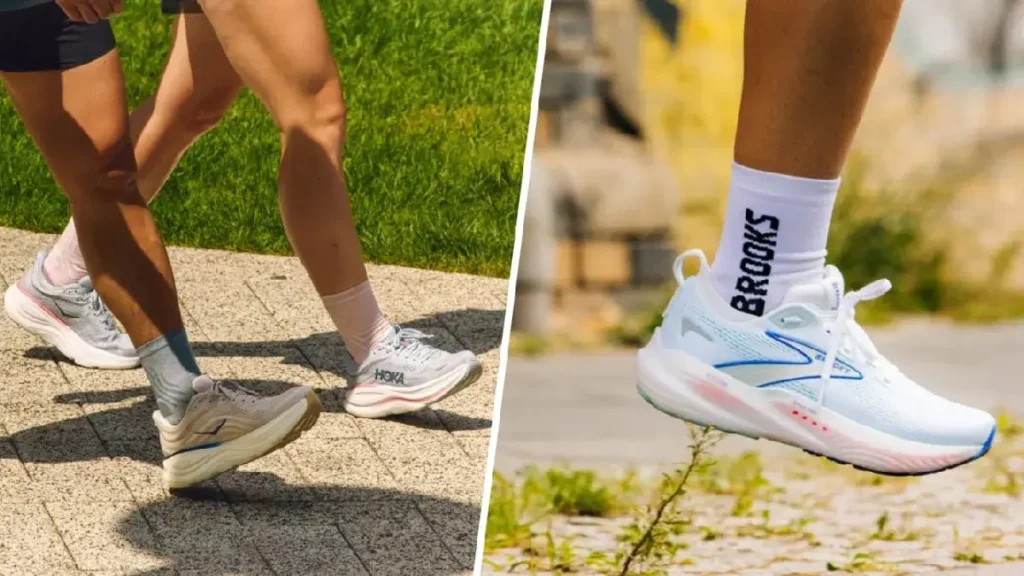
Brooks Adrenaline GTS for Arch and Heel Support
For individuals who overpronate (their feet roll inward excessively) or require additional stability, the Brooks Adrenaline GTS is an excellent option. The GTS stands for “Go-To Support,” and the shoe is designed to provide structure without feeling stiff.
The Adrenaline GTS 24 features Brooks’s proprietary GuideRails support system. Rather than forcing the foot into a specific position, GuideRails act like “bumpers” to keep excess motion in check, supporting the knees and feet by allowing them to move naturally within a stable framework. This feature is particularly helpful for limiting the excess motion that can put stress on the plantar fascia. Additionally, the shoe has removable footbeds, accommodating custom orthotics.
What to Look for in Shoes for Plantar Fasciitis
Podiatrists recommend looking for several key features when selecting shoes to manage plantar fasciitis:
Good Cushioning and Arch Support: Shoes with structured arch support and cushioning that absorbs impact without being overly soft are best. This helps reduce strain on the plantar fascia.
Firm Heel Counter: A firm, supportive heel counter helps keep the heel steady and minimizes additional stretching of the plantar fascia.
Moderate Heel-to-Toe Drop: A moderate drop of approximately 10 to 12 mm can help reduce tension on the plantar fascia. This elevation offloads the Achilles tendon and reduces fascial stretch.
Roomy Toe Box: A spacious and wide toe box helps prevent pressure, squeezing, and discomfort in the toe area.
Removable Insole: Opting for shoes with a removable insole allows you to fit in custom or over-the-counter orthotics.
Are Brooks Shoes Right for Everyone?
While Brooks shoes are highly regarded by podiatrists and users alike, footwear preferences and foot conditions vary. What works well for one person may not be suitable for another. Some individuals with specific foot shapes or conditions may find that other brands or models suit them better. It is always advisable to try shoes on and test them for fit and comfort.
Important Medical Disclaimer: This article provides general information for educational purposes and does not constitute medical advice. Individuals with persistent or severe foot pain should consult a qualified healthcare professional for a proper diagnosis and personalized treatment plan.
FAQ
Are Brooks shoes good for plantar fasciitis?
Yes, multiple board-certified podiatrists recommend Brooks shoes for plantar fasciitis due to their stable design, thick foam cushioning, and supportive features such as the GuideRails support system.
Which Brooks shoes are recommended for plantar fasciitis?
Podiatrists commonly recommend the Brooks Ghost and Brooks Adrenaline GTS lines. The Ghost is praised for its plush cushioning and 12mm drop, while the Adrenaline GTS is favored for its stability and GuideRails support system.
Are Brooks Ghost shoes good for arch pain?
Yes, the Brooks Ghost is frequently recommended for arch and heel pain. Its neutral cushioning and high heel-to-toe drop help reduce strain on the plantar fascia and provide comfort for daily wear.
What should you look for in shoes if you have plantar fasciitis?
Look for good cushioning and arch support, a firm heel counter, a moderate heel-to-toe drop, a roomy toe box, and a removable insole for orthotics.