







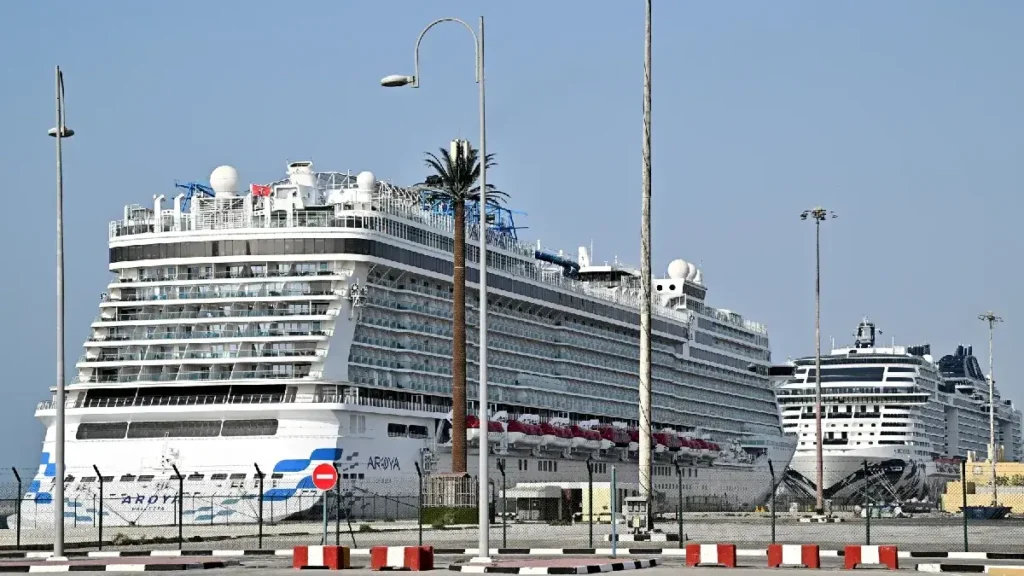
A passenger aboard a luxury cruise ship has died during a European voyage as the vessel made a port call in Ireland. The individual was on board the Regent Seven Seas Voyager, a 698-guest ship operated by Regent Seven Seas Cruises, when the incident occurred.





The passenger was brought ashore on August 28 at Greencastle in County Donegal, a small port on the western shore of Lough Foyle. The individual was subsequently transferred to Letterkenny University Hospital.
Irish police, known as Garda Síochána, have confirmed that the passenger’s death is not the subject of a criminal investigation. Authorities are treating the incident as a medical emergency.
What Happened During the Cruise
The Regent Seven Seas Voyager was sailing a 12-night “Viking Vistas” itinerary when the passenger died. The voyage had departed from Reykjavik, Iceland, on August 20, 2026, and was scheduled to conclude in Southampton, England, on September 1.
The ship’s itinerary included calls to ports in Iceland, Scotland, Northern Ireland, and Ireland. The vessel anchored off Greencastle on August 28, where the deceased passenger was brought ashore.
A spokesperson for Foyle Port, which operates the dock at Greencastle, confirmed the passenger died on board the vessel and was transferred to Letterkenny University Hospital. The port spokesperson stated, “It was all organized by the ship’s agent and dealt with by the Garda in accordance with Irish regulations.”
Cruise Ship Makes Port Call in Ireland
Greencastle Port, located in County Donegal on Ireland’s northwestern coast, served as the location where the passenger was brought ashore. The port is situated on the western shore of Lough Foyle, a deep estuary that separates County Donegal from County Londonderry in Northern Ireland.
The ship anchored off Greencastle rather than docking, with the passenger transferred to shore via tender or other vessel. The individual was then transported approximately 39 miles by road to Letterkenny University Hospital.
Go Visit Inishowen, a local tourism agency, expressed condolences regarding the incident, stating, “Sadly, we understand that a passenger has passed away. Our thoughts are with their family and loved ones at this difficult time.”
What Authorities Said
Garda Síochána, Ireland’s national police and security force, confirmed to media that the passenger’s death is not being investigated as a criminal matter. The police office did not offer further comment, citing the incident as a medical emergency.
The Foyle Port spokesperson confirmed the passenger’s death on board the vessel and detailed the coordination with ship’s agents and local authorities. The statement emphasized that the transfer of the deceased followed Irish regulations.
No official statement has been released by Regent Seven Seas Cruises regarding the incident at this time.
What Is Known About the Cruise Ship
The Seven Seas Voyager is a luxury cruise ship operated by Regent Seven Seas Cruises, a line known for all-inclusive, ultra-luxury voyages. The vessel accommodates 698 guests and has been in service since 2003.
The ship underwent an extensive multi-million-dollar renovation completed in May 2026. Following a 25-day dry dock in Marseille, France, the vessel returned to service on May 21. The refurbishment included new finishes in public spaces, upgraded suite appointments, and redesigned bathrooms.
After the Greencastle port call, the Seven Seas Voyager continued its scheduled itinerary, visiting Belfast and Cobh before arriving in Southampton on September 1. The ship departed Southampton the same day for its next 10-night voyage, scheduled to conclude in Copenhagen, Denmark, on September 11.
What Happens When a Passenger Dies at Sea
When a passenger dies aboard a cruise ship, a standard protocol is typically followed. The ship’s medical team assesses the situation and notifies the ship’s captain and senior officers. Local authorities at the next port of call are informed, and arrangements are made to transfer the deceased ashore.
The ship’s agent typically coordinates with port authorities and local officials to ensure the process follows local regulations. In Ireland, this involves notifying the Garda Síochána, who assess the situation to determine whether any criminal investigation is warranted.
The deceased is usually transferred to a local hospital or morgue, where medical professionals may conduct examinations. The ship operator and authorities work to notify the passenger’s family and make arrangements for the repatriation of remains.
Communication with family is handled sensitively by the cruise line and authorities. The specific procedures can vary depending on the jurisdiction of the port, the circumstances of the death, and local regulations.
Why Port Calls Matter in Cruise Emergencies
Cruise ships often coordinate with local port authorities when medical emergencies or other incidents occur. Ports serve as the primary point of contact between the ship and onshore emergency services, including police, medical personnel, and hospital facilities.
When a passenger dies aboard a ship, the vessel must typically bring the deceased to a port where local authorities can process the incident. This involves notification of the relevant authorities, documentation, and compliance with local laws regarding death certification and transfer of remains.
The ability to make a port call during a medical emergency depends on the ship’s location, itinerary, and the availability of appropriate facilities. In this case, Greencastle provided a suitable location for transferring the deceased and coordinating with local authorities.
Cruise Safety and Medical Emergencies at Sea
Medical emergencies on cruise ships are relatively uncommon but do occur, particularly given the large number of passengers, many of whom are older adults. Cruise ships are required to have medical facilities and trained medical staff on board to handle emergencies.
Medical facilities on luxury ships like the Seven Seas Voyager typically include a medical center staffed by doctors and nurses. However, at-sea medical care has limitations compared to onshore hospitals. When serious incidents occur, ships may coordinate with onshore authorities for evacuation, as happened at Greencastle.
Ships maintain communication with shore-based medical providers and emergency services to ensure appropriate response to medical incidents. The cruise industry follows international regulations and standards for medical care and emergency response procedures.
What Remains Unknown
Several details about the incident have not been publicly disclosed:
- The passenger’s identity — No name, age, nationality, or other identifying information has been released.
- The exact cause of death — Authorities have not disclosed the medical circumstances.
- The specific timing of the incident — It is unclear exactly when the passenger died on board.
Authorities have confirmed only that the death is being treated as a medical emergency and that no criminal investigation is underway.
The Broader Cruise Travel Context
European cruise travel remains popular in 2026, with extensive itineraries connecting ports across the continent. The Seven Seas Voyager’s Viking Vistas route represents one of many European voyages that combine scenic coastal sailing with historic port calls.
Cruise lines operating in European waters must navigate varying regulations across multiple jurisdictions. When incidents occur, ships coordinate with local authorities at each port of call to ensure compliance with local laws.
The cruise industry continues to emphasize safety and emergency preparedness, with ships maintaining medical facilities and procedures for handling incidents at sea or during port calls.
Frequently Asked Questions
What happened to the cruise passenger?
A passenger aboard the Regent Seven Seas Voyager died during a 12-night European cruise and was brought ashore at Greencastle, Ireland.
Where did the cruise passenger die?
The passenger died on board the Seven Seas Voyager while the ship was sailing near Greencastle, County Donegal, Ireland.
Which cruise ship was involved?
The Regent Seven Seas Voyager, a luxury cruise ship operated by Regent Seven Seas Cruises, was involved in the incident.
What did Irish authorities say about the incident?
Irish police confirmed the death is not being investigated as a criminal matter and is being treated as a medical emergency.
Was the passenger’s death investigated as a crime?
No, Garda Síochána confirmed that the death is not under criminal investigation and is being handled as a medical emergency.
What happens when someone dies on a cruise ship?
The ship’s medical team typically assesses the situation, notifies authorities at the next port of call, and coordinates with local officials for transfer of the deceased. Procedures vary by jurisdiction.
Was the cruise ship making a port call in Ireland?
Yes, the Seven Seas Voyager anchored off Greencastle, Ireland, where the passenger was brought ashore.
What is known about the cause of death?
The exact cause of death has not been publicly disclosed. Authorities have only confirmed that the incident is being treated as a medical emergency.