






Sandra Bullock has never been one to chase the spotlight. For the past four years, she has largely stayed out of it, focusing on family and stepping away from the relentless machinery of Hollywood promotion.




But with the release of Practical Magic 2, the Oscar-winning actress is back—and in a candid new conversation with longtime friend Jennifer Aniston for Interview magazine, she reflected on the uncomfortable realities she encountered during her earliest days as a working actor.
Among the experiences she described: being asked to lower her pants during auditions, a request she says she refused. Her comments offer a rare window into the boundary-setting that shaped her early career, long before she became one of the most bankable stars in the industry.
What Sandra Bullock Said About Her Early Auditions
Bullock made the remarks during an interview with Jennifer Aniston for Interview magazine’s September 2026 cover story, timed to the release of Practical Magic 2. The conversation covered a wide range of topics—motherhood, privacy, her return to acting after a four-year hiatus—but it was a question about career choices that prompted the most revealing moment.
Aniston asked Bullock whether there was a moment when she made a deliberate decision about the kind of career she wanted, or whether it simply evolved. Bullock pointed to her time living in New York, before she had any real leverage in the industry. She was waitressing. She was auditioning constantly. And she was encountering situations that made her deeply uncomfortable.
“I was in New York, I was a waitress, I was auditioning for every pervert that existed asking me to drop my pants,” Bullock recalled. “I was like, ‘Nope, not the role for me.’ I was working my way up. Every working actor thinks you will never work again so you just take what you can get and make the most of it.”
The quote captures two competing pressures that define early acting careers: the fear of never working again, which pushes actors to accept almost anything, and the instinct to protect oneself from situations that feel wrong. Bullock’s response was clear: she walked away.
Sandra Bullock Was Asked to ‘Drop’ Her Pants
The phrase itself is blunt, and Bullock used it without hedging. She did not name the production, the casting director, or the filmmaker involved. She did not describe the circumstances in detail. What she offered was a general characterization of the audition environment she encountered as a young, unknown actress in New York in the late 1980s and early 1990s.
Bullock’s recollection is notable for what it reveals about how she navigated those situations. She did not frame herself as a victim. She framed herself as someone who made a judgment call: this request was not something she was willing to do, so this was not the role for her. The decision was simple, even if the moment was not.
It is important to be precise about what Bullock said and what she did not say. She did not identify the person who made the request. She did not characterize the conduct as illegal or describe it as an assault. She did not claim that this was a universal experience for every actress in Hollywood. She described her own experience, in her own words, and she made clear that she declined to participate.
How Sandra Bullock Responded to Uncomfortable Auditions
Bullock’s response to the situation was consistent with the approach she has described throughout her career: she assessed what was being asked of her, decided it was not something she was willing to do, and moved on.
“Nope, not the role for me,” she said. The phrasing is casual, but the boundary it represents is significant. For an actor with no leverage, no credits, and no guarantee of future work, walking away from an audition is not a small decision. It means giving up a potential paycheck. It means possibly alienating someone who could hire you later. It means accepting that the phone might not ring again.
Bullock has spoken before about the fear that drives working actors. “Every working actor thinks you will never work again,” she said. That fear is real, and it is one of the mechanisms that can make people vulnerable to exploitation. Bullock’s willingness to say no, even under those conditions, reflects a sense of self-preservation that she has carried throughout her career.
She has also been candid about the broader dynamics of her early career. In the same conversation, she noted that she did not feel she had real agency until much later. “When I think back, I wasn’t allowed to produce, or go out there and say, ‘No, we need the best of the best,'” she said. “It was scarier back then.”
What Bullock’s Story Says About Early Hollywood
Bullock’s anecdote is one data point, not a comprehensive indictment of an entire industry. But it fits into a well-documented pattern of power imbalances in Hollywood’s early-career pipeline.
Casting is an inherently asymmetrical relationship. The actor needs the job. The casting professional, director, or producer controls access to it. When that power is misused—when an audition becomes a vehicle for personal gratification rather than a professional evaluation—the actor is placed in an impossible position. Refuse, and you might lose the role. Comply, and you might compromise your own boundaries.
Other actresses have described similar experiences. Alison Brie, for example, has spoken about being asked to take off her top during an audition for Entourage, though she clarified that she was wearing a bikini top underneath. These accounts are not universal, and they do not describe every audition in every era. But they illustrate a broader cultural moment in which professional boundaries in casting were less clearly defined and less consistently enforced than they are today.
Why Auditions Can Create a Power Imbalance
The audition process is structured around a fundamental imbalance. On one side is a person with power: the ability to hire, to recommend, to open doors. On the other is a person seeking an opportunity, often with no leverage and limited experience. The gap between them is not incidental. It is the defining feature of the relationship.
For actors early in their careers, the pressure to comply can feel overwhelming. The fear of being labeled difficult, of being blacklisted, of never working again can make it difficult to say no. Bullock’s story is notable precisely because she did say no—and because she framed it as a decision she was capable of making even when she had little else to fall back on.
It is important to distinguish between different types of problematic audition requests. An uncomfortable request is not necessarily an illegal one. An unprofessional request is not necessarily abusive. The law draws lines that ethics and professionalism may not. Bullock did not characterize her experience in legal terms, and neither should readers. What she described was a situation that felt wrong to her, and she chose not to participate.
Sandra Bullock’s Early Career Before Becoming a Major Star
Bullock’s path to stardom was not instantaneous. She was born in Arlington, Virginia, in 1964 and grew up largely in Europe, where her mother, a German opera singer, performed. She made her first stage appearance at age five in an opera in Nuremberg. After moving back to the Washington, D.C. area as a teenager, she attended East Carolina University to study acting before leaving just three credits short of her degree and moving to New York in 1986.
In New York, she joined the Neighborhood Playhouse Theatre and supported herself with waitressing and bartending work. Her first professional gig came at age 21 in an off-Broadway production of No Time Flat. The critical reception helped her land an agent, but the years that followed were filled with bit parts, television roles, and B-movies that she has since described as sometimes embarrassing.
She appeared in the short-lived NBC sitcom Working Girl, based on the 1988 film, and had a co-starring role in the 1992 romantic comedy Love Potion No. 9. These were not the roles that made her a star. They were the roles that kept her working—and kept her auditioning.
How Sandra Bullock Became a Hollywood Star
Bullock’s breakthrough came in 1994 with Speed, the action thriller in which she starred opposite Keanu Reeves. Her audition for that film has become part of her career lore: she recalled pretending to drive a bus using a folding chair and a paper plate as a steering wheel. The film was a massive commercial success and transformed her from a working actress into a movie star.
What followed was a remarkable run of hits that established her as one of the most reliable box-office draws of the 1990s and 2000s. While You Were Sleeping (1995) cemented her romantic-comedy appeal. Miss Congeniality (2000) became a franchise. She won the Academy Award for Best Actress for The Blind Side (2009) and earned another nomination for Gravity (2013).
The contrast between the actress auditioning for “every pervert” in New York and the Oscar winner commanding tens of millions of dollars per film is stark. But the throughline is consistency: Bullock kept working, kept making choices, and eventually accumulated enough power to make the choices on her own terms.
Sandra Bullock’s Ability to Say No
The ability to say no is not something actors are born with. It is something they develop, often through painful experience.
In Bullock’s case, the willingness to walk away from an audition that made her uncomfortable was an early expression of a skill that would serve her throughout her career. Knowing when to say no—to a role, to a project, to a situation—is one of the most important tools an actor can have. It is also one of the hardest to cultivate, especially when you are starting out and every opportunity feels like the last one you will ever get.
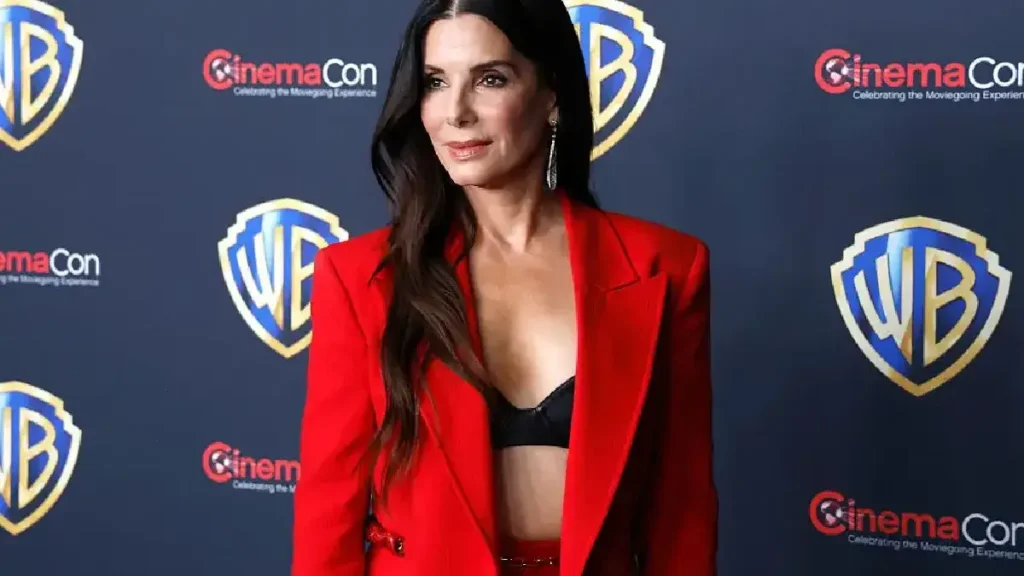
Bullock’s career suggests that saying no did not hurt her. It may have helped. By refusing roles and situations that did not feel right, she preserved her ability to choose the ones that did. That is not the only reason she became a star. Talent, timing, and hard work played their parts. But the boundary-setting she described is part of the story.
Bullock’s Career Shows How Much Can Change in Hollywood
The industry Bullock entered in the late 1980s is not the industry she works in today. Conversations about workplace conduct, consent, and professional boundaries have changed dramatically, particularly in the years since the #MeToo movement brought widespread attention to power imbalances in entertainment and other industries.
That does not mean inappropriate behavior has disappeared. It means that standards, awareness, and public discussion have evolved. Actors today have more resources than Bullock did when she was starting out: intimacy coordinators for productions involving intimate scenes, union protections, and a broader cultural willingness to speak openly about misconduct.
Bullock herself has noted the shift. “Now we’ve seen behind the curtain and we see it’s all smoke and mirrors,” she said in the Interview conversation. “We get to have more agency over our narrative now and speak the truth, when back then we really couldn’t.”
How Hollywood’s Audition Culture Has Changed
The audition process itself has changed in practical ways. Self-taping, which became widespread during the COVID-19 pandemic, has shifted many first-round auditions out of hotel rooms and studio offices and into actors’ homes. That change has both advantages and drawbacks, but it has reduced the frequency of in-person auditions in intimate settings.
Casting practices have also become more structured. While the industry is far from uniform, many productions now have clearer protocols for what is and is not appropriate to ask of an actor during an audition. Intimacy coordinators, while primarily relevant to productions involving intimate scenes rather than auditions, have raised broader awareness about consent and boundaries on set.
Bullock’s generation of actors navigated a system with fewer formal protections. The changes since then reflect a broader cultural reckoning, even if the work is not finished.
The #MeToo Era and Changing Conversations About Hollywood
The #MeToo movement, which gained widespread attention in 2017, fundamentally altered the public conversation about power, consent, and accountability in Hollywood. It created space for survivors to speak, for accountability to be demanded, and for industry practices to be scrutinized.
Bullock has not framed her audition experience as part of the #MeToo narrative. She described it as a personal recollection, not a political statement. But her story fits into the broader context of an industry that has historically placed young actors in vulnerable positions and sometimes failed to protect them.
The conversation has not ended. Debates about casting practices, pay equity, and representation continue. Bullock’s comments add a personal dimension to those discussions without claiming to speak for anyone else.
Sandra Bullock and Jennifer Aniston’s Conversation
The Interview cover story was not a standard celebrity profile. It was a conversation between two friends who have known each other for decades. Aniston and Bullock have been close for years, and Bullock has described Aniston as “one of my protectors.”
The warmth between them is evident throughout the conversation. They joke about Bullock’s aversion to red-carpet posing and her desire to be more like Zendaya. They talk about motherhood, empty-nesting, and the exhausting mechanics of maintaining a public image. The audition anecdote emerged naturally from a discussion about career choices and longevity, not as a planned revelation.
That context matters. Bullock was not giving a formal interview about her early struggles. She was talking to a friend. The candor of her comments reflects the trust in the room.
What Sandra Bullock’s Comments Mean for Actors Today
For actors navigating early careers today, Bullock’s story offers a practical lesson: you are allowed to say no.
That does not mean every audition that feels uncomfortable is exploitative. It does not mean actors should walk away from every challenging opportunity. It means that when a request crosses a line—when it feels wrong, when it has nothing to do with the role, when it asks something of you that you are not willing to give—you have the right to decline.
Bullock did not have a union representative in the room. She did not have a lawyer. She had her own judgment, and she used it. That is not a guarantee of safety or success. It is a reminder that boundaries are not a luxury reserved for those who have already made it.
Why This Story Is Resonating With Fans
Bullock’s comments have generated attention because they offer a glimpse behind the polished surface of a beloved star. Audiences know Bullock as the charming, self-deprecating actress who has anchored romantic comedies and won an Oscar. Hearing her describe being asked to drop her pants during an audition is jarring not because it is shocking in the abstract, but because it contrasts so sharply with the image of the confident, established star.
There is also a broader cultural appetite for stories about how successful people navigated early adversity. Bullock’s willingness to talk about the unglamorous parts of her career—the waitressing, the bad auditions, the fear—makes her success feel earned rather than inevitable.
Sandra Bullock’s Career Beyond the Audition Story
It would be a mistake to reduce Bullock’s career to one uncomfortable anecdote. She is one of the most successful actresses of her generation, with a filmography that spans comedy, drama, action, and science fiction. She has been nominated for two Academy Awards and won one. She has produced films. She has been a consistent box-office draw for three decades.
Her current project, Practical Magic 2, reunites her with Nicole Kidman and the Owens family nearly three decades after the original film became a cult classic. Bullock has described the sequel as a “love letter” to her own daughter and a chance to revisit characters that mean something to a generation of viewers.
The audition story is one chapter in a much longer book.
What We Know and What We Don’t Know About the Audition
What we know:
- Bullock publicly recalled the experience in an interview with Jennifer Aniston for Interview magazine.
- She described being asked to “drop” her pants during auditions in New York early in her career.
- She said she responded by declining the role.
- She characterized the auditions as involving “every pervert that existed.”
What remains unknown:
- The identity of the person or persons who made the request.
- The exact production or audition involved.
- The full circumstances of the audition.
- Whether any other individuals were present.
Bullock did not provide these details, and they should not be filled in with speculation.
Frequently Asked Questions
What did Sandra Bullock say about her early auditions?
Bullock said she auditioned for “every pervert that existed” while living in New York early in her career, and that some asked her to drop her pants. She declined those requests, saying “Nope, not the role for me.”
Was Sandra Bullock really asked to drop her pants during an audition?
Yes, according to her own account. She described the experience in an interview with Jennifer Aniston for Interview magazine. She did not identify the person involved or the production.
Where did Sandra Bullock discuss the audition experience?
She discussed it in Interview magazine’s September 2026 cover story, a conversation with Jennifer Aniston timed to the release of Practical Magic 2.
How did Sandra Bullock respond to the uncomfortable audition?
She said she told the person, “Nope, not the role for me,” and walked away. She did not elaborate on the specific circumstances.
When did Sandra Bullock begin her acting career?
Bullock made her first stage appearance at age five. She moved to New York in 1986 to pursue acting and landed her first professional gig at 21 in an off-Broadway production.
What was Sandra Bullock’s breakthrough role?
Her breakthrough came in 1994 with Speed, opposite Keanu Reeves. The film was a major commercial success and established her as a movie star.
What movies made Sandra Bullock a major Hollywood star?
Speed (1994), While You Were Sleeping (1995), Miss Congeniality (2000), The Blind Side (2009), and Gravity (2013) are among her most significant commercial and critical successes.
What does Sandra Bullock’s audition story say about Hollywood?
It illustrates the power imbalances that have historically existed in casting, particularly for young actors with limited leverage. It also reflects a broader cultural moment before #MeToo prompted more formal conversations about boundaries and consent in the industry.