







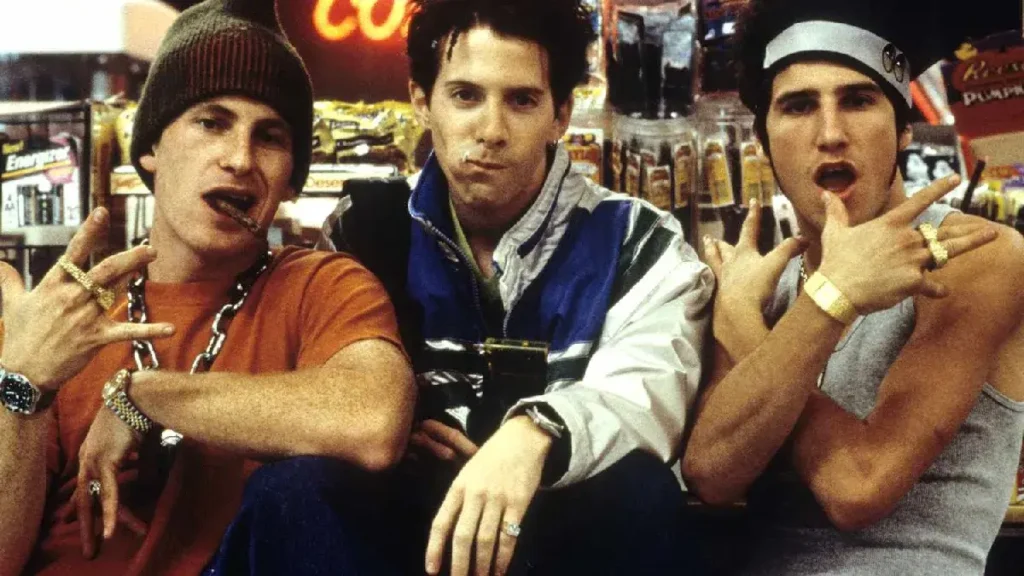
Seth Green has spent more than four decades in Hollywood, but he never signed up for the kind of attention that makes it impossible to blend in. In a new interview, the actor and voice artist opened up about the moment his career shifted from steady working actor to recognizable public figure—and why that transition left him feeling deeply uneasy.



Speaking on The McBride Rewind podcast, Green recalled that his life changed somewhere between the end of 1997 and 1999, when a cluster of high-profile projects hit at once. Austin Powers: International Man of Mystery arrived on DVD, he became a series regular on Buffy the Vampire Slayer, and Can’t Hardly Wait landed in theaters. The combination suddenly made him a familiar face across multiple demographics.
“Somewhere between the end of ’97 and ’99, a series of things happened,” Green said. “It became a really uncomfortable period of time.”
For someone who describes himself as valuing anonymity, that discomfort wasn’t about ingratitude or regret. It was about losing the freedom to exist in public without being observed.
What Seth Green Said About Early Fame
Green’s comments on The McBride Rewind offer a rare glimpse into how he experienced the early stages of widespread recognition. He didn’t describe fame as something he had actively pursued or even particularly wanted. Instead, he framed it as a byproduct of doing work he loved.
“I’m like a very silly person in public, and there’s something different about like ‘Who’s that crazy guy who’s singing on the fence’ to be like ‘Yo, Seth Green was out there singing on the fence,'” he explained. “It’s suddenly a very different premise and everyone assumes that you’re doing it for their benefit, and I don’t know, I got really good at being invisible.”
That quote captures something specific about Green’s relationship with fame. He wasn’t describing a hatred of fans or a resentment of his career. He was describing the way recognition alters the meaning of ordinary behavior. A silly moment becomes a performance. A private joke becomes a public statement. The simple act of being yourself in public suddenly carries an expectation you never asked for.
Green also noted that he came up before social media transformed celebrity culture, which meant he was spared some of the more intense scrutiny that younger performers face today. Still, the recognition he did experience was enough to leave a lasting impression.
Why Seth Green Says He Loves Anonymity
The word Green used was “anonymity,” and it’s worth taking seriously. He didn’t say he dislikes his fans. He didn’t say he regrets his career. He said he loves anonymity—the ability to move through the world without being identified, without every action being interpreted through the lens of celebrity.
Green elaborated on this during the podcast, explaining that he never entered the industry for fame and still doesn’t care much about being famous.
“There isn’t something in me where it’s like, ‘Look at me,’ or ‘[Look at] my name.’ It’s never really been about that,” he said. “I knew really young that I could do the trick, that I could do the magic trick, that I can, like, make you feel something.”
That distinction matters. Green’s discomfort wasn’t with acting—it was with the attention that came attached to it. He loves the craft of performance, the ability to make an audience believe a story. What he didn’t love was the loss of the ordinary privacy that most people take for granted.
For Green, anonymity isn’t about hiding. It’s about having a life that isn’t constantly on display.
Seth Green’s Early Career and Rise to Fame
Green’s path to recognition was anything but overnight. He started acting at just seven years old, making his feature film debut in The Hotel New Hampshire (1984) opposite Jodie Foster and Rob Lowe. Throughout the late 1980s, he worked steadily in supporting roles, including appearances in Woody Allen’s Radio Days (1987) and Big Business (1988).
His first lead role on television came in 1991 with the ABC sitcom Good & Evil, for which he won a Young Artist Award. But it was the late 1990s that truly changed his profile.
In 1997, Green was cast as Daniel “Oz” Osbourne on Buffy the Vampire Slayer, a role he played for three seasons and 40 episodes. That same year, he appeared as Scott Evil, the son of Dr. Evil, in Austin Powers: International Man of Mystery. The film became a cultural phenomenon, and its DVD release brought Green’s face into countless homes.
Then came Can’t Hardly Wait in 1998, a teen comedy that became a cult favorite. By 1999, Green was a series regular on Buffy, a recognizable face from Austin Powers, and a rising presence in teen films. The recognition he described on the podcast was the direct result of that convergence.
Green himself has acknowledged that his path was different from some child stars who achieve stratospheric fame early and then struggle to maintain it. In a 2003 interview, he noted that he “just kind of plodded along successfully without becoming famous until much later” compared to someone like Macaulay Culkin. His rise was steady rather than explosive—but when it arrived, it still caught him off guard.
What It Can Be Like to Grow Up in the Spotlight
Green’s experience points to a broader truth about young performers: recognition can arrive before they’ve developed the tools to process it. Child actors often navigate a strange dual existence—they’re professionals on set, but they’re still children navigating school, friendships, and identity formation.
The challenges are well-documented across the entertainment industry. Young performers may face public recognition that limits their ability to have ordinary childhood experiences. They may encounter media attention that focuses on their personal lives rather than their work. They may feel pressure to maintain a public persona that doesn’t match who they actually are.
Green has spoken about his own adjustment during adolescence. In a 2003 interview with the Chicago Tribune, he described how his appearance changed between ages 12 and 16, and with it, his career trajectory.
“My childhood success came and went real fast,” he said. “Like most child actors, I found it a difficult adjustment. Desperate to maintain my popularity, I was performing all the time. Now that I’ve stopped trying so hard, I’m more comfortable in my skin.”
That quote reveals something important: the pressure Green felt wasn’t just about external recognition. It was also internal—the desire to keep working, to stay relevant, to hold onto something that felt precarious. By his own account, he eventually found more comfort by letting go of that desperation.
Why Fame and Privacy Can Be Difficult to Balance
Green’s comments highlight a tension that many public figures navigate: the desire for career success alongside the need for personal privacy. These two things aren’t inherently incompatible, but they often pull in opposite directions.
On one hand, a successful acting career requires visibility. Audiences need to know who you are to care about your work. Casting directors, producers, and networks benefit from performers who bring recognizable names and faces to projects. Recognition can open doors, create opportunities, and extend a career.
On the other hand, constant recognition can erode the boundaries between public and private life. Simple activities—running errands, having dinner, walking down the street—become subject to observation. Interactions carry an implicit expectation of performance or availability. The freedom to be unremarkable disappears.
For Green, the solution seems to have been a kind of intentional invisibility. “I got really good at being invisible,” he said on the podcast. That skill—the ability to move through public spaces without drawing attention—became a way of preserving something essential.
It’s worth noting that Green’s discomfort with recognition doesn’t mean he dislikes his fans or resents their interest. He has continued to work steadily in film, television, and voice acting for decades. He has appeared at conventions, done interviews, and maintained a public presence when necessary. The tension isn’t between fame and ingratitude—it’s between recognition and the human need for ordinary privacy.
From Child Actor to a Long Hollywood Career
If Green’s early fame felt uncomfortable, his career has nonetheless endured. In fact, he has built one of the more versatile and resilient resumes in contemporary entertainment.
After Buffy, Green continued to work in both comedy and drama. He appeared in films like The Italian Job (2003), Without a Paddle (2004), and Party Monster (2003), demonstrating range beyond the teen comedies that first made him recognizable.
But it was voice acting that became a defining pillar of his career. Since 1999, Green has voiced Chris Griffin on Fox’s Family Guy, a role that has kept him connected to one of the most popular animated series on television. He also voiced Jeff “Joker” Moreau in the Mass Effect video game series and Leonardo in Nickelodeon’s Teenage Mutant Ninja Turtles.
In 2005, Green co-created Robot Chicken with Breckin Meyer, an Adult Swim stop-motion sketch comedy series that became a critical and commercial success. The show has earned Green multiple Emmy Awards and Annie Awards, and it cemented his reputation as a creative force behind the camera as well as in front of it.
More recently, Green has voiced Howard the Duck in the Marvel Cinematic Universe, appearing in Guardians of the Galaxy films and What If…?. In 2019, he wrote, directed, and starred in the comedy-drama Changeland.
His career has spanned more than 40 years and well over 100 credits, a testament to both his talent and his adaptability.
The Roles That Made Seth Green a Familiar Face
Several roles stand out as turning points in Green’s relationship with public recognition.
Oz on Buffy the Vampire Slayer (1997–2000) was arguably the role that made him a household name among younger audiences. Oz was the laid-back guitarist and werewolf boyfriend of Willow Rosenberg, and Green’s portrayal made him a fan favorite. The show’s devoted following meant that Green became recognizable in a way he hadn’t been before.
Scott Evil in the Austin Powers films (1997–2002) brought him to a broader, more mainstream audience. Playing the resentful son of Dr. Evil alongside Mike Myers, Green delivered a comedic performance that became quotable and iconic. The DVD release of the first film, as Green noted, was a specific catalyst for his recognition.
Chris Griffin on Family Guy (1999–present) has been a constant presence in Green’s career for more than two decades. While voice acting doesn’t come with the same kind of face-to-face recognition as on-screen work, the show’s massive popularity has kept his name and voice in the cultural conversation.
Robot Chicken (2005–present) represents a different kind of fame—the recognition that comes from creative ownership. As co-creator, producer, writer, director, and frequent voice performer, Green built something that exists on his own terms. It’s a project that has earned him industry respect and awards recognition, even as it operates outside the traditional celebrity ecosystem.
Does Seth Green Regret His Fame?
The question is worth asking directly, and the answer appears to be no. Green’s comments about discomfort with fame are not the same as regret about his career. He has continued to work consistently for decades, taking on projects across film, television, voice acting, and production. He has spoken positively about the craft of acting and the joy of performance.
On the podcast, Green described acting as the place where he feels most like himself.
“Somewhere between ‘action’ and ‘cut’ is where I feel the most like myself,” he said.
That statement reframes the entire conversation. Green didn’t pursue fame—he pursued acting. The recognition was an unintended consequence of doing work he loved. His discomfort wasn’t with the work itself, but with the loss of anonymity that came alongside it.
It’s also worth noting that Green has maintained a relatively private personal life despite his public career. He married actress Clare Grant in 2010, and the two have kept their relationship largely out of the spotlight. That choice suggests a deliberate approach to balancing public work with private life—one that prioritizes the latter whenever possible.
How Seth Green Views Fame Today
Green’s recent comments suggest that his perspective on fame hasn’t fundamentally changed. He still values anonymity. He still doesn’t care much about being famous. He still finds the craft of acting more meaningful than the attention it brings.
What has changed, perhaps, is his ability to manage it. The “invisibility” he described developing during that uncomfortable late-’90s period seems to have become a durable skill. He has found ways to work prolifically without centering his identity on celebrity.
His comments also reflect a kind of clarity about what matters. Green didn’t describe fame as something he tolerates grudgingly. He described it as something that was never the point. The point was always the work—the ability to make an audience feel something, to inhabit a character, to tell a story.
“If I can do it on behalf of a character or a story, you feel something,” he said. “That’s the thing that I can do, and it feels amazing when I’m doing it.”
Why Seth Green’s Comments About Fame Are Resonating With Fans
Green’s honesty about the discomfort of early fame has struck a chord, and it’s not hard to see why. His experience touches on something universal: the gap between external success and internal comfort.
Many people can relate to the idea that achieving something you wanted doesn’t always feel the way you expected. Recognition, even when it’s positive, can be exhausting. Being watched can be alienating. The things that make you successful can also make it harder to feel like yourself.
Green’s comments also resonate because they avoid the two extremes that often dominate celebrity discourse. He didn’t complain about fame or portray himself as a victim. He didn’t pretend that recognition was meaningless or that he was above caring about it. He simply described what it felt like—uncomfortable—and explained why: he values anonymity.
That kind of nuance is refreshing. It treats fame as neither a curse nor a blessing, but as a complicated reality that requires navigation.
Celebrity Privacy Has Changed in the Social Media Era
Green acknowledged on the podcast that he came up before social media reshaped celebrity culture, and that timing may have spared him some of the more intense pressures that younger performers face today.
The difference is significant. In the late 1990s, a rising actor might be recognized on the street, approached at a restaurant, or written about in magazines. Today, a rising actor faces constant documentation. Smartphones mean that any public moment can be photographed, filmed, and shared within seconds. Social media means that fans can interact directly, often blurring the boundaries between public performance and private life. Online commentary means that every choice—what you wear, where you go, who you’re with—can be analyzed in real time.
For young performers in particular, this environment creates a kind of perpetual visibility that didn’t exist in previous eras. The ability to be “invisible” that Green cultivated in the late ’90s is much harder to achieve now. The tools for disappearing have not kept pace with the tools for being seen.
Green’s experience offers a useful counterpoint to the assumption that more visibility is always better. For some performers, privacy isn’t a luxury—it’s a necessity.
Frequently Asked Questions
Why did Seth Green say early fame made him uncomfortable?
Green said he became recognizable between 1997 and 1999 after projects like Austin Powers, Buffy the Vampire Slayer, and Can’t Hardly Wait. He described this as “a really uncomfortable period of time” because he values anonymity and found the attention difficult to adjust to.
Does Seth Green dislike being famous?
Green has said he never got into acting for fame and “still doesn’t really care about being famous.” His discomfort seems to be with the loss of privacy and anonymity, not with his career or his fans.
When did Seth Green start acting?
Green began acting at age seven. His first feature film role was in The Hotel New Hampshire (1984).
What is Seth Green best known for?
Green is known for roles including Oz on Buffy the Vampire Slayer, Scott Evil in the Austin Powers films, Chris Griffin on Family Guy, and as co-creator of Robot Chicken.
Why does Seth Green value anonymity?
Green has described himself as a “very silly person in public” who found it strange when his behavior began to be interpreted through the lens of celebrity. He said he “got really good at being invisible” as a way of managing that attention.
How long has Seth Green been acting?
Green made his film debut in 1984 at age seven, giving him a career spanning more than 40 years.