







King Haakon automatically became monarch upon his father’s death, as Norway’s succession does not require a formal crowning ceremony to transfer power. While King Charles III’s 2023 coronation was a global spectacle featuring ancient rituals, crowns, and centuries of tradition, King Haakon’s accession will be marked by a constitutional oath and a possible consecration ceremony—a stark contrast that highlights the fundamental differences between the two monarchies.





Why Norway Abolished Coronations
Norway’s last coronation took place in 1906, when King Haakon VII and Queen Maud were crowned at Nidaros Cathedral in Trondheim. Just two years later, in 1908, the Norwegian Parliament, known as the Storting, voted to repeal the constitutional article requiring a coronation. The ceremony had come to be regarded as undemocratic and archaic, reflecting Norway’s evolving egalitarian values.
Since 1908, Norwegian monarchs have not undergone a formal crowning. Instead, they have participated in a simpler consecration ceremony, which serves as a blessing rather than a coronation. This tradition was established by King Olav V in 1958 and continued by King Harald V and Queen Sonja in 1991.
How the Norwegian Royal Succession Works
Unlike the British system, where a monarch’s accession is followed by a formal coronation months later, Norway’s process is immediate and constitutionally driven. King Haakon became king the moment his father passed away—no ceremony was required for the transfer of power.
The Constitutional Oath
On September 1, 2026, King Haakon will take an oath before the Storting, formally pledging to govern the Kingdom of Norway in accordance with its Constitution and laws. The oath, which is mandatory, will include the declaration: “I promise and swear that I will govern the Kingdom of Norway in accordance with its Constitution and Laws; so help me God, the Almighty and Omniscient.” The ceremony will take place in Parliament at 1:00 PM local time and will be broadcast live to the Norwegian public.
The Consecration Ceremony
If King Haakon chooses, he may hold a consecration ceremony at Nidaros Cathedral in Trondheim, similar to his father’s ceremony in 1991. During such a ceremony, the royal crown is displayed on the altar but is not placed on the monarch’s head. Traditionally, a consecration is followed by an official tour of the country by the new king and queen.
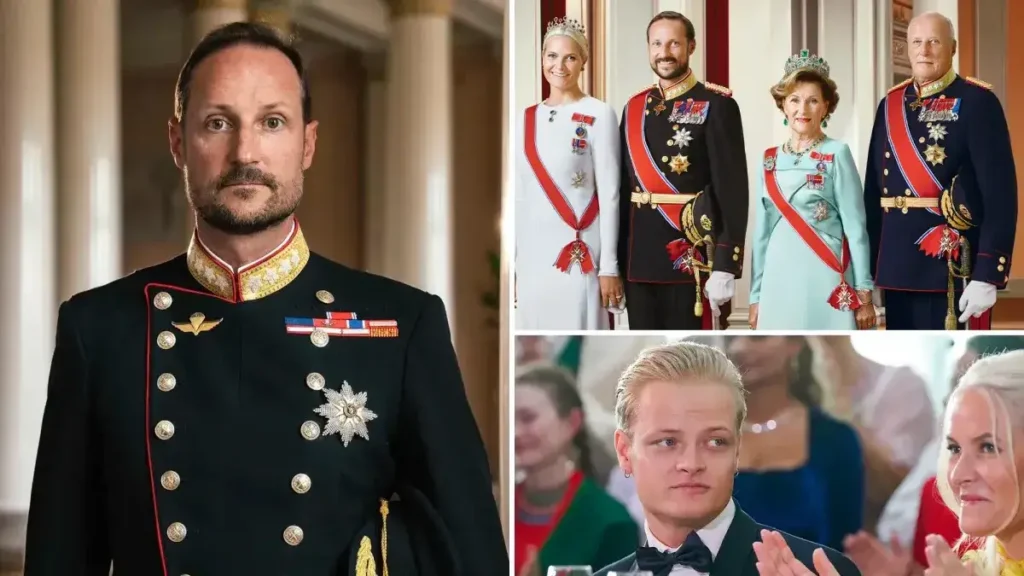
King Haakon vs. King Charles III: Key Differences
| Aspect | Norway | United Kingdom |
|---|---|---|
| Monarch | King Haakon VIII | King Charles III |
| Traditional Coronation | Abolished in 1908 | Held in 2023 at Westminster Abbey |
| Constitutional Oath | Required before Parliament | Oath taken during coronation |
| Ceremonial Elements | Consecration possible, crown displayed but not worn | Full coronation with crown placed on monarch’s head |
| Modern Accession Process | Immediate succession, simple oath ceremony | Elaborate ceremony with centuries of tradition |
What Happens Next for Norway’s New Monarch
King Haakon has already held an extraordinary council of state meeting with government ministers at the Royal Palace in Oslo, where he formally informed the cabinet of his father’s death and confirmed his regnal name and motto. He has chosen to retain the motto shared by his father and grandfather: “Alt for Norge” (Everything for Norway).
Following the constitutional oath on September 1, the king may choose to hold a consecration ceremony at Nidaros Cathedral. If that occurs, it would be followed by a traditional tour of the country, allowing the new monarch to connect with his subjects across Norway.
While King Charles III’s coronation was a historic event watched by millions around the world, King Haakon’s accession reflects a distinctly Norwegian approach—one that values constitutional tradition over royal pageantry, and simplicity over spectacle.
FAQ Section
1. Will King Haakon have a coronation?
No, King Haakon will not have a traditional coronation. Norway abolished coronations in 1908, and no crown will be placed on his head as part of his accession.
2. Why doesn’t Norway have traditional coronations?
The Norwegian Parliament repealed the constitutional article requiring coronations in 1908, as the ceremony came to be regarded as undemocratic and archaic. This decision reflected Norway’s evolving egalitarian values.
3. When was Norway’s last coronation?
Norway’s last coronation was held in 1906, when King Haakon VII and Queen Maud were crowned at Nidaros Cathedral in Trondheim.
4. How does a Norwegian monarch officially take the throne?
A Norwegian monarch becomes king immediately upon the death of their predecessor—no ceremony is required for the transfer of power. The new monarch then takes a constitutional oath before Parliament and may choose to hold a consecration ceremony.
5. How is King Haakon’s accession different from King Charles III’s?
King Charles III had a full traditional coronation at Westminster Abbey in 2023, complete with a crown placed on his head. King Haakon will take a constitutional oath and may have a blessing ceremony, but no crown will be placed on his head.