
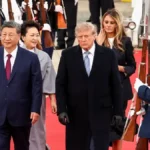


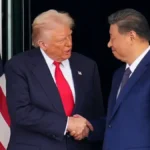
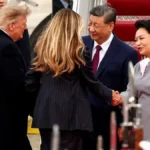


Chinese President Xi Jinping is in Washington for a three-day state visit with U.S. President Donald Trump, bringing the world’s two largest economies into another high-level round of talks at a sensitive moment for trade, technology and international security.

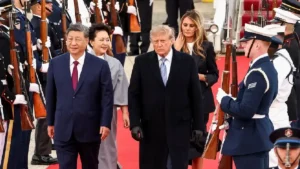


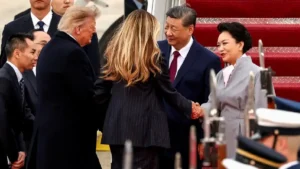
Xi arrived in the United States on September 23 and is scheduled to meet Trump at the White House on September 24. The visit runs through September 25 and is taking place with trade tensions, artificial intelligence, rare-earth minerals, Taiwan and the war involving Iran all shaping the broader U.S.-China relationship.
One of the biggest developments came just before the leaders’ meeting. U.S. Treasury Secretary Scott Bessent said Washington and Beijing had agreed to extend the existing Busan trade agreement until January 10. The announcement came after Bessent met Chinese Vice Premier He Lifeng in Washington ahead of the Trump-Xi meeting.
The extension does not mean that the broader U.S.-China economic rivalry is over. Instead, it gives both governments additional time to negotiate while avoiding an immediate return to a potentially disruptive tariff escalation.
Why Is Xi Jinping Visiting Washington?
Xi’s September 2026 visit is a state visit at the invitation of Trump. It is taking place from September 23 to September 25, with the main Trump-Xi meeting scheduled for September 24. Chinese officials have described the visit as an opportunity for the two sides to discuss major issues in bilateral relations and broader international affairs.
The timing is significant because the relationship has moved through several periods of tariff escalation, temporary agreements and renewed negotiations over the past two years.
The leaders also met in Beijing in May 2026. Their Washington meeting therefore represents another direct attempt to manage the relationship between two countries whose economies remain deeply connected despite major strategic disagreements.
The diplomatic program surrounding Xi’s visit is also unusually elaborate. Trump and First Lady Melania Trump are hosting Xi and Peng Liyuan for formal state-visit events, including a state arrival ceremony and state dinner. Trump also personally greeted Xi at Joint Base Andrews after the Chinese president arrived in the United States on September 23.
The ceremony provides the public backdrop, but the economic negotiations are likely to be the most closely watched part of the visit.
U.S.-China Trade Truce Extended to January 10
The immediate economic issue is the status of the U.S.-China trade truce.
The existing arrangement had been due to expire on November 10, 2026. That deadline had created uncertainty for companies and investors because the two governments still have major disagreements over tariffs, market access, technology restrictions and critical minerals.
On September 23, however, Bessent said the United States and China had agreed to extend what he called the “Busan Agreement” until January 10. He said the two sides had considered whether to pursue a broader agreement rather than simply continue a series of smaller measures.
That means the immediate expiration risk has been pushed back.
The extension should not be interpreted as a permanent trade settlement. It is better understood as additional negotiating space for Washington and Beijing.
Earlier on September 23, Bessent had said the United States was open either to extending the existing arrangement or examining a larger trade deal proposed by China. He did not provide details of what a broader agreement would contain.
For businesses, the distinction matters.
A temporary extension provides greater policy visibility than an immediate return to escalating tariffs. A permanent agreement, however, would require the two governments to resolve deeper disagreements that have remained unresolved despite repeated rounds of talks.
What Is the Busan Agreement?
The current trade truce traces back to the Trump-Xi meeting in Busan, South Korea, in 2025.
The agreement followed an intense period in which Washington and Beijing raised tariffs against each other and expanded restrictions involving technology, critical minerals and other strategic industries.
The 2025 arrangement reduced some of the immediate pressure and created a framework for both countries to negotiate rather than continuously escalate tariffs. The truce was subsequently extended during 2026, but its underlying disagreements remained.
The U.S. Trade Representative has also extended certain China-related tariff exclusions through November 2026, while other trade measures remain in place. USTR records show that 178 exclusions connected to the Section 301 technology-transfer investigation were extended until November 10, 2026.
Therefore, “trade truce” does not mean that all tariffs between the two countries have disappeared.
Instead, it represents a period in which some of the most damaging escalation has been paused or managed while negotiations continue.
What Are Trump and Xi Negotiating?
Trade is expected to remain at the center of the September 24 meeting.
The discussions involve more than headline tariff rates. They include agricultural purchases, market access, supply chains, technology restrictions, rare-earth exports and the broader rules governing commercial relations between the two countries.
U.S. officials have also been working on a proposed “Board of Trade” mechanism intended to provide a regular structure for discussing tariff and trade issues. Preparatory talks in September included discussions over potential tariff reductions on non-strategic goods.
Agriculture is another potential area for progress.
China is an important market for U.S. agricultural producers, while the Chinese market is important to American farmers seeking stable export demand. Any new commitments on agricultural purchases could therefore become part of a broader effort to maintain economic stability.
At the same time, China has continued to seek greater predictability in its access to the U.S. market.
That leaves both sides with reasons to avoid a sudden return to the tariff escalation seen in 2025.
Why Rare Earths Matter in Trump-Xi Talks
Rare-earth minerals have become one of the most strategically important economic issues in the U.S.-China relationship.
Rare earths are a group of elements used in products and systems ranging from electronics and electric vehicles to renewable-energy equipment, aerospace applications and defense technologies.
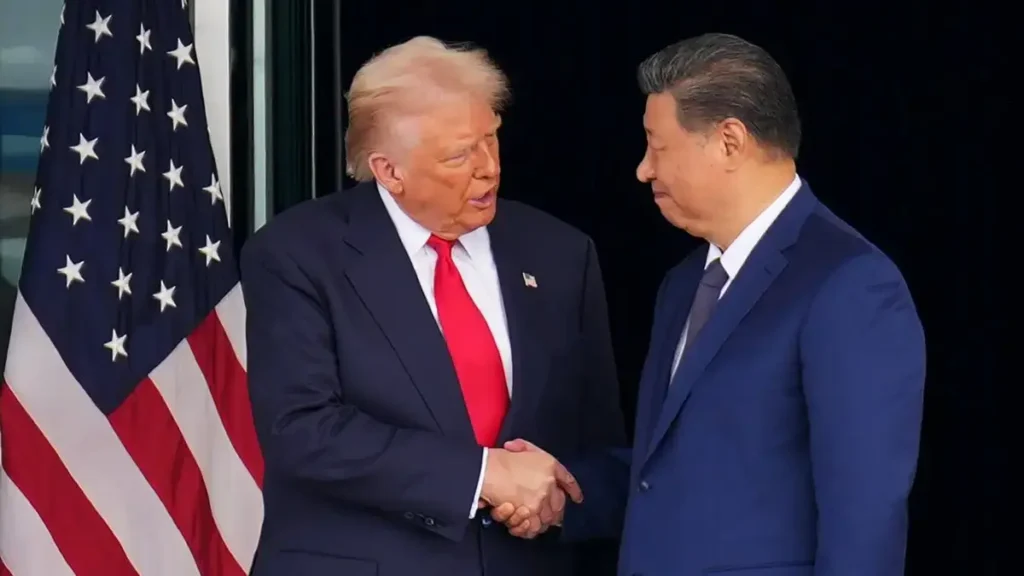
The importance of rare earths does not come only from mining. Processing and refining capacity is particularly important because raw materials must be converted into usable forms before they can enter many industrial supply chains.
China has a major role in global rare-earth mining, processing and refining. Reuters reported that China controls a large share of global rare-earth mining and an even larger share of refining and production capacity.
That concentration has become an important source of concern for U.S. manufacturers.
In September, Reuters reported that some Chinese rare-earth suppliers had halted or delayed shipments to U.S. customers amid geopolitical and regulatory concerns, despite previous commitments related to maintaining supply flows.
Washington is therefore seeking greater predictability in access to critical minerals, while Beijing has its own concerns about U.S. restrictions on Chinese companies and technologies.
The issue is not simply about individual shipments.
It is about whether companies can reliably obtain critical inputs without sudden changes caused by geopolitical disputes.
AI and Semiconductor Technology Are Also on the Agenda
Artificial intelligence has added another layer to the relationship.
The United States and China are competing aggressively in advanced AI, semiconductor technology and computing infrastructure. At the same time, officials from both countries have acknowledged that increasingly powerful AI systems create risks that cannot necessarily be managed by one government alone.
Preparatory talks in September included a proposal for an AI safety notification mechanism that could allow the two governments to communicate about serious AI-related risks. U.S. officials have discussed the possibility of an incident communication channel between Washington and Beijing.
The two countries are expected to continue discussing AI safety, with another meeting planned in Shenzhen within two months, according to Bessent.
But cooperation on AI safety should not be confused with an end to technology competition.
The United States continues to maintain restrictions affecting advanced semiconductor technologies, while China is pursuing greater technological self-reliance.
That creates a complicated situation in which Washington and Beijing may cooperate on selected AI risks while simultaneously competing over the development and availability of advanced computing technology.
Taiwan Remains a Sensitive Strategic Issue
Taiwan is another issue that could surface during the Trump-Xi talks even if it is not the primary focus of the economic negotiations.
Beijing regards Taiwan as part of China and strongly opposes moves it sees as supporting Taiwanese independence.
Washington maintains its longstanding policy framework toward Taiwan while also providing defense support to the island. Ahead of the Trump-Xi summit, the United States reaffirmed its security commitments to Taiwan, Japan and South Korea.
The Taiwan issue therefore carries implications far beyond trade.
A disagreement over Taiwan could complicate progress in other areas, while stability in the Taiwan Strait remains important to regional security and global supply chains.
The two governments have different positions, and there is no indication that the Trump-Xi meeting by itself will resolve the fundamental dispute.
Iran and Global Security Could Enter the Conversation
The U.S.-Iran conflict also provides another complicated backdrop for the meeting.
Reuters reported before the summit that Iran, Taiwan and other geopolitical issues could form part of the wider Trump-Xi discussions alongside trade and technology.
Washington has an interest in Beijing’s role in the Middle East, while China has its own economic and diplomatic interests in the region.
Energy security is especially important because disruptions involving major shipping routes can affect oil prices, inflation and global economic activity.
However, discussions involving Iran should not automatically be interpreted as evidence of a new U.S.-China agreement on Middle East policy.
Any concrete commitments would need to be separately confirmed by the governments involved.
What Does Trump Want From Xi?
The U.S. administration’s priorities center heavily on economic issues.
These include maintaining a more balanced trading relationship, improving market access for American companies and farmers, addressing supply-chain vulnerabilities and securing more predictable access to critical minerals.
The administration is also concerned about technology and national security.
U.S. officials have continued to defend restrictions involving advanced technologies while simultaneously exploring areas in which communication with China could reduce the risk of escalation.
Bessent’s September discussions show that Washington is not limiting the current negotiations to tariff rates. Officials are also examining broader trade mechanisms and possible future agreements.
What Does Xi Want From Trump?
China has consistently sought greater stability in its relationship with the United States.
That includes lower or more predictable tariffs, greater access to international markets and fewer disruptions involving Chinese companies and supply chains.
Beijing also wants the United States to manage technology restrictions in a way that does not prevent China’s broader economic and technological development.
At the same time, China has demonstrated that it can use controls involving critical minerals and other strategic resources as part of its economic policy toolkit.
The presence of Chinese business executives during Xi’s visit also highlights the commercial dimension of the relationship. Reuters reported that executives from major Chinese companies were being considered for the U.S. delegation, including firms in electric vehicles, batteries, consumer electronics and agriculture.
What Has Actually Been Agreed?
Confirmed
The most important newly reported development is the extension of the Busan Agreement.
Bessent said on September 23 that the United States and China agreed to extend the arrangement until January 10.
Xi’s September 23–25 state visit is also confirmed, with Trump scheduled to host him at the White House on September 24.
The two governments have also agreed to continue discussions on AI safety and emergency communication mechanisms.
Discussed
Potential areas of further negotiations include a broader trade agreement, tariff reductions, agricultural purchases, rare-earth export licenses, technology issues and the proposed Board of Trade mechanism.
Bessent said the United States was open to examining a larger agreement proposed by China.
Unresolved
Major strategic disagreements remain.
These include technology restrictions, Taiwan, supply-chain security, market access and the longer-term structure of U.S.-China trade.
The January extension therefore creates additional negotiating time rather than ending the broader economic rivalry.
What the Trade Truce Means for Businesses
For businesses, the immediate benefit of an extended truce is greater predictability.
Importers and manufacturers can make purchasing and inventory decisions with less concern about an immediate return to rapidly increasing tariffs.
Chinese exporters also gain additional time to plan around U.S. trade rules.
Technology companies face a more complicated situation because trade stability does not necessarily remove national-security restrictions on advanced semiconductors.
Manufacturers that depend on rare earths and other critical minerals will also continue to watch licensing and export approvals closely.
For companies with global supply chains, the key issue is therefore not simply whether tariffs are temporarily stable.
It is whether the U.S. and China can create a more predictable framework for trade, technology and strategic materials over the longer term.
What Could Happen to Global Markets?
Financial markets are likely to pay close attention to the Trump-Xi talks because U.S.-China trade policy affects companies, commodities, currencies and supply chains around the world.
A continuation of the trade truce could reduce the immediate risk of another tariff shock.
Technology stocks could be sensitive to any developments involving semiconductor restrictions or AI cooperation.
Commodity markets could respond to developments involving rare earths and other critical minerals.
Currency markets may also watch the Chinese yuan. Ahead of the summit, the yuan reached its strongest level against the U.S. dollar in more than three and a half years, although analysts cautioned that the move did not necessarily indicate a lasting trend.
The important point for investors is that markets can react to expectations before formal agreements are implemented.
That means headlines from the summit could influence sentiment even when the underlying policy details remain incomplete.
Three Possible Paths After the Trump-Xi Talks
Scenario 1: The Trade Truce Continues
The January 10 extension already provides additional time for negotiations.
If both sides continue to avoid major tariff escalation, companies could benefit from a more stable trade environment.
However, the underlying disagreements would remain.
Scenario 2: The Two Countries Pursue a Broader Trade Agreement
The United States and China could use the extended period to negotiate a wider package involving tariffs, agricultural purchases, critical minerals and other economic issues.
Such an agreement would likely require detailed implementation rules.
A broad deal should therefore not be assumed simply because the leaders maintain positive dialogue.
Scenario 3: Talks Make Limited Progress
The two governments could also maintain the truce without resolving their deepest disagreements.
In that situation, tariffs and other restrictions could remain part of the relationship even as the two sides continue meeting.
That would represent managed competition rather than a full normalization of U.S.-China relations.
Trump-Xi Relationship: From Tariff War to Trade Truce
The current meeting is part of a much longer cycle of confrontation and negotiation.
During 2025, the United States and China escalated tariffs significantly, while Beijing expanded controls involving rare earths and other strategic materials.
The pressure eventually produced a trade truce after Trump and Xi met in Busan.
The agreement reduced the immediate risk of a deeper trade war but did not eliminate disagreements over technology, market access and strategic competition.
Trump’s May 2026 visit to China then created another opportunity for direct negotiations.
The September Washington meeting continues that process.
The pattern shows why the current extension is important: both governments have increasingly relied on direct leader-level engagement to prevent economic disagreements from escalating into broader confrontation.
Trump-Xi Talks 2026 Timeline
October 2025 — Busan: Trump and Xi agree to a trade truce after a period of intense tariff escalation.
May 2026 — Beijing: Trump and Xi meet again and reach several economic understandings while agreeing to continue bilateral engagement.
September 2026 — New York: U.S. and Chinese officials hold preparatory talks covering trade, AI and critical minerals.
September 23, 2026 — Washington: Xi arrives in the United States for a three-day state visit and is greeted by Trump at Joint Base Andrews.
September 23, 2026 — Trade truce extended: Bessent says the United States and China agreed to extend the Busan Agreement until January 10.
September 24, 2026 — White House: Trump and Xi are scheduled for their main face-to-face talks.
Key Takeaways
- Xi Jinping is visiting Washington from September 23 to September 25, 2026.
- Trump and Xi are scheduled to meet at the White House on September 24.
- The United States and China have agreed to extend the Busan trade arrangement until January 10, according to Treasury Secretary Scott Bessent.
- The extension does not mean the broader U.S.-China trade conflict has ended.
- Rare-earth exports remain an important issue because of China’s major role in global processing and supply chains.
- AI safety discussions are progressing even as the two countries remain competitors in advanced technology.
- Taiwan, Iran and other geopolitical issues could complicate the economic discussions.
- Businesses and financial markets will be watching for signs of longer-term stability rather than simply the headline outcome of one meeting.
FAQs About Trump-Xi Talks 2026
Why is Xi Jinping visiting the United States in 2026?
Xi Jinping is visiting the United States from September 23 to September 25, 2026, at Donald Trump’s invitation. The visit includes a state program and a face-to-face meeting between the two leaders at the White House. Trade, technology and broader international issues are central to the wider U.S.-China relationship.
When are Trump and Xi meeting?
Donald Trump and Xi Jinping are scheduled to hold their main meeting at the White House on September 24, 2026. Xi arrived in the United States on September 23 and is scheduled to leave after the three-day state visit on September 25.
Has the U.S.-China trade truce been extended?
Yes. On September 23, U.S. Treasury Secretary Scott Bessent said the United States and China agreed to extend the Busan Agreement until January 10. The arrangement had previously been scheduled to expire on November 10.
Does the trade truce mean U.S. and China have ended their trade war?
No. The extension provides additional time for negotiations and reduces the immediate risk of another escalation, but major disagreements remain over tariffs, technology, market access and strategic supply chains. The two countries continue to compete economically and technologically.
Why are rare earths important in Trump-Xi talks?
Rare earths are important because they are used in many advanced industrial and technological applications, including electronics, electric vehicles, aerospace and defense. China has a major role in global mining, processing and refining, making reliable access to these materials an important issue for U.S. manufacturers.
Are AI chips part of the Trump-Xi discussions?
AI and advanced semiconductor technology are important parts of the broader U.S.-China relationship. The two countries are competing over advanced computing while also discussing AI safety. Recent preparatory talks included proposals for improved communication about serious AI risks.
What does the trade truce mean for businesses?
An extended truce can provide businesses with more predictable conditions for sourcing, manufacturing and trade planning. However, companies involved in semiconductors, critical minerals and other strategic industries still face technology and regulatory restrictions that are separate from the temporary trade arrangement.
Could Trump and Xi reach a larger trade agreement?
A broader agreement remains an area under discussion. Bessent said China had raised the idea of a bigger deal and that the United States was open to examining it. However, no comprehensive new trade agreement covering all major U.S.-China disputes had been announced in that statement.
What are the main disagreements between the U.S. and China?
Major disagreements include tariffs, market access, technology restrictions, semiconductor controls, rare-earth exports, supply-chain security and Taiwan. The countries may cooperate on selected economic or AI-safety issues while continuing to disagree over broader strategic and national-security questions.
What happens after the January 10 trade-truce extension?
The two countries will have additional time to negotiate before the new deadline. The eventual outcome could involve another extension, a broader trade agreement or continued negotiations without a comprehensive settlement. The specific result will depend on decisions made by both governments.